Activity
Mon
Wed
Fri
Sun
Aug
Sep
Oct
Nov
Dec
Jan
Feb
Mar
Apr
May
Jun
What is this?
Less
More
Owned by Manda
Learn simple, AI tools and systems that help you work smarter, stay calm, and grow with ease.
A growing library of prompts for images, content, business, GPTs, products, and more. Copy, use, and create faster.
Memberships
Promptora AI ASMR
30 members • Free
901 contributions to Skill & Soul Studio

🔥
22h •
How are you feeling today
How are you feeling today Do not generate an image yet. Your first task is to ask the user exactly one question: "How are you feeling right now?" Wait for the user's response before doing anything else. Do not ask any follow-up questions. After the user responds, ask this one question only: "Please upload a clear photo of yourself that you'd like me to use as the reference image." Wait for the user to upload their image before continuing. Use the uploaded photo as the exact identity reference. Preserve the person's facial structure, facial proportions, eye shape, skin tone, skin texture, age appearance, hairstyle, hair colour, body shape, body proportions, and overall recognisable identity. The finished artwork must clearly depict the same person. Read the user's response carefully. Do not simply identify the emotion they describe. Instead, interpret the deeper emotional experience behind their words. For example: • "I'm happy and excited." may represent anticipation, possibility, fulfilment, triumph, freedom, or childlike wonder. • "I'm overwhelmed." may represent emotional chaos, uncertainty, pressure, or quiet resilience. • "I'm proud of myself." may represent achievement, confidence, self-belief, or growth. • "I'm exhausted." may represent perseverance, healing, or the need for peace. Before creating the artwork, imagine the exact moment that caused this emotional experience. The image should capture that single defining moment. The viewer should immediately feel that something important has just happened, is happening, or is about to happen. The emotion must feel like a genuine reaction to the story rather than an expression created for a portrait. Create an ultra-realistic cinematic fantasy scene. The person is always the hero of the story. The person is the unmistakable focal point of the image. The fantasy world exists only to support the person's emotional journey. Compose the artwork as an intimate cinematic character portrait rather than a wide fantasy landscape.

🔥
1 like • 59m
@Mary Park this is beautiful, you look relaxed
🔥
17h •
A Personal Update ❤️
This has been one of the hardest weeks my family has faced. My 21-year-old brother has just today been diagnosed with cancer. We also found out my uncle has cancer, and another one of my brothers is waiting on answers after medical testing. I'm going to keep showing up here, but if I'm a little quieter than usual, this is why. I'm incredibly grateful for this community. You've created a place that's supportive, kind, and full of good people, and I'm thankful to have you all in my corner right now. ❤️
🔥
2 likes • 1h
@Denice Mann we have alot to do here to make the house wheelchair accessible. I just found out its spread, its in his liver, bladder, both sides of his hip and his femur
🔥
2 likes • 60m
@Jenny Rader-Bakos thank you 🤍
🔥
2h •
Oversubscribed
One of the biggest lessons from Oversubscribed is that you should not wait until a product is finished before you start creating demand for it. A lot of creators build the whole thing first. Then they post once. Then they wonder why nobody buys. But demand usually needs to be built before the offer goes live. That means talking about the problem first. Show the result. Share examples. Let people raise their hand. Ask who wants it. Then release the offer to people who already understand why it matters. This works for digital products, prompt packs, communities, challenges, templates, and services. Instead of saying: “I made a prompt pack.” Start earlier: “I’m building something that turns one messy idea into posts, captions, image prompts, and product angles. Who would use this?” That one post gives you feedback, interest, and language you can use in the product. The goal is not to pressure people. The goal is to create clarity and demand before the launch. Today’s question: Are you launching after building interest, or are you finishing products and hoping people magically notice?

10h •
I've put everything else on hold!
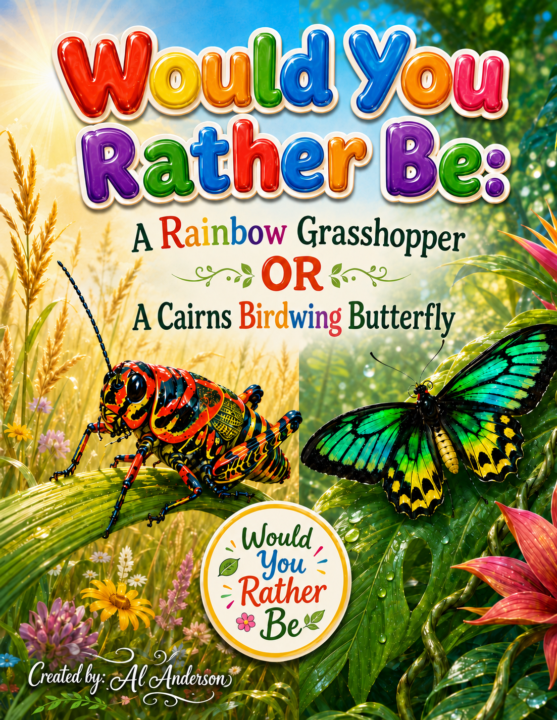
I've modified Emma's prompt and project for creating insect books to create my own creatures in super fast time. I am creating a KDP series on the theme: "Would You Rather Be?" where I present two creatures in one book to learn about them and then select which the reader would choose to be. Attached is the first book as a pdf and with a link to the flip book. They are meant to target children ages 5-8. Tell me what you think about the idea and more specifically comments on the book. flip book: https://designrr.page/?id=508873&token=3682752458&type=FP&h=4910
🔥
0 likes • 4h
This book is beautifully illustrated and instantly eye-catching. The colours are bright, playful, and perfect for children, and the “Would You Rather Be?” concept is a clever way to make learning about nature feel fun and interactive. I really like how the book introduces real facts in a simple, child-friendly way. The table of contents gives it a polished feel, and the artwork makes the rainbow grasshopper and butterfly feel exciting and memorable. My main suggestion would be to reduce the white space on some pages. A few pages feel a little unfinished because the text and images are sitting in the middle of a large blank page. Enlarging the artwork, spreading the text more intentionally, or adding soft background details would make the pages feel more balanced and immersive. Overall, this is a gorgeous educational children’s book with strong visual appeal, a fun concept, and lots of potential. With a little layout tightening, it would feel even more professional and print-ready.
🔥
1d •
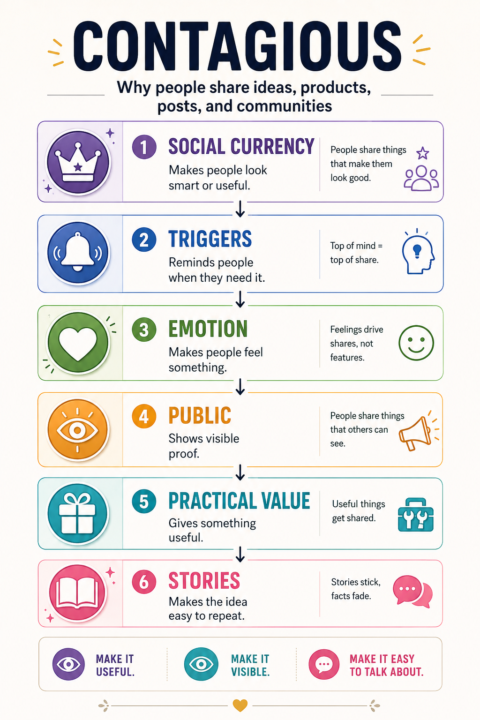
Contagious
One of the biggest lessons from Contagious by Jonah Berger is that people do not share things randomly. They share things that make them look useful, feel something, solve a problem, or tell a simple story. That matters if you are building a product, community, prompt pack, or digital offer. It is not enough to make something helpful. People need to understand why it matters and what they can do with it. A prompt pack becomes more shareable when it helps someone create a finished result. A Skool post becomes more useful when it gives people something they can actually apply. A product becomes easier to talk about when the result is clear. Instead of saying: “I made a prompt pack.” Try: “This helps you turn one messy idea into posts, captions, image prompts, and product angles.” That is easier to understand. It is easier to remember. It is easier to share. Today’s question: What result does your offer create that someone would actually want to show, share, or talk about?
🔥
2 likes • 22h
@Riley Saint
🔥
2 likes • 14h
@Suzie Kemper
1-10 of 901

🔥
@manda-jackson
My focus is practical AI that helps you stop overthinking, get clear, and actually build the thing.
Active 48m ago
Joined Oct 11, 2025
INTJ
Kilcoy QLD Australia