Activity
Mon
Wed
Fri
Sun
Oct
Nov
Dec
Jan
Feb
Mar
Apr
May
Jun
Jul
Aug
Sep
What is this?
Less
More
Project 99.95
429
Free
103 contributions to Project 99.95

Jun 24 •
ATAR 30 Day Hard Challenge Complete
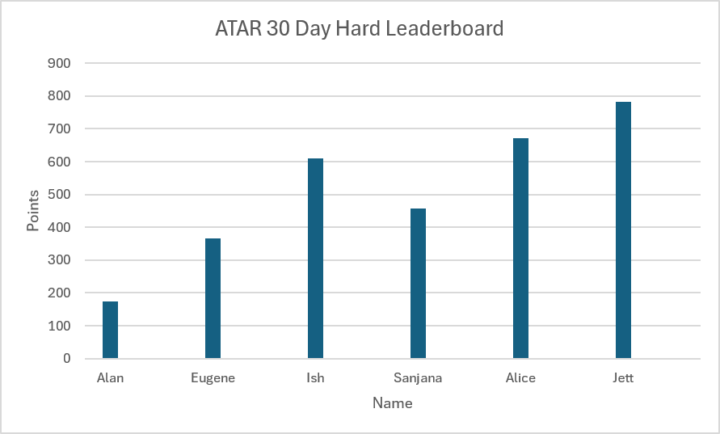
And just like that, the 30 days are done. Massive congratulations to everyone who took part in the first ATAR 30 Day Hard Challenge. This challenge was never just about points. It was about building discipline, showing up consistently, reflecting honestly, doing the hard study properly, and learning what actually works for you. Across the challenge, we focused on: Week 1: Reset — fixing the system before blindly grinding. Week 2: Volume — increasing the amount of meaningful work. Week 3: Pressure — testing yourself with exam-style conditions. Week 4: Performance — turning effort into results. A huge congratulations to Jett for finishing at the top of the leaderboard, followed by Alice, Ish, Sanjana, Eugene, and Alan. The leaderboard only includes those who participated in 15+ days of the challenge. But regardless of where you placed, completing this challenge means you now have a much clearer understanding of your study habits, your strengths, your weaknesses, and what you need to improve moving forward. The real win is not just the 30 days. The real win is taking the systems you built here and carrying them into the rest of the year. Thank you to everyone who submitted, reflected, posted, joined the reviews, and gave this challenge a genuine effort. 30 days complete. Now keep the standard.
Jun 22 •
Day 30: Finish Strong
Today is the final day of the ATAR 30 Day Hard Challenge. Whatever your last 29 days looked like, today is your chance to finish properly. This challenge was never about being perfect. It was about learning how to show up, reset after bad days, study with more intention, handle pressure, and build a system that actually works. So don’t switch off early. Finish the last day with the same standard you wanted to build from the start. Get your deep work done. Do your exam questions. Review your mistakes. Move your body.Submit your final check-in. One more day of execution. Finish strong.
2
0
Jun 8 •
Week 3 Check-In: Pressure
This week’s key word is pressure. By now, you should be moving beyond just studying more and starting to test whether your study actually holds up under exam conditions. That means more timed questions. More past papers.More marking.More error log reviews.More practice under conditions that feel uncomfortable. Pressure reveals what you actually know. This week, don’t avoid the hard questions. Use them to find the gaps, fix them, and come back stronger. Keep showing up. Week 3 is where real exam improvement starts to happen.
2
0
Jun 2 •
Week 2 Check-In: Volume
This week’s key word is volume. Now that we’ve reset our systems, the goal is to start increasing the number of quality reps. More deep work blocks.More exam questions.More active recall.More error log entries.More consistent submissions. Not just more time at your desk — more meaningful work that actually moves you forward. Keep showing up. Week 2 is where momentum starts to build.
6
0
May 31 •
Thanks to everyone who attended the weekly review.
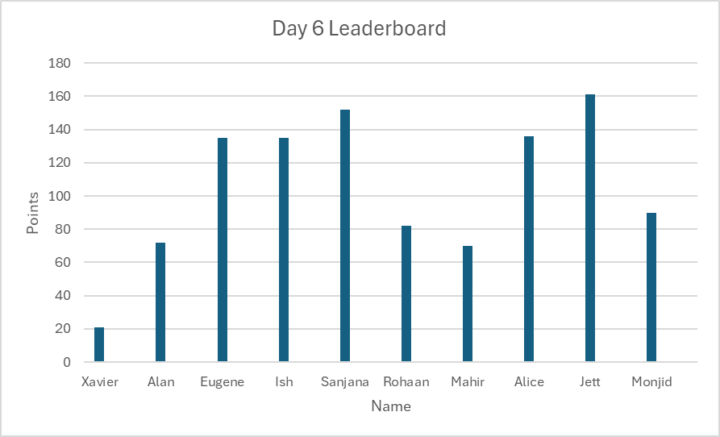
Great to reflect on how the first week went and what we can improve moving forward. The key word for this week is volume. Last week was about resetting your system. This week is about increasing the amount of meaningful work you are doing — more deep work blocks, more exam questions, more active recall, and more consistent submissions. Not just more hours. More quality reps. We’ll also be posting the leaderboard from Days 1–6 soon. Use it as motivation, not pressure. The goal is to keep improving your own standard each week. Strong start so far. Let’s build into Week 2.
3
0
1-10 of 103

Active 45d ago
Joined Jul 17, 2025