Activity
Mon
Wed
Fri
Sun
Oct
Nov
Dec
Jan
Feb
Mar
Apr
May
Jun
Jul
Aug
Sep
What is this?
Less
More
Cancer Warriors
555 members • Free
5 contributions to Cancer Warriors

Apr 2 •
RGCC
Anyone ever try the RGCC test ? I’m really interested. It’s $2,500 . A blood test sent to Greece for your specific cancer analysis. From what I was told, they find out exactly where your cancer originated and how. They test many different immunotherapies until they find one that kills the cancer cells specific to you . It really sounds promising.
3 likes • Apr 4
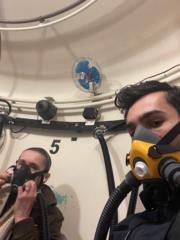
When combine pricing for HBOT and Vitamin C IV’s , it’s $3,200 per month. That doesn’t include any other items in the protocol. I’d say about $4,000 USD per month and who knows how many months. I already pay that for living expenses. Too bad it takes a lot of money to manage cancer.
1 like • Apr 5
@Fitch T where did you get CDS ?
Feb '25 •
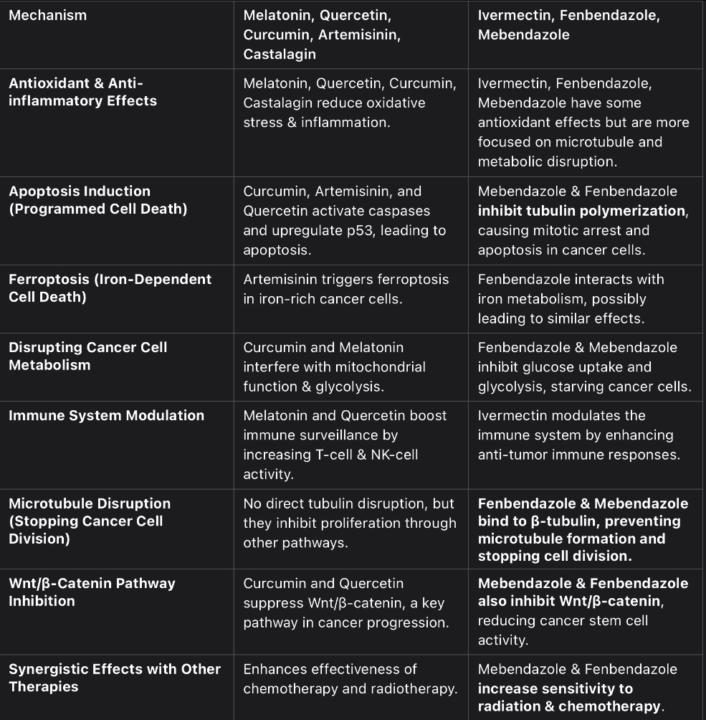
Synergistic Anticancer Effects of Ivermectin, Melatonin, Quercetin, Curcumin, Artemisinin, and Castalagin: A Multi-Targeted Approach
I recently noticed a pattern - these natural compounds and repurposed drugs act through multiple converging mechanisms. I suspect this is key in our approach to fighting cancer. Interestingly, they also end with the same two letters, although this could simply be a coincidence. While Ivermectin’s mechanisms differ slightly—emphasizing tubulin inhibition and immune modulation—it follows the same fundamental principle of targeting cancer through multi-pathway disruption. This further supports a metabolic and multi-targeted approach to cancer treatment, reinforcing the idea that combining these agents could enhance efficacy. Below is an example framework for a research hypothesis and study design that explores the synergistic anticancer properties of these compounds: Primary Hypothesis: A combination of melatonin, quercetin, curcumin, artemisinin, castalagin, and ivermectin will exhibit a synergistic anticancer effect by targeting multiple pathways, including oxidative stress reduction, apoptosis induction, metabolic disruption, immune system modulation, and inhibition of cancer stem cells, leading to decreased tumor growth and improved treatment outcomes compared to monotherapy or conventional chemotherapy alone. Secondary Hypotheses: 1. The combined regimen will enhance the sensitivity of cancer cells to conventional chemotherapy and radiation therapy. 2. The combination treatment will modulate key cancer survival pathways (e.g., PI3K/Akt/mTOR, Wnt/β-catenin, NF-κB) more effectively than individual compounds. 3. The therapeutic effect will be mediated through immune system activation, including increased natural killer (NK) cell and T-cell activity, leading to enhanced tumor suppression. 4. The compounds will synergistically induce apoptosis and ferroptosis in cancer cells while protecting normal cells from oxidative damage. 5. The treatment will inhibit cancer stem cell activity, reducing tumor recurrence and resistance. Mechanistic Rationale: • Antioxidant and Anti-inflammatory Effects:
3 likes • Mar '25
Called the doctor from the news article who gave Dostarlimab to patients. They said it’s for colorectal cancer only. They haven’t tested it on bladder cancer.
1 like • Mar '25
Does anyone here know approximately how many times you can remove a bladder tumor before having to remove the bladder?
Feb '25 •
My Mum's Protocol (Updated)
Hi Warriors, just wanted to share the latest version of my mum's protocol. (See attached) There has been some changes along the way... Because we don't know the extent to which some Antioxidants could interfere with certain Off-Labels, I've decided to separate and divide doses between morning and afternoon (away from evening dose of rivaroxaban) with antioxidants only introduced in the afternoon. We hope to get the best of both worlds this way! Artemisinin, EGCG, ALA, Quercetin and Fenbendazole used as a pulse Monday-Wednesday. Fenbendazole: 444mg 3x week Mebendazole: 1500mg/daily. Ivermectin: 1mg/kg daily. This is not medical advice. Always consult with a healthcare professional before making any changes to your current regime.

3 likes • Feb '25
@Bernardo Henriques I have non invasive bladder cancer. Tumors show up once a year.
3 likes • Feb '25
@Bernardo Henriques just ordered Milk Thistle . I’ll use it along with the Ivermectin & Fenbendazole
Dec '24 •
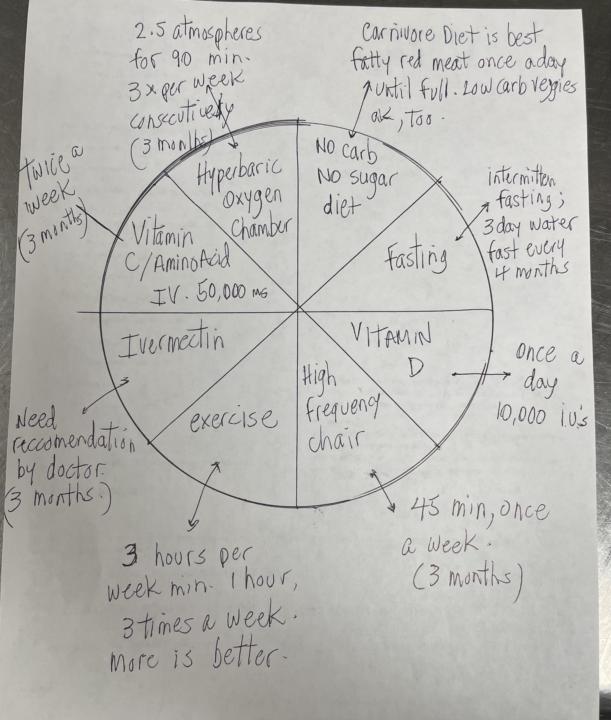
Cancer therapy program
After studying up on how to fight this, here is a picture of what I’ve come up with. I’m also adding Soursop extract just in case.
3 likes • Dec '24
You might have to take a screenshot so you can zoom in
Dec '24 •
New member
Hello everyone. . Just joined the group. Hopefully we can all compare therapies to find out what works and what not to do. I’ll give an intro to my cancer journey and what I have found out soon.
3 likes • Dec '24
@William Wong thanks
5 likes • Dec '24
Soon , I’ll go over the procedures I plan to do . Maybe someone can give me advice on whether or not I’m on the right track.
1-5 of 5
Active 42d ago
Joined Dec 2, 2024
Powered by