Activity
Mon
Wed
Fri
Sun
Nov
Dec
Jan
Feb
Mar
Apr
May
Jun
Jul
Aug
Sep
What is this?
Less
More
Owned by Daniel
A space to educate and empower people on mental health through honest conversations, practical insight, and tools for real-life growth and clarity.
241 contributions to Daniel Rubin LMHC LPC

12h •
You're just a human
Got asked on a podcast why so many men are quietly fighting mental health struggles. My answer wasn't what the question expected. We've always had issues. That's not new, and I don't buy the framing that this is a modern male crisis. Men have been carrying this forever. What's actually broken is that therapy got mislabeled. It became an emergency service instead of a tool. And the second something is framed as an emergency service, men start calculating whether they qualify yet. That's the whole trap. Not resistance. Not denial. Qualification. Guys in this room do this constantly — I'd bet most of you have run the math at some point and concluded you're not bad enough to take the spot. Somebody has it worse. It's not that serious. I'll go if it gets worse. So you wait. And then a crisis makes the decision for you, and your first session is damage control instead of actual work. Here's what I tell men in my office: you're just a human. The idea that you're not supposed to have stuff is a fallacy. There is no version of a person without stuff. There are only people who've looked at theirs and people who haven't yet. Any tool that improves your life — why wouldn't you use it? Nobody lifts because they're dying. They lift because they'd rather be stronger. This week's prompt: Have you ever decided you weren't "bad enough" to ask for help — therapy, a meeting, a hard conversation, anything? What was the bar you were waiting to clear? And who set it? — Daniel | 404-668-8369
0
0

14h •
When was the last time you were bored on purpose?
Clip going up today on the least masculine-sounding advice that exists: rest. Where it comes from for me — there were a lot of nights early on where I sat in silence in a halfway house, looking straight at the reality of my life, going how did I get here. It felt like punishment at the time. In hindsight it was the first stretch in my adult life where nothing was coming at me. No phone, no job, no performance, nothing to manage. And a surprising amount of what I actually figured out came out of that silence rather than out of effort. Now look at the setup most of us live in. Connected all the time. On call 24/7 whether or not anyone said so out loud. The brain never gets the signal that the day ended, so the thinking keeps running in the background and bills you for it later. There's value in not thinking. There's value in not doing. I know how that sounds in a room full of ambitious men. Saying it anyway. And I'm not above it. Ten years in, I'll be standing in my own garden on a day off, nothing to handle, and my hand goes into my pocket for my phone for no reason at all. The reflex is still there. I just catch it faster now. That's the honest version — you don't get rid of it, you get better at noticing it. This week's prompt: When was the last time you were bored — on purpose, with no phone, no podcast, no music, nothing to fix? If you can't remember, that's your answer. Try fifteen minutes this week and post what came up. Most guys find out pretty fast that boredom isn't the thing they've been avoiding. — Daniel | 404-668-8369
0
0

19h •
What do you lead with?
Clip going up today where I say the thing that took me years to be able to say out loud: losing everything was one of the best things that ever happened to me. Not because loss is noble. Because I was fused to a series of identities and I couldn't see any of them until they were gone. Twelve to twenty-four, I was the party guy. People knew me for it. That was the whole thing. Then I got licensed, and I swapped one identity for another without noticing I'd done it. You'd know I was a therapist within two minutes of meeting me. Every time. That's what I led with. At 31 it all got pulled, and there was no role left to hand anybody. Just Daniel. And I genuinely did not like him at first. Here's what I want to put in front of this room: most men in here aren't attached to their lives. They're attached to the label. The provider. The strong one. The guy who shows up. The one with the answer. And the reason losing it feels like dying is that something real is actually ending — you're just grieving a role instead of a person, and nobody teaches you that's a thing you're allowed to grieve. This week's prompt: What do you lead with in the first two minutes of meeting someone new? Be honest. Job, title, where you went to school, what you drive, who you know, how busy you are, your recovery time, how much you lift. Everybody leads with something. Then the real question: if that got taken tomorrow, what would be left — and do you like him? — Daniel | 404-668-8369
0
0

2d •
I pay people to tell me what I can't see
Clip going up today where I say something I want to put directly in front of this group. I still pay for my own therapy. Fifteen years licensed, and I pay other people to tell me what I can't see about myself — because I'm blind in places, same as everybody in this room. Shadow work is just the unglamorous name for that. The hidden pieces you'd rather not admit are in there. And the catch is structural: you can't find them alone. It takes people willing to actually see you, and a version of you that can hear it without immediately explaining why they're wrong. That second part is where almost everyone quits. Including me, for a long time. Here's the other thing I said in it, which I think about a lot: at some point it stopped being about attainment for me. I've got stuff. I like it. I'm not performing otherwise. But it's not the measure anymore. The only question that still moves me is whether I'm actually growing. This week's prompt: Think of a time someone told you something true about yourself and you fought them on it — and they turned out to be right. What was it, and how long did it take you to admit it? That gap, between being told and being able to hear it, is the whole thing we're working on in here. — Daniel | 404-668-8369
0
0

2d •
What would you type at 2am if nobody could see it?
Data that reframed something for me this week: 42% of men report using AI for mental health support. For women it's 33%. Men are higher — in a category where men trail on literally every other help-seeking measure. And in a study of people already in therapy, 64–88% never told their therapist they were doing it. So the story we've all been telling — men don't open up — is out of date. Men open up constantly now. Just to something that can't look at them while they do it. I get the appeal. No face. No pause. No risk that someone treats you differently on Monday. For a lot of men that's the only room that's ever felt safe. But here's the limit, and I'd say the same thing in group: the relief of saying it isn't the same as the repair of being known while you say it. A machine can process your words. It cannot witness you. It won't notice you've gone quiet for three weeks. It will never be the guy across the room who says me too. This week's prompt: What's something you've typed out — in a notes app, a draft text, a chatbot, a journal — that you've never said out loud to a person? You don't have to post the content. Just post whether it exists. That's the whole exercise. Most men will find out the answer is yes. — Daniel | 404-668-8369 | 988 if tonight is heavy
0
0

1-10 of 241
@daniel-rubin-9400
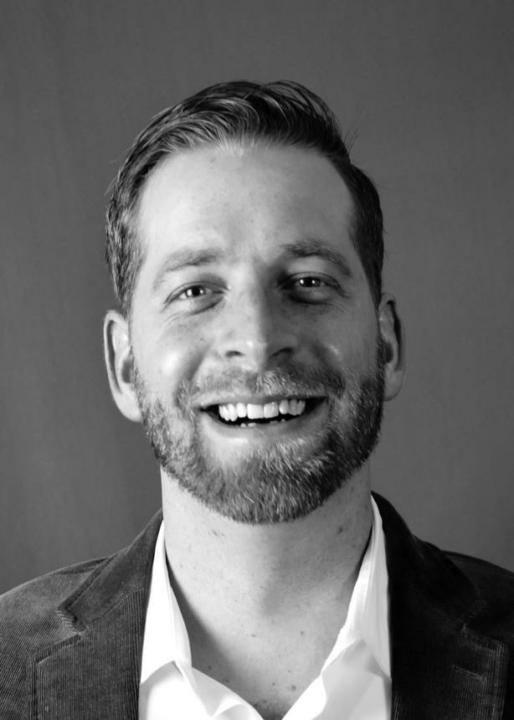
Daniel Rubin, LMHC, LPC is a licensed therapist with over 15 years experience treating mental health and addiction.
Active 12h ago
Joined Dec 19, 2025
Fort Lauderdale