Activity
Mon
Wed
Fri
Sun
Nov
Dec
Jan
Feb
Mar
Apr
May
Jun
Jul
Aug
Sep
What is this?
Less
More
CSCS Accelerator Community
236
Free
49 contributions to CSCS Accelerator Community

Jun 5 •
CSCS Daily Practice Question #55
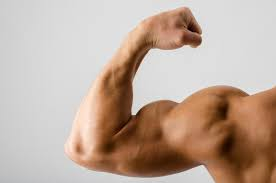
Which term describes a muscle that directly produces the primary movement? A. Synergist B. Antagonist C. Agonist Answer in the poll, then explain your rationale below in the comments! I'll follow up with my breakdown of the question after enough people have responded. From Chapter 2: Biomechanics of Resistance Exercise DCO Code: 1.C3 NOTE: Image is for illustration purposes, not needed to answer the question.
Poll
26 members have voted

0 likes • Jun 16
Agonist = prime mover (ie quads and glute max in the back squat) Antagonist - muscle that opposes the agonist (ie hip flexors and hamstrings in the back squat) Synergist = helps with the movement (ie hamstrings, adductor magnus, gastrocnemius, soleus, and erector spinae in the back squat)
Jun 5 •
CSCS Daily Practice Question #54
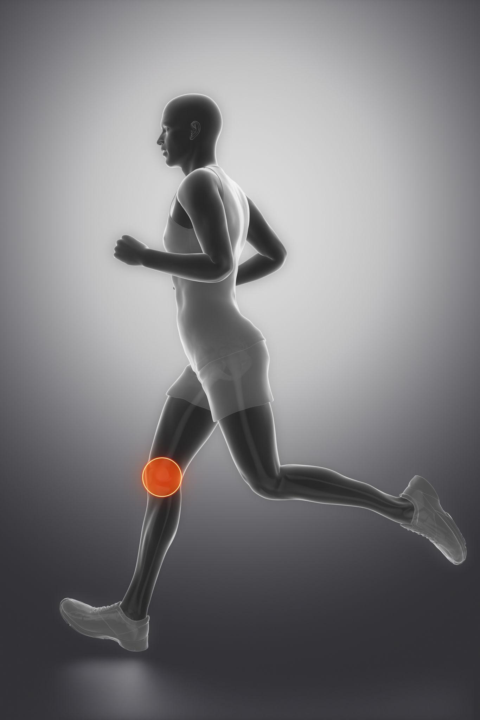
What distinguishes synovial joints from other joint types? A. They contain cartilage directly between bones with no fluid B. They fuse bone to bone through connective tissue strands C. They are filled with synovial fluid and allow considerable movement Answer in the poll, then explain your rationale below in the comments! I'll follow up with my breakdown of the question after enough people have responded. From Chapter 1: Structure and Function of Body Systems DCO Code: 1.D1 NOTE: Image is for illustration purposes, not needed to answer the question.
Poll
28 members have voted
1 like • Jun 16
Synovial fluid is in joints such as hips, knees, shoulders. It provides lubrication, absorbs shock and delivers nutrients/ removes waste
Jun 5 •
CSCS Daily Practice Question #56
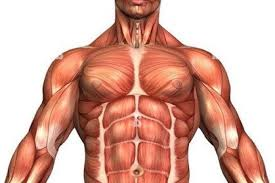
Eccentric muscle action is best described as: A. The muscle remains at constant length B. The muscle shortens rapidly C. The muscle lengthens while producing tension Answer in the poll, then explain your rationale below in the comments! I'll follow up with my breakdown of the question after enough people have responded. From Chapter 2: Biomechanics of Resistance Exercise DCO Code: 1.C2 NOTE: Image is for illustration purposes, not needed to answer the question.
Poll
24 members have voted
0 likes • Jun 16
eccentric = elongates under tension, concentric = contracts against resistance, isometric = no change in length under tension
Jun 5 •
CSCS Daily Practice Question #57
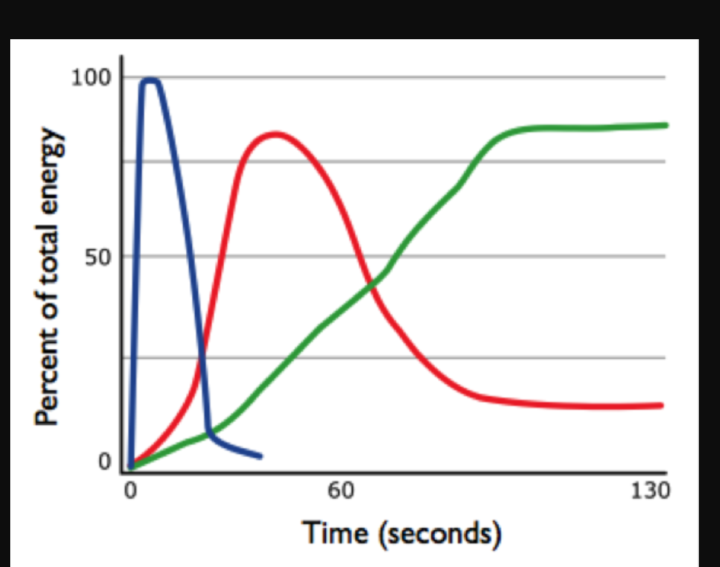
Which of the following is NOT one of the three basic energy systems? A. Phosphagen system B. Pentose phosphate pathway C. Glycolytic system Answer in the poll, then explain your rationale below in the comments! I'll follow up with my breakdown of the question after enough people have responded. From Chapter Chapter 3: Bioenergetics of Exercise and Training DCO Code: 1.E1 NOTE: Image is for illustration purposes, not needed to answer the question.
Poll
26 members have voted
0 likes • Jun 16
The three pathways are P-Cr, Glycolytic and Oxidative. The pentose phosphate pathway is a metabolic pathway parallel to glycolysis; it generates NADPH
Jun 5 •
CSCS Daily Practice Question #58
Excess postexercise oxygen consumption (EPOC) refers to which of the following? A. The anaerobic threshold after which oxygen is required B. The total oxygen used during the exercise bout C. The elevated oxygen uptake that continues after exercise ceases Answer in the poll, then explain your rationale below in the comments! I'll follow up with my breakdown of the question after enough people have responded. From Chapter Chapter 3: Bioenergetics of Exercise and Training DCO Code: 1.E1 NOTE: Image is for illustration purposes, not needed to answer the question.
Poll
23 members have voted
0 likes • Jun 16
EPOC will typically happen after a strenuous training session to return the body to its resting state
1-10 of 49

@dana-sowards-7562
Sports dietitian, USAT Level I coach and CSCS candidate
Active 23d ago
Joined Mar 18, 2026
Powered by