Activity
Mon
Wed
Fri
Sun
Jun
Jul
Aug
Sep
Oct
Nov
Dec
Jan
Feb
Mar
Apr
May
What is this?
Less
More
Memberships
Kell's Classroom Collective
44 members • Free
2 Day Shred
3.8k members • Free
Lazy Ripped
1.5k members • Free
Mojo Dojo
3.9k members • Free
7 contributions to Kell's Classroom Collective

18d •
Welcome to April
April is my favorite month of the year. Between birthdays and spring break and the excitement of what’s to come, this month has always had a very special place in my heart. Time seems to speed up and slow down all at once. Recesses somehow get longer, yet the days get shorter. You realize, a little too late, that time is a thief. The students you met at the beginning of the year no longer exist. Instead of being small, innocent kiddos, they’ve transformed into the scholars you’ve molded all year long. The structures you’ve worked so hard to put in place and reinforce are smooth and seamless. Your students “need” you less and less. It’s delightfully heartbreaking. And while all of this quiet transformation is happening, April also brings a lot of “talk”. Contract negotiations are well underway, and teachers decide whether they’re staying put, switching grade levels, or saying farewell. Rumors can (and will) spread as long as people continue to add kindling. In my early years as an educator, I was easily swept into the nonsense of trying to “be in the know” to feel even a semblance of control over what lay ahead. That illusion was always quickly shattered because change is inevitable, and plans made in April are often laughed at in August. All of the uncertainty and “talk” doesn’t just stay in the teacher’s lounge. Quick conversations before class turn into a game of telephone, and suddenly, information shared in confidence morphs into something that never existed in the first place. It can be a very dysregulating time for the grown-ups, which inevitably seeps into our students’ nervous systems, too. I think it’s important to (re)name that our energy is palpable and shared. When we are grounded and calm in our bodies, even if it’s chaotic around us, our students can tell. They then feel safe enough to settle, which leads to a much more enjoyable learning environment. The opposite is also true- chaotic teacher energy equals triple chaotic student energy. There have been many moments when I’ve had to pause and reflect on the energy I was bringing to my students. Often, it wasn’t even mine—it was the residue of a frustrated colleague. Once I recognized that, I could pause, reframe, and re-engage as my authentic, calm, and sometimes silly self.

0 likes • 18d
Nice work here! Always a joy reading your writings.
Apr 2 •
Moral Development Didn't Fail- We Opted Out
So, permission to be weird. (Permission granted!) The collective is going through a pretty massive awakening. It’s not the end of the world, but rather the end of a world. We can no longer afford to be neutral while staring injustice in its horrifying, pimply, twisted face. Because nothing is ever neutral- silence is complicity. Silence gives hatred, inequity, and fear permission to continue. I often find myself frustrated with people who I consider “good” who also remain willfully ignorant, silent, and complicit in allowing broken systems to thrive (thank you, neurodivergence). While rage-running at the gym, I ripped open a memory box from one of the many psychology courses I took in college. After calling my dad, relearning a few terms, and screaming into the void, I transmuted my running rage into (mostly) coherent thoughts, which have helped me to understand why we are where we are and to (hopefully) provide insights and hope to others. Kohlberg’s theory of moral development outlines how people can progress through different levels and stages of morality. He argues that people move through each level as they get older, which I wholeheartedly disagree with, but more on that later. Growth isn’t guaranteed- it’s a choice. And a lot of people opt out. Essentially, the three levels look like this: Pre-Conventional Moral reasoning is simple and self-centered. I either avoid punishment or do something because I get something in return. For example, Mom gets mad when I hit my sibling, so I will not hit my sibling to avoid getting into trouble (not because I know that hitting hurts others). Or, I know that when I help my teacher, I get a sticker on my sticker chart. So I will help my teacher because I want to fill up my sticker chart and earn a prize (not because I value contributing). This stage is said to last from ages 3 to 9 years old (or forever, if you're a politician in Utah). Conventional Moral reasoning is guided by law and order, and by what society expects of me. I follow the rules because they're there for a reason, even if I’m not sure what that reason is. Known as the “good girl/boy” stage, I know my behavior is judged by others, and I want approval to fit in. I am a contributing member of society, and I am not going to rock the boat. Most adults land here and stay. Why? Because it’s comfortable. And humans will choose comfort over growth almost every time.

0 likes • Apr 3
Reading this made my day...thank you. It's a fun read and I hope you keep building on this.
Mar 17 •
Welcome to March
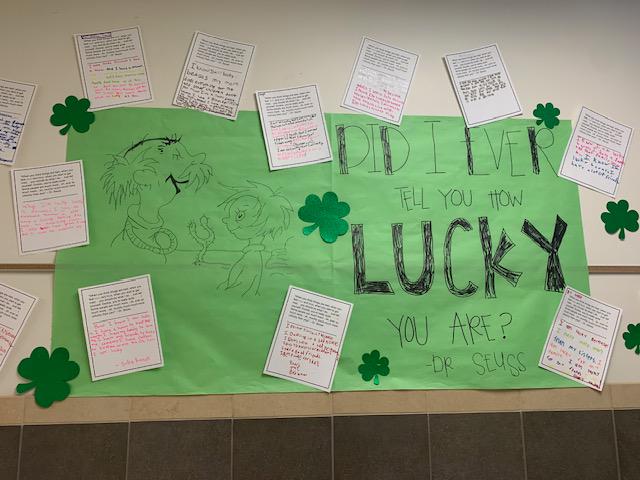
Madness? Sure. Magical? That’s up to you. The energy of March is always exciting and chaotic. The spring equinox occurs midway through the month, marking the transition from the stillness of winter to the blossoming of spring. The weather is still unpredictable; I’ve experienced snow days and shorts weather in the exact same calendar year. Students and teachers often follow suit, with behaviors emerging from hibernation just like those of our fellow woodland creatures. Personally, March has brought me its own craziness, with a middle school suspension and a near-firing after I got a bit too brave with a board member. Whoops. All that said, March Madness is appropriate alliteration and should not be tied to just college basketball. However, Magical March is just as real- if we choose to see it. Every March, I would read "Did I Ever Tell You How Lucky You Are" by Dr. Seuss. It was a perfect blend of celebrating Dr. Seuss’s birthday and St. Patrick’s Day. If you’re unfamiliar, the book goes through a list of people who live very unfortunate lives. Characters include Mr. Potter, the T-crosse, I-dotter, who has to cross t’s and dot i’s as his main source of work, and the Bee-Watcher-Watcher who watched the Bee-Watcher. Each character and storyline is sillier than the one before, and the kids giggle the entire time. Their favorite line was always: “Be grateful you’re not in the forest of France Where the average young person just hasn’t a chance To escape from the perilous pant-eating plants But your pants are safe, you’re a fortunate guy You ought to be shouting how lucky am I” Something about third graders and making sure their pants were safe delighted and intrigued them– needless to say, we read the book several times. And, in true Kell fashion, I would bring it back to gratitude- though perhaps sneakily rebranded. We would write our own version of the story to explain how we knew how lucky we were. Not only were my students grateful that their pants were safe, but they also began to see their lives as lucky rather than ordinary.
1 like • Mar 22
Outstanding post...we are lucky to have you.
Jan 23 •
The Cost of Being Right
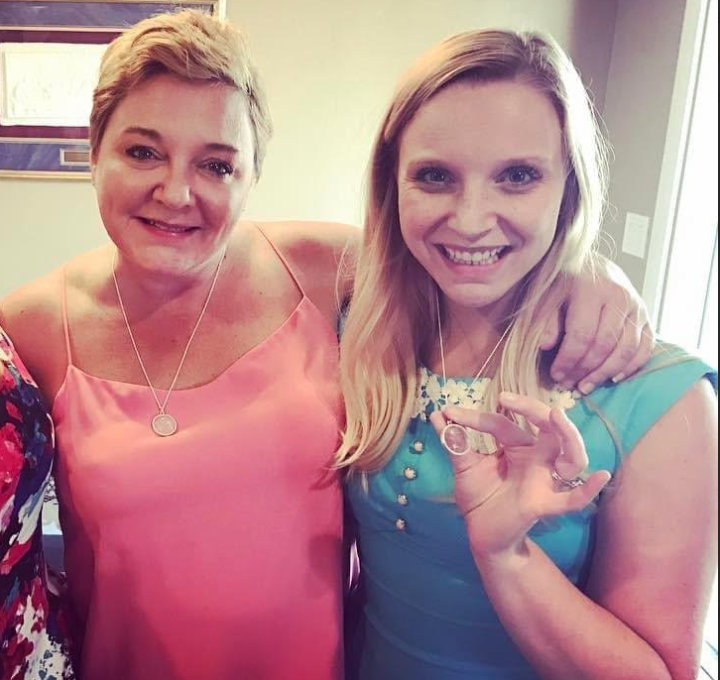
Hi, sweet people 🤍 I’ve added a new course called Lessons Along the Way—because some of the most important learning happens outside the classroom, usually while we’re living, parenting, leading, messing up, and figuring things out as we go. The first post, The Cost of Being Right, is live, and I wanted to share it here, too. A loving but clear reminder: this is a safe, inclusive space. We don’t do shaming, bullying, or drive-by cruelty here. Growth requires curiosity, not perfection. And real learning asks us to loosen our grip on the idea that we’re “supposed to” already know everything (spoiler: none of us do). The more we learn, the more we realize how much we don’t know—and honestly, that’s part of the fun. The 2016 election shifted the trajectory of my mom’s life. My family was shocked and saddened by the results, though different members of my tribe chose to cope in different ways. Some of us took it as a difficult learning experience and allowed it to highlight our own ignorance. “Everyone we knew voted for…” became an admission to the fact that our circles were filled with mainly like-minded individuals who rarely challenged our beliefs or made us feel uncomfortable. Our false sense of safety during the Obama presidency was shattered, and we realized that everything women and civil rights groups had fought for over centuries was once again up for debate. Some of us chose to gain fresh perspectives, try to understand “why”, and build connections over resentment. My mom chose a different path. She would yell at the news every day and allow herself to get sucked into the endless loop of anger and alcohol. Her feelings were understandable, even justified, though extremely misplaced. It eventually led to other issues and, ultimately, her death. I don’t talk about my mom often, but the parallels between the end of her life and what we are currently witnessing collectively are too similar not to address. My mom was a bright, beautiful, and hardworking woman with poor emotional regulation. Before that election, she lived a full life—imperfect, generous, and deeply human—marked more by laughter than rage. In the years that followed, however, she allowed herself to get so far down the road of playing the victim and shifting blame that to reverse course would’ve meant admitting, even to herself, that her entire identity and narrative had become protective mechanisms rather than a true reflection of reality. She had to be right. So right, in fact, that she would rather be gone than admit she caused harm.
1 like • Jan 30
I have told you how much I love this post, but the impact hits me daily. You are amazing.
Jan 3 •
Welcome to January
Not a complete reset- just an opportunity to reflect and reframe. If August is one long Sunday, then January is the longest Monday of all time. After the fun, family, and food of the holidays, January arrives begrudgingly, lazily knocking on our doors. I used to really struggle with it. Where I live, in Utah, the first month of the year is often marked by frigid temperatures and poor air quality due to an inversion in the Salt Lake Valley. As a teacher, I knew it meant a full 31 days of it being dark when I left for work, dark when I returned home, and a high probability of at least one indoor recess due to weather or gross air. Not ideal. To top it off, society has added its own silly expectations of the month- New Year’s. We hype ourselves up for this “New Year, New Me” mindset and create goals for ourselves that will most likely fade by the second Friday of the month, called “Quitters Day.” In our self-imposed rush from Christmas celebrations to action planning for the year ahead, we skip the pause our nervous system is actually craving. We miss perhaps the most important piece of all: reflection. We don’t need to fully reset in January. We can simply reframe. Instead of setting goals in the dead of winter, reflect on the year we just exited. Thank her, and sit with her just a bit longer. Show gratitude for the good of the year, and grace for the lessons and tough moments. In December, we talked about the sparkle and the shadow of the season. January gives us permission to embrace the shadow- whether it’s with ourselves, our relationships, or our work. With the holidays behind us, our wallets empty, and perhaps too many ingested libations, our shadow is begging for some quality time this month. Shadow work doesn’t have to be scary. In fact, we all have our shadows– they are just as much a part of us as our light. More importantly, your shadow doesn’t mean there’s something wrong with you. She often sounds like exhaustion, resentment, or the quiet thought of “I can’t keep doing this.” Consider the holidays’ final gift as an opportunity to reflect on where you are, where you’ve been, and where you’re headed next.
1 like • Jan 5
As we discussed, "Janus" is the two-headed god that looks backwards and forwards. I have been summing the past year since 1987, an assignment in my Debt-Free Millionaire course, into Best-Worst Lists. (I have something called "Baby John" in my 1989 list as we were expecting!) Reminder: every day now grows a bit longer. Enjoy January!
1-7 of 7
@dan-john-9225
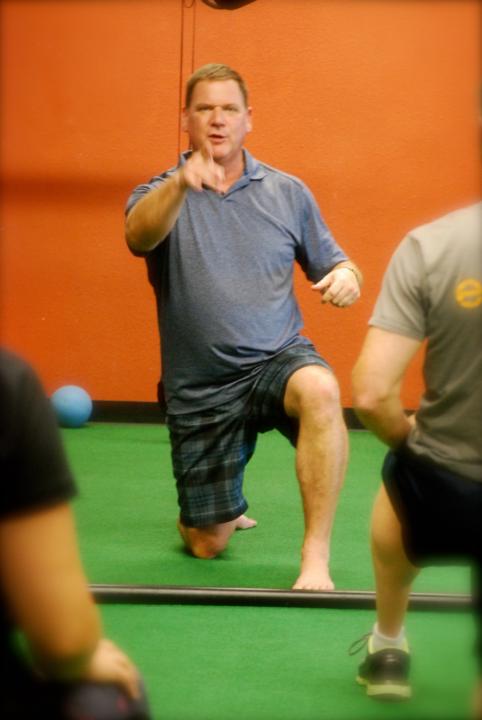
Dan John has been lifting since 1965 and has won national championships in the discus throw, Olympic lifting, and Highland Games.
Active 5h ago
Joined Sep 28, 2025
Powered by