Activity
Mon
Wed
Fri
Sun
Dec
Jan
Feb
Mar
Apr
May
Jun
Jul
Aug
Sep
Oct
Nov
What is this?
Less
More
The Health Syndicate
89
Free
5 contributions to The Health Syndicate

19d •
CJC 1295/IPAMORELIN…
What It Is, How It Works & What To Expect Today I want to talk about one of the more popular peptide combinations being researched for growth hormone stimulation: CJC-1295 and Ipamorelin. Now, what makes this combination interesting is that these two peptides work through different receptors, but they’re ultimately trying to accomplish the same thing: stimulate your body to release more of its own growth hormone. Let me explain how that works. First, CJC-1295 is a growth hormone-releasing hormone analog, or GHRH analog. Basically, it mimics a signal your hypothalamus naturally sends to your pituitary gland, telling it to release growth hormone. Think of your pituitary gland as a factory. CJC-1295 is essentially sending a message to that factory telling it to increase production. Now, Ipamorelin works a little differently. Ipamorelin is what’s called a growth hormone secretagogue. It activates the ghrelin receptor, also known as GHS-R1a, which is involved in stimulating growth hormone release. So here’s where the combination gets interesting. CJC-1295 activates the GHRH pathway, while Ipamorelin activates the ghrelin receptor pathway. Two different signals, both working toward increased growth hormone release. And because these pathways are different, researchers are interested in whether stimulating both simultaneously produces a greater growth hormone response than stimulating either one individually. That’s the science behind the combination. Now, what happens after growth hormone is released? Growth hormone travels through your bloodstream and acts on different tissues, including the liver, where it stimulates the production of IGF-1. IGF-1 is involved in cellular growth, tissue maintenance, and protein synthesis. So when we’re talking about this combination, we’re really talking about stimulating the body’s natural growth hormone and IGF-1 pathway. Now, what should you expect? First, this isn’t something where you’re going to see dramatic changes overnight.


1 like • 18d
Hello. Can you explain DAC a little more. I guess the pros and cons. Thanks
0 likes • 18d
Thank you for that info. I’m learning a lot. I appreciate it
0 likes • 22d
Yes it does. Thank you

0 likes • 23d
I have a question? Should different peptides be injected in different areas?
0 likes • Oct 5
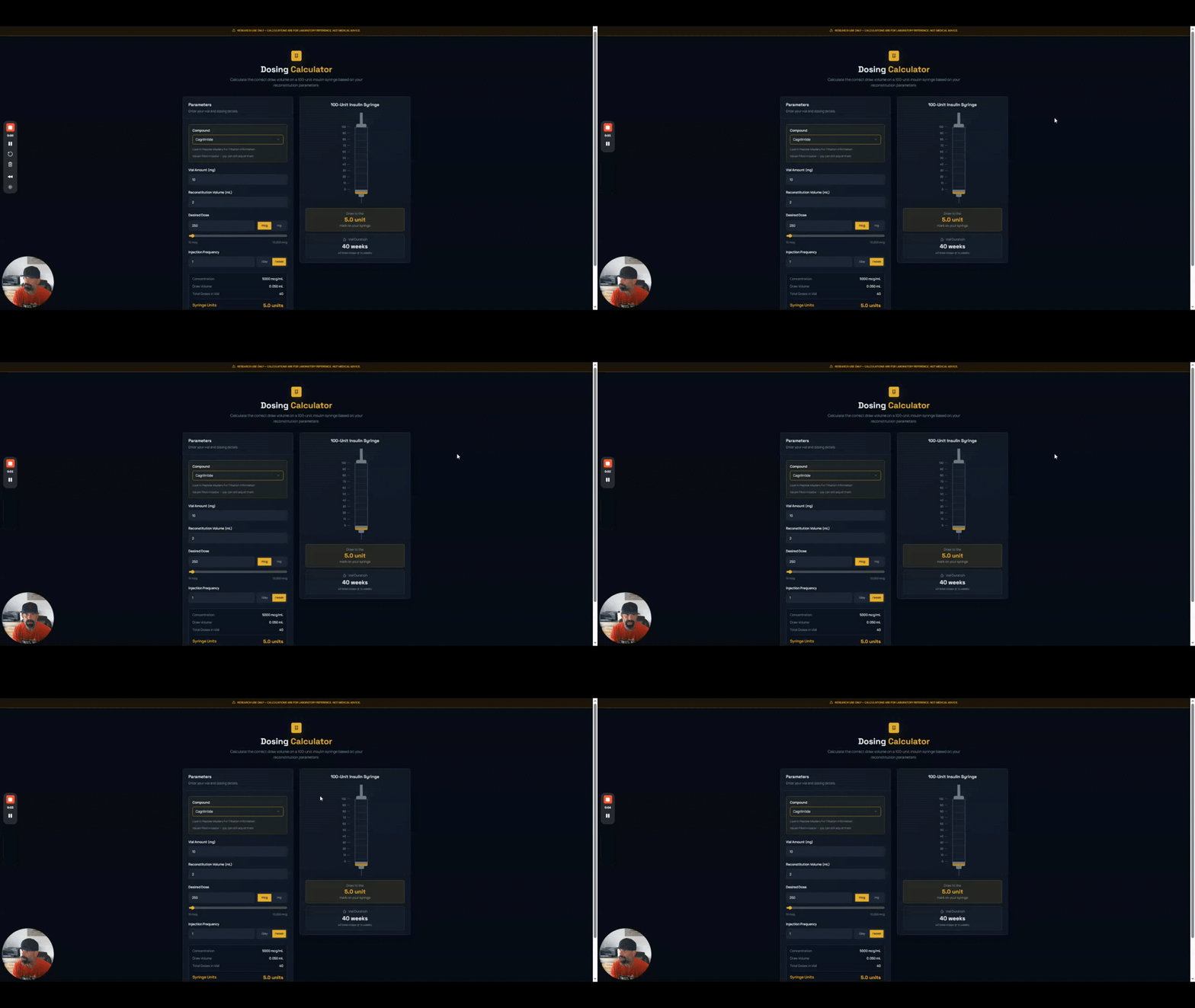
I’m sorry how do I make this larger. I have tried every way I know
0 likes • 29d
@Chris Reale ty
1-5 of 5

@dan-cunningham-7496
Hello. I am here to learn and understand the peptide world better
Active 1h ago
Joined Oct 1, 2026
Powered by