Activity
Mon
Wed
Fri
Sun
Aug
Sep
Oct
Nov
Dec
Jan
Feb
Mar
Apr
May
Jun
Jul
What is this?
Less
More
Owned by Connor
Ear IQ is a systematic approach to musical fluency through the development of our ears in a supportive community!
Memberships
Unleash Your Inner Guitar Hero
65 members • $9/month
Unison Producer Growth Hub
47.8k members • Free
28 contributions to Ear IQ

Jan 17 •
✨ Jengo - Heize | Chords
These are the chords to the intro of Jengo by Heize. Check out the video below to see my process to transcribe complex harmony live!
0
0
Jan 16 •
🏆 Weekly Ear Training Challenge #7
This week ill be transcribing Jenga by Heize! Really looking forward to this one. Fat harmony, fast chord changes, amazing arrangement and more! Come hangout with me tomorrow at 10:30am on Youtube. https://youtube.com/live/q4g043q_r8E
1 like • Jan 16
@Melvin Williams Back indeed my friend! Hope to see you there :)

Jan 9 •
How do i find the scale when transcribing a melody?
I feel lost and confused when trying to properly identify the scale when learning songs.
0 likes • Jan 9
Hey @Sara McDonald! Thanks so much for your question ✨ The most important aspect of transcribing a melody or even chord progression, is to be able to identify the tonic; the generating tone of the scale. This can be done either logically through a deductive process, or it can be felt. Sometimes it is even a combination of both... however once the tonic is isolated, simultaneously you will be oriented to where you are and then you will understand what the deal is with all the other notes relative to it. Are you able to identify a tonic? Every time, sometimes or not at all? It is helpful to think that music is always (not literally) made up of either a major or a minor scale: Major - 1 2 3 4 5 6 7 Minor - 1 2 b3 4 5 b6 b7 So, now imagine that you have isolated the tonic, and you hear a major third relative to it. Well, there is only one option so you are in a major scale. The same logic would be true if a melody went something like C > Eb > Bb These notes expressed as intervals would be the 1 - b3 - b7 relatively and these notes appear withing the minor scale. Now you may be wondering, couldn't those notes by a "fragment" of some other scale, and yes they could be, but you can always be sure to the degree that you are familiar with the tonic, and can identify and know the tonic. Then you instantly know where you are. So when you are working on transcriptions, focus on identifying the tonic in the melody and see how that goes. Feel free to reach out in this thread if anything isn't clear! 🐒
Nov '25 •
Hi! 👋
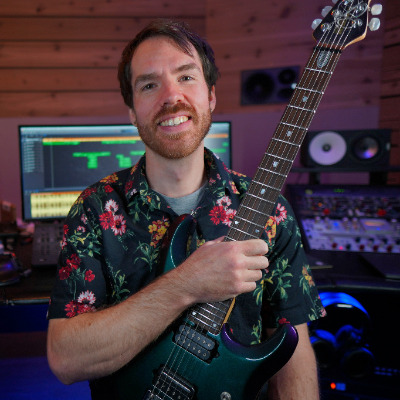
Hey everyone, my name is Connor and I'm a guitarist and composer from Canada. My favourite thing about music is for sure chords and harmony. Sometimes I just get obsessed with a certain sound and I just listen to the same song over and over. I also love figuring out what those chords are and then playing them. There is something so fun about understanding and reproducing my favourite sounds. Apart from that, I love just being a music nerd. I love transcribing and ear training to understanding the listening world. Its almost as much fun just talking music theory than making it haha. Stoked to be here!
0 likes • Jan 6
@Cosimo Marraffa hi nice to meet you here! If you have any questions about anything please let me know in the Questions tab and I can respond to you there.
Dec '25 •
🔍 Harmony | Intro Chords of "Secret Lab"
Check out the harmony in this track, especially the intro two chords. Anyone wanna transcribe that? @Chris P @Christophe Savage Legault @Chrystian Szankowski
0
0
1-10 of 28
Active 147d ago
Joined Apr 13, 2024
Vernon BC