Activity
Mon
Wed
Fri
Sun
Jun
Jul
Aug
Sep
Oct
Nov
Dec
Jan
Feb
Mar
Apr
May
What is this?
Less
More
Memberships
The Substrate Academy
66 members • Free
6 contributions to The Substrate Academy

Feb 26 •
NuCore Moisture Testing Requirements
They only call out ASTM 2659, that’s moisture meter guys. Here’s what it says: Although this floor is waterproof, from the top down, it is not to be used as a moisture barrier. The subfloor must be dry. Concrete moisture vapor emissions should not exceed 2.5% moisture content (ASTM F2659 method). Prior to installing flooring, remove dirt, paint, varnish, wax, oils, solvents, any foreign matter and contaminants from the subfloor. Do not use products containing petroleum, solvents or oils to prepare subfloors as they can cause staining and expansion of the new flooring. Link: https://flooranddecor.a.bigcontent.io/v1/static/NuCorePerformanceWarrantyandInstallationInstructionsMixedWidths110-144-178

1 like • Feb 26
So what if it's above the 2.5%? Like 3.5? Is 6 mil underlayment not good enough? What are they saying here?
1 like • Feb 26
I always use a 6 mil over concrete with nucore. I really hate using plastic though! What's the best and cheapest roll on alternative for moisture block you like to use? Roll coat?
Feb 24 •
🚀 SKOOL MEMBERS – FIRST ACCESS ANNOUNCEMENT
🚀 FOUNDING MEMBERS ANNOUNCEMENT Before this certification is promoted publicly… Before it hits Facebook or LinkedIn… Before it opens to the broader industry… This community will get it first. The Tramex Certified Time‑of‑Install Moisture Technician – Level 1 Program is about to drop inside Skool. And when it does, you will have: ✅ First enrollment access ✅ First opportunity to certify ✅ First practical submissions reviewed ✅ First names added to the Certified Technician Registry No one outside this group will see it before you. Why This Matters When this goes public, it will reach far beyond this community. Right now, you’re positioned ahead of the industry. You’ll have the opportunity to: • Complete certification before broader release • Establish early credibility • Be part of the first wave • Help set the professional standard This isn’t a casual course launch. It’s a structured certification program. And it’s landing here first. What To Expect Level 1 will require: ✔ Written Examination ✔ Practical Field Demonstration ✔ Structured Documentation ✔ Clear INSTALL / NO INSTALL decision authority No shortcuts. No participation trophies. If you complete it — you earned it. Stay tuned. The drop is coming. And this community will see it first.
1 like • Feb 24
Appreciate you
Jan 17 •
PCD Grinding Wheel
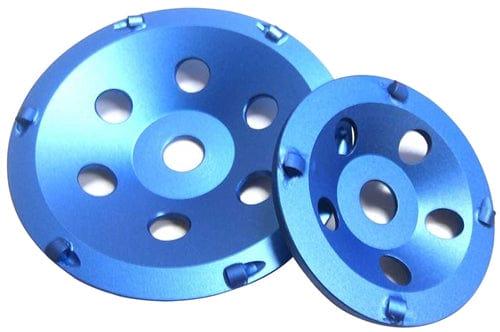
Guys! The PCD is what’s up! If you haven’t tried it, maybe you should, PCD stands for Polycrystalline Diamond and is a cup wheel that lasts longer and is much more aggressive than most traditional diamond cup wheels out there. It efficiently removes surface coatings, glue, urethanes, mastic, and paint during high-performance surface grinding on concrete, tile, and asphalt surfaces. The attached photo is what it looks like. Happy Grinding!
1 like • Jan 17
https://a.co/d/5KtwDD9. ?
Jan 16 •
💰 How to Get Paid for Self‑Leveling Underlayment (Even When Clients Say It’s “Too Expensive”)
If you’ve ever walked a floor, explained why it needs self‑leveling, and immediately heard “We don’t want to pay for that”, the next shop talk live Zoom call is for you. Check the calendar and you’ll see it on the 29th. Self‑leveling underlayment is one of the most necessary steps in quality flooring—and one of the most misunderstood by homeowners and builders. The problem isn’t the work. The problem is how it’s presented, priced, and positioned. In the LIVE Zoom, I’m breaking down: - Why clients resist paying for self‑leveling (and it’s not what you think) - How to shift the conversation from extra cost to non‑negotiable value - Simple ways to package, price, and explain self‑leveling so it gets approved - How to stop eating the cost or cutting corners just to win the job If you’re tired of arguing over flat floors—or worse, doing it for free—this will change how you approach every estimate moving forward.
1 like • Jan 17
Will this be recorded to listen to later? I'll be traveling that day.
Jan 15 •
📈 Why More Manufacturers Are Approving ASTM 2659 Impedance Meters for Moisture Testing
One trend that keeps accelerating: manufacturers are explicitly calling out ASTM F2659 electrical impedance meters as approved tools for moisture evaluation. This is a big shift from a few years ago, when these meters were often treated as “screening tools only.” What’s driving it? ✅ Non‑destructive testing Manufacturers want moisture data without drilling, patching, or damaging assemblies—especially in finished or occupied spaces. ✅ Speed + coverage Impedance meters allow technicians to scan large areas quickly and identify moisture patterns, not just point‑in‑time readings. ✅ Repeatability ASTM 2659 provides a standardized method, which gives manufacturers confidence in consistency across jobs, techs, and regions. ✅ Better decision‑making Instead of guessing where moisture might be, manufacturers can now require documented scans before remediation, flooring installs, or warranty decisions. What this means for contractors & inspectors: • If you’re not using an ASTM 2659‑compliant meter, you may already be behind manufacturer expectations • Documentation from impedance scans is becoming more defensible • “Approved tool lists” are expanding—and meters that meet ASTM 2659 are showing up more often Important note: Impedance meters still don’t replace in‑situ probes or RH testing where required—but manufacturers are increasingly recognizing them as a legitimate, primary assessment tool for many applications. To name a few: 1. Cali Floors 2. Trafficmaster 3. Artisan Hardwoods 4.Tarkett(qualitative purposes) 5.Sika 💬 Curious: Which manufacturers have you seen specifically call out ASTM 2659 meters in their documentation? And how has that changed the way you test or report moisture?
1 like • Jan 15
@Deron Lopez was just reading this and wondering the same thing. Which one to buy that will cover me?
1-6 of 6

@chris-raynor-3383
Looking for good insights on all aspects of flooring preparation
Active 33d ago
Joined Jan 15, 2026
Powered by