Activity
Mon
Wed
Fri
Sun
Dec
Jan
Feb
Mar
Apr
May
Jun
Jul
Aug
Sep
Oct
Nov
What is this?
Less
More
Owned by Chaela
As you calm your heart, your animal follows. Learn simple practices to create shared calm, trust, and connection—together.
SkoolKit | Skool CRM Toolkit
1.5k
5.0
$2/m
AI-Driven Business Community
9.3k
5.0
Free
The Western Horse Circle
778
Free
YouTube Digital Products Vault
290
5.0
$7/m
Skool Growth with Carolina
111
Free
Oracle Connections
4.2k
5.0
Free
Business Astrology Hub
604
Free
Skoolers
148.6k
Free
Mercedes Hangout
2.6k
Free
22 contributions to The Western Horse Circle

Aug 9 •
🌟 Professional Spotlight -- Shelayne Fico 🌟
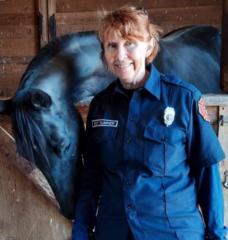
"Sometimes, that may mean we are not doing anything more than meeting each other that day." Every so often we shine a light on the people who work with horses for a living. This week meet Shelayne -- in her own words. Who I Am My name is Shelayne Fico and I'm based in central North Carolina. I'm a Certified Clinical Aromatherapist and Animal Aromatherapy Specialist. Through my practice, Shelayne Fico Equibalance, I specialize in equine aromatherapy, red light therapy, and acupressure -- helping horse owners support their horses naturally. I'm the only horse person in my family. Nobody is quite sure where my passion came from, but my parents say it started pretty much when I learned to talk. What I Do For Horses I begin every session by acknowledging the horse and asking permission to approach and touch. From there, each session is completely individualized. Depending on what the horse needs, I may use aromatherapy, acupressure, red light therapy, or a combination of all three. I pay close attention to body language throughout and let the horse guide both the work and the pace. I've also developed a specialized technique called Horse Harmony Touch. And on some days, it's simply spending time with my pony pal Louie, his stable mate Diablo, and the donkeys Lotus and Rusty. The Rewarding and The Hard The most rewarding part is seeing a positive change in the horse. What most people never see is the research and preparation that happens before I ever walk into a barn. Each horse is different, so I review their health history, current concerns, medications, sensitivities, environment, and individual needs before creating a safe and individualized wellness plan. I also consider what's realistic for the owner to maintain at home. The Horse That Started It All The horse who changed me was my Tennessee Walking Horse, Snooks Merry Boy. I was 14 when my parents bought him -- a powerful, 18-hand performance horse who was far more horse than my novice riding capabilities. I didn't tell my mom that. Days after they bought him, Snooks suffered a serious tendon injury. The vet gave us three options: traction, put him down, or stitch him up and hope. We couldn't afford the first and the second wasn't an option. We chose the third. The months I spent visiting him almost every day during his recovery -- just grooming him, talking to him, loving him -- changed both of us forever.

4 likes • Aug 9
@Shelayne Fico is amazing! She spoke at my Skool on pets, anxiety and essential oils.
Jul 14 •
Powdered tails anyone?
In the 1700s, some aristocrats actually powdered their horses' manes and tails to match the powdered wigs and fashion of the day. Imagine spending hours grooming your horse... only to finish with a dusting of white powder before heading to a royal procession. What's the strangest historical horse fact you've ever heard?
3
0

Jul 8 •
Horses as criminals
It sounds unbelievable today, but in parts of medieval Europe, animals could be treated as legal actors, capable of committing offenses against both people and the community. When a horse killed someone, perhaps by kicking, trampling, or dragging them, local authorities might seize the animal and hold a formal legal proceeding. The horse wasn't simply "put down." Instead, there could be an investigation, witnesses, and even legal representation in some cases. Court records survive showing lawyers appointed to defend animals, arguing that they acted according to instinct or that the owner bore responsibility. The reasoning reflected a very different worldview. Medieval people saw the universe as an ordered hierarchy created by God. If an animal caused a death or serious disruption, it represented more than an unfortunate accident. It disturbed the moral and social order. A public trial acknowledged that disruption and restored a sense of justice. Punishments varied. A dangerous horse might be confiscated, sold, or destroyed. More commonly, however, the owner's negligence came under scrutiny. If someone knowingly kept a vicious animal or failed to restrain it, they could also face legal consequences. Interestingly, pigs appeared in court far more often than horses. Free-roaming pigs lived in towns, wandered the streets, and occasionally attacked children. There are documented cases of pigs being convicted and executed for killing people. Horses, because they were valuable working animals and generally under closer control, appeared much less frequently. To modern eyes, these trials seem almost theatrical. But to medieval communities they served an important purpose. They created a public ritual that acknowledged tragedy, assigned responsibility, and reassured people that even chaos could be brought back under the rule of law. In a world where the line between the natural, moral, and spiritual realms felt much thinner than it does today, putting an animal on trial made a surprising kind of sense.

1 like • Jul 9
@Jason Darger right?
1 like • Jul 9
@Marie Duffoo good point!
Jun 30 •
What You Say... and How You Say It... Matters
❤️🐾 Imagine hearing your own name followed by: "You're so stubborn." "You bad horse." "You naughty mule." Or, worse, "Stop being an a$$hole today!!!" Even if our animals don't understand every word, they are extraordinary readers of tone, intention, facial expression, posture, and energy. Your horse may not know the dictionary definition of stubborn, but they absolutely know the feeling behind it. Your horse may not understand the word "a$$hole," but they can sense disappointment, frustration, or irritation. Over time, those emotional messages become part of the relationship. What if, instead of labeling our animals, we described what was happening? Instead of: ❌ "You're so stubborn." Try: ✅ "You're having a hard time following instructions today. I wonder what's going on?" Instead of: ❌ "Bad horse!" Try: ✅ "That choice didn't work. Let's try again." Instead of: ❌ "You're so damn frustrating!" Try: ✅ "I wonder what you're trying to tell me." It's a small shift in language, but it creates a very different emotional atmosphere. One invites shame. The other invites curiosity. As someone who teaches heart coherence, I believe our animals respond just as much to the emotional state behind our words as they do to the words themselves. When we speak from regulation instead of frustration, our voice becomes a place of safety. Today, notice not only what you say to your equine, but how you say it. Your relationship may change one sentence at a time. ❤️

1 like • Jul 1
@Jason Darger yep.
Jun 29 •
Weird Random Horse Fact or Fun Fable?
According to an ancient story, Alexander the Great noticed that his famous horse, Bucephalus, wasn't stubborn at all. Everyone else thought the horse was impossible to ride. But Alexander observed something different. Bucephalus seemed frightened by the movement of his own shadow. So he turned the horse toward the sun, spoke calmly, and the horse settled enough for Alexander to mount him. Whether every detail is historically accurate or not, the story has survived for more than 2,000 years because it points to a timeless truth: Sometimes what looks like defiance is actually fear or even physical discomfort. It makes me wonder how often our horses are trying to tell us something that has nothing to do with "being difficult." I've worked with horses who were deemed "unworkable," "dangerous," or "untrainable" but who had ulcers or other physical injuries. Once the ailment was addressed the horse became an angel. 💚 Have you ever discovered that a behavior you first labeled as stubbornness turned out to have a completely different cause?

3 likes • Jun 29
@Patti Covert it's a beautiful thing when an animal trusts us to listen. You must be doing a great job at being his companion. ♥️
3 likes • Jun 29
@Jason Darger self preservation ... I like the way you put it.
1-10 of 22
@chaela-sumner-1788
I help you and your animal find shared calm. Heart coherence is where we shine—building trust, easing stress, and deepening connection.
Active 18h ago
Joined May 31, 2026