Activity
Mon
Wed
Fri
Sun
Nov
Dec
Jan
Feb
Mar
Apr
May
Jun
Jul
Aug
Sep
Oct
What is this?
Less
More
Freight Skool Group
668
Free
39 contributions to Freight Skool Group

Jul '24 •
Skyrocketing Freight Rates
What do you believe are the key factors driving the current surge in freight rates?

Jun '24 •
Cost to operate rise yet again
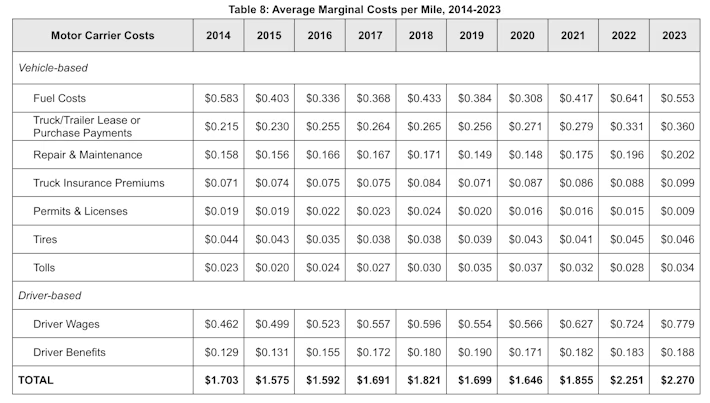
The story of inflation & cost to do business continues to get bleaker for our carrier friends out there. With most freight I see on the board barely being above this $2.27 operating cost estimate is the damage more then people are aware of to the carriers? https://www.ccjdigital.com/economic-trends/freight-demand/article/15678318/permile-cost-of-trucking-hit-record-high-in-2023?utm_medium=email&utm_content=06-26-2024&utm_campaign=CM_NL_CCJ+Daily&utm_source=CM_NL_CCJ+Daily&ust_id=3c8edb5b1c3638e951e9bedb13d445f98bb2419a&oly_enc_id=9629J8650390I5N
2 likes • Jun '24
We just renewed and you guessed it another increase.....we have been accident free and claim free as well. Sucks

Jun '24 •
Shippers are becoming Brokers
Is it common to hear of shippers becoming brokers due to the lack of support they feel they’re receiving? I recently spoke to a company who employed their logistics manager to become a broker so they can have better service.
2 likes • Jun '24
I recently spoke to a company that took this very step; they had their logistics manager become a broker to ensure better service. This move highlights the growing frustration among shippers with the current support landscape and their proactive efforts to enhance service quality. By bringing brokerage in-house, companies can have greater control over their logistics, ensure more reliable communication, and foster stronger relationships with carriers. It also allows them to tailor solutions specifically to their needs, bypassing some of the limitations and inefficiencies they might face with third-party brokers. However, this transition isn’t without its challenges. It requires significant investment in training and infrastructure, as well as a deep understanding of the regulatory environment. Despite these hurdles, many companies find that the benefits outweigh the costs, leading to better service, increased flexibility, and ultimately, greater satisfaction for their customers. This trend reflects a broader shift in the industry towards more integrated and customized logistics solutions. As more shippers take this route, it will be interesting to see how the market evolves and whether traditional brokers will adapt to these changing demands.
Jun '24 •
Good read!! This is happening WAY to much in our industry.
https://www-freightwaves-com.cdn.ampproject.org/c/s/www.freightwaves.com/news/man-charged-with-posing-as-carrier-agent-nabbing-9-5m-in-goods/amp Has something like this happened to you? It has happened to us. The people responsible are still out there, actively running this scam and others like it. My question is, how can we stop them? Who do we report to that will actually assist? We have taken numerous steps: filing a police report with our local PD, contacting police departments in the fraudsters’ state, informing the FMCSA, Carrier411, DOT, the Attorney General’s office, BBB, and even the FBI. The best response we received was after leaving a FreightGuard report, when we were approached by 10 others who had experienced the same thing with these fraudsters.
2 likes • Jun '24
10000% Steven

Jun '24 •
New Freight Skool Hats and Shirts
We got New Winners!! @Bill Robinson is our leader on the 30 day Leaderboard. Thank you for your active participation. You already have a hat. When you got minute send me a selfie with the hat on please. The next 3 on our list get a Free Hat or Shirt for your community participation Congrats @Melissa Rosenthal @Lisa Taylor @Robert Petersen In chat here on Skool send me your address that you would like your swag mailed to. The pic shows the front and back of the shirt and a hat. Let me know if you want a hat or shirt. (Sorry ladies the shirts are just normal T-Shirts not ladies cuts) but we have Medium Large XL 2X in sizes. The hats are banded EZ Fit. Let me know. Also if you receive swag we expect a picture of you wearing it. lol Anybody want free Freight Skool swag? Need be active in our community like these 3 winners. Be at the top of the leaderboard over the next 30 days and you will get free swag! Thanks to all our Skoolmates for your active participation in our Skool community you guys are awesome!

2 likes • Jun '24
Whoa hoo!!! Super excited for my shirt :) Congrats to all the winners!!!
1-10 of 39

@melissa-rosenthal-1661
Experienced Freight Broker excels in transportation and logistics, while balancing the joys of mothering six and caring for 3 fur babies.
Active 784d ago
Joined Apr 16, 2024
Merrillville IN
Powered by