Activity
Mon
Wed
Fri
Sun
Oct
Nov
Dec
Jan
Feb
Mar
Apr
May
Jun
Jul
Aug
Sep
What is this?
Less
More
Addict II Athlete
81 members • Free
3 contributions to Addict II Athlete

Aug 4 •
The Wall
Every athlete eventually meets "The Wall". It is the point where energy drops, doubt gets loud, and quitting starts to sound reasonable. In recovery and in sport, the wall is not always a sign to stop it is often the moment the real work begins. Hitting the Wall In endurance sports, “hitting the wall” describes the sudden crash: fatigue, depleted energy, heavy legs, racing thoughts, and the feeling that the body and mind are fighting each other. The physical discomfort is real. But the danger comes when the mind turns that discomfort into a conclusion: “I can’t do this.” “This is too much.” “I need relief right now.” “I might as well quit.” That is the wall. For someone in recovery, the wall may show up as an urge, grief, anger, loneliness, exhaustion, shame, boredom, or the belief that progress is not happening fast enough. It is the stretch where your old escape routes start calling your name. The Wall Is Not the Finish Line Taking a knee can feel like the only option when the wall shows up. Sometimes the body needs genuine recovery, hydration, nutrition, sleep, or medical attention. But many times, the wall is not an emergency—it is resistance. Resistance shows up right before growth. You do not have to sprint through it. You do not have to feel motivated. You do not have to have every answer. You simply need to refuse the decision to abandon yourself. Make the next play: - Slow your pace, but keep moving. - Take one more breath before reacting. - Drink water, eat something nourishing, and reset your body. - Call a teammate instead of isolating. - Break the distance into the next minute, next mile, or next clean choice. - Replace “I can’t” with “I can do the next right thing.” - Remember why you started when your feelings demand that you stop. Team AIIA Keeps Going The wall teaches you something motivation never can: you are capable of action even when you do not feel strong. You will not always feel inspired to train, attend the meeting, make the call, repair the relationship, face the consequence, or stay sober for one more day. That is why we train. We build the ability to keep showing up when feelings, circumstances, and fatigue argue against it.


1 like • Aug 4
My wall came in the form of 2 broken ribs & the thought that “maybe this is a sign I should just give up on my goal of a 50k this Fall.” My training has taught me that these are the hard times I’ve been preparing for. The next right thing is (Dr approved) walking & a nourishing meal. After all-this too shall pass. It might pass like a kidney stone, but it will pass.
Jul 2 •
Roll Call
Hey Athletes; How are you all doing out there? The good, the bad, the ugly, lets talk.
4 likes • Jul 4
Overwhelmed & struggling with doing all the “adulting” that has been expected of me lately. I’ve been aware enough to remind myself that this too shall pass (even if it passes like a kidney stone, it will pass) and that there is something the current situation is trying to teach me. The first lesson? No is a complete sentence that doesn’t always need an explanation.
Mar 12 •
Let’s go!
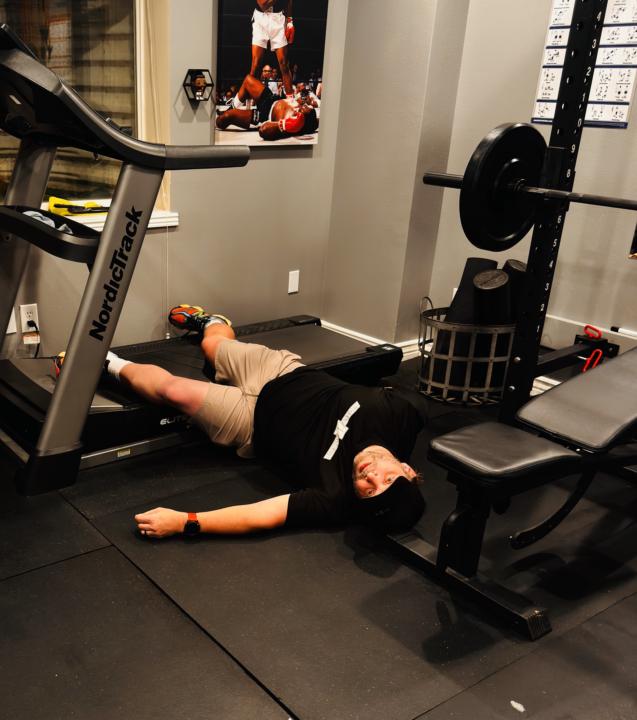
OK athletes the classroom is called the lifestyle lab, that’s where we’re going to post workouts, recipes, professional input things of that nature, but let’s get the dialogue going. I’ll be held accountable by my workouts, as I will be doing at least five workouts per week and as I find food tips, other things like that I’ll make sure you are all aware. So, today’s first workout for me. Check out the lifestyle lab in the classrooms section where we will be posting recipes, workout tips, cool fitness stuff! my day one workout 1 mile warm-up run on the treadmill upper body workout Bench press 4 sets of 12 Bicep curls 4 sets of 12 Shoulder press 4 sets of 12 Dumbbell pull-ups 4 sets of 12 Russian twists 4 sets of 12
3 likes • Mar 24
Started my morning with getting the farm chores taken care of (feeding/watering dogs, cats & chickens) I’ve found that my “workouts” don’t have to be traditional for me to benefit from them. Any movement counts.
1 like • Jun 22
@Loki Skarsgard likewise and congratulations on kicking cancers behind!
1-3 of 3