Activity
Mon
Wed
Fri
Sun
Oct
Nov
Dec
Jan
Feb
Mar
Apr
May
Jun
Jul
Aug
Sep
What is this?
Less
More
How to Spot a Liar
11 members • $5/month
The Black Archive
12 members • $3/month
2 contributions to The Black Archive
May 19 •
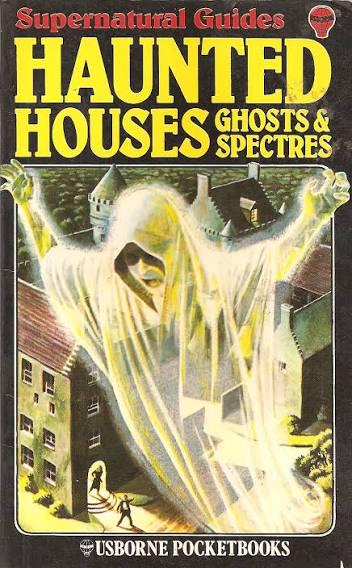
The Usborne Guide to the Supernatural World
There are books people remember fondly from childhood, and then there are books that linger in the mind like old fears never properly explained. The Usborne Guide to the Supernatural World — later absorbed into the World of the Unknown series — belongs unmistakably to the latter category: less a children’s book than a quietly traumatising cultural artefact passed between schoolbags and bedrooms with the conspiratorial gravity of forbidden evidence. To describe it merely as a children’s ghost book is to miss what made it so psychologically effective. It did not feel like fiction. That was the problem. Most books aimed at children contain an implicit contract: dragons are imaginary, monsters belong safely inside stories, and by the final page, normality will be restored. Usborne’s ghost books violated this agreement entirely. They approached the paranormal with a kind of calm administrative seriousness. Here were poltergeists, haunted houses, spectral monks and phantom hitchhikers presented not as entertainment, but as documented phenomena deserving sober consideration. For a certain generation of children, this was deeply alarming. The design alone carried an unsettling authority. The glossy pages. The diagrams. The captions beneath ‘genuine’ photographs. (They are definitely photographs, I’ve since checked.) Everything about the presentation implied rigorous research. The books never seemed excited by ghosts, which made them infinitely scarier. Excitement suggests exaggeration. Calmness implies truth. And then there were the illustrations. It is difficult now to explain just how haunting those images were to children encountering them alone in bedrooms lit only by the weak yellowish glow of a landing bulb. Usborne specialised in a kind of subdued visual dread. Ghosts rarely lunged from darkness. Instead they appeared standing motionless in windows, lingering at the end of corridors or half-visible on lonely roads at dusk. The horror emerged not from violence but from stillness.

2 likes • May 20
For a certain generation of children, this was deeply compelling.
May 18 •
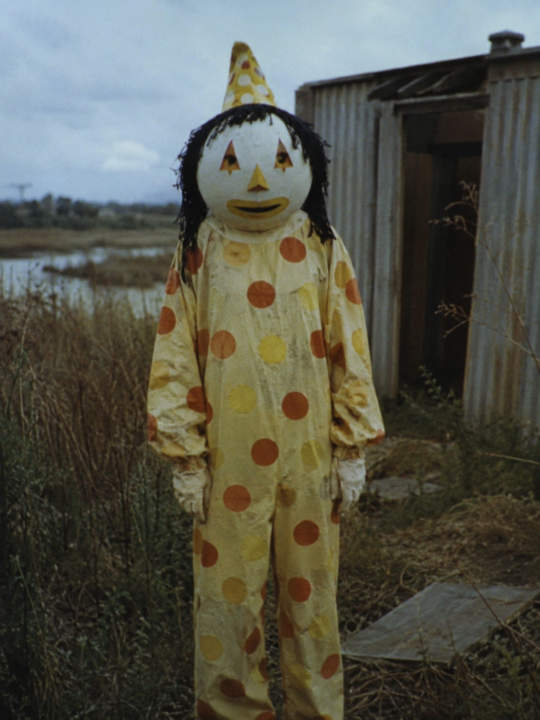
The Sandown Clown
There are some stories that resist classification so completely that they begin to feel less like reported events and more like fragments from a dream someone else had years ago and passed on imperfectly. The Sandown Clown encounter of 1973 belongs firmly in that category: not quite a ghost story, not quite science fiction, not quite folklore, but something stranger than all three. It has the unsettling texture of memory itself — blurred at the edges, absurd in places, yet carrying an emotional weight that refuses to disappear. The story begins innocuously enough. Two children, walking near Sandown on the Isle of Wight, heard a strange noise somewhere across the marshland: a high mechanical wail, rhythmic and unnatural, like machinery attempting to imitate distress. So, they crossed a small footbridge and entered the reeds. What they found there has remained a mystery. The figure was tall and awkward, dressed in a kind of patched costume that resembled a clown outfit designed by somebody who had only received verbal descriptions of clowns second-hand. Its face was white and featureless apart from triangular eyes and painted lips. A black wig hung stiffly around its head. It moved oddly too, lifting its knees high with every step as though uncertain about gravity, or perhaps uncertain about legs. And yet the thing did not threaten them. If anything, it seemed eager for company. “My name is All-Colours Sam,” it reportedly told them, with the solemn confidence peculiar to beings — human or otherwise — who assume they are making perfect sense. That sentence is the detail that transforms the story from mere oddity into something haunting. It has the logic of a sentence spoken in dreams: grammatically correct, emotionally coherent, and completely incomprehensible at the same time. The children accepted it immediately. The entity led them to a strange metallic hut hidden in the marshes. Inside were pieces of furniture, strange equipment and various scraps whose purpose remained unclear. Nothing dramatic occurred there. No revelation. No attack. Instead, the encounter drifted into a kind of gentle surrealism. Sam demonstrated how he ate berries by placing them into one ear, after which they somehow travelled through his head before emerging near his mouth, as though he didn’t really understand the process.
1 like • May 19
It's all highly suspicious that no-one alive, including the children at the centre of the story, appear to have any direct recollection of the events. Just the rambling yarn of a man who saw flying saucers.
1-2 of 2
Active 62d ago
Joined May 11, 2026