Activity
Mon
Wed
Fri
Sun
Aug
Sep
Oct
Nov
Dec
Jan
Feb
Mar
Apr
May
Jun
Jul
What is this?
Less
More
Owned by Aun
Here, we learn practical trauma-healing tools that build regulation and personal capacity. The intention is to move toward post-traumatic growth
Memberships
6 contributions to Trauma Healing Lifestyle

Apr 18 •
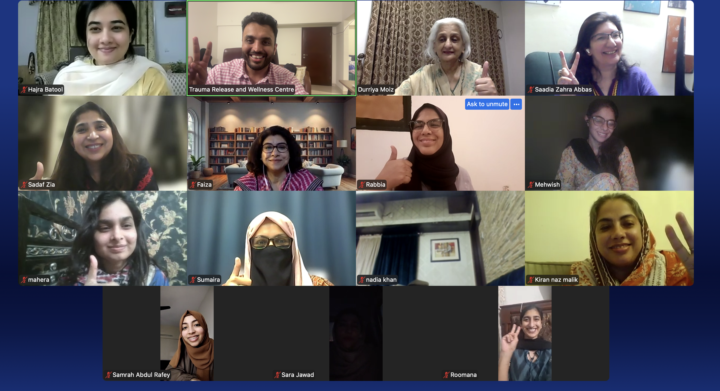
Week 7 of 16 — and look at this room. 🌿
Halfway through our Becoming Trauma Informed training and the energy in these sessions keeps getting richer. What started as a group of practitioners wanting to deepen their clinical lens has become something much more — a genuine community of people doing the inner work alongside the professional work. That's rare, and it doesn't happen by accident. Six weeks in, we've moved through the foundations of trauma, the architecture of the nervous system, and the language of polyvagal theory. We've sat with uncomfortable material. We've challenged assumptions — including our own. And week after week, everyone keeps showing up. Week 7 is where things start to shift. We're moving deeper into how trauma actually lives in the body — not just as a concept, but as something we begin to recognise, hold, and work with in session. This is where the training stops being theoretical and starts becoming embodied. Nine weeks to go. We're just getting started. — Aun
1 like • May 6
@Dr. Kristin Beasley I’m so happy to so coonect with some one who have been on this path of trauma informed care and I’m really hoping this community grows and we all connect in a safe regulated space
Apr 14 •
👋 Welcome to the Community — Let's Start Here
I want to open this space with something simple but important. This community exists because healing doesn't happen in isolation — and neither does learning how to hold space for it. Whether you're a seasoned clinician, a newer practitioner, or somewhere in between, you've likely felt the weight of sitting with trauma — in your clients, and sometimes in yourself. The work is meaningful. It's also demanding in ways that aren't always talked about openly. This is the place to talk about it. So here's my first question for the community: What's one thing you wish you had known earlier in your trauma-informed practice journey? It could be a clinical insight, a boundary you learned to hold, a framework that changed how you see your clients, or simply something that made the work more sustainable for you. Drop it below. No answer is too simple. The most grounding truths usually are. Let's build something real here together. 🌿 — Aun
3 likes • Apr 15
@Syed Samar Abbas really excited for you to be here and we can grow together
2 likes • May 6
@Dr. Kristin Beasley I Could not agree more I’m really believe that more people are starting to acknowledge that change. Thank you for sharing your thoughts and being part of the community
May 4 •
🌿 We Were Part of Something Historic in Indonesia
A few days ago, I was part of the 1000th TRE Workshop in Indonesia. I'm still sitting with it, honestly. There's something that happens when a room full of people — strangers, really — give themselves permission to shake. To stop bracing. To let the body lead for once. It's not dramatic. It's actually very quiet. But something shifts in the space, and you feel it. If you want to see what that looks like 👉 https://youtu.be/xm-xBqt3ga4?si=cLXGl5J3u8SEARNl I share this because this community exists for exactly that reason. Not to learn about healing as a concept. But to actually experience it — together, regularly, in a container that's held with care. For those of you who've been curious about the live sessions, here's what's available inside the premium membership: Tremor Circle — bi-monthly group TRE sessions online. A space to practice, regulate, and be witnessed. No experience needed, just willingness. Practitioners Q&A — for the clinicians and therapists here who are working to bring trauma-informed care into their practice. A space to bring the real questions — the ones that don't have easy answers. Both are in the Calendar inside this community. If something calls to you, the next step is simply upgrading to premium membership and signing up. The Door is Open 🌿 — Aun
2
0
Apr 21 •
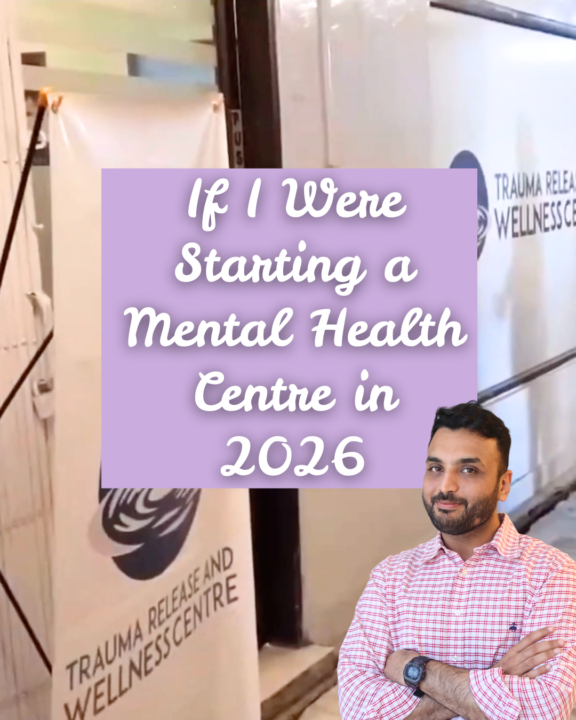
If I were starting a mental health centre in 2026, this is what I'd do differently. 👇
Most people think building a clinic is about the right location, the right therapists, the right price point. It's not. It's about the values you lead with before a single client walks through the door. After 10+ years in Mental Health care, here's what I know to be true: 🔹 Hire for values, not just credentials 🔹 Care starts from the very first phone call 🔹 Personal growth IS business growth 🔹 Build a community — not just a client list 🔹 Find mentors who've walked the path 🔹 There is no failure — only feedback The centres that last aren't built on systems alone. They're built on nervous system regulation, relational integrity, and a team that genuinely believes in the work. Save this if you're building something in the mental health space. 🙏
Apr 16 •
The Muscle Memory of Identity
When we begin nervous system regulation work, whether through TRE, somatic therapy, or consistent bodywork; something unexpected happens. We don’t just feel calmer. We become different people. And there’s a grief in that we don’t always talk about. The Muscle Memory of Survival Our nervous system learned to survive in a particular way. It built patterns - tension in the shoulders, breath-holding, a certain sharpness in the eyes, a readiness that never quite turned off. These patterns became us. They were woven into how we moved, how we related, how we showed up in the world. That hypervigilance? It kept you alive.That perfectionism? It protected you.That people-pleasing? It was smart strategy in an unsafe environment. Your nervous system wasn’t broken. It was brilliant. It adapted. The Plot Twist: Regulation Changes the Game But then you learn to regulate. You do the shakes. You breathe differently. You notice the held tension and you actually let it go instead of white-knuckling through life. And slowly- sometimes quickly- you are not the same person anymore. You don’t react as sharply. You don’t need to control everything. You can actually rest without feeling like you’re dying. Your capacity for joy expands, but so does your capacity to notice what you’ve lost. The Active Grief This is where people get stuck, and it’s rarely named: You are grieving who you were. Not because that person was bad. But because: • That person made sense in a way the new you is still learning • That person had answers, even if they were exhausting answers • That person’s hypervigilance kept you from being blindsided (or so it felt) • That protective tension was familiar—it was home • The identity built on survival was the only identity you knew Now you’re building a new one. And it’s messier, slower, less certain. The new you doesn’t have all the armor. And that’s terrifying—even as it’s also freedom. The Muscle Memory Won’t Leave Here’s what’s important: the old patterns don’t disappear. They become optional.
6
0
1-6 of 6

@aun-ali-6706
Mental Health Founder, Trauma Therapist, (TRE) Trauma and Tension Release Exercise Provider, Founder and Clincal
Active 32d ago
Joined Mar 4, 2026