Activity
Mon
Wed
Fri
Sun
Nov
Dec
Jan
Feb
Mar
Apr
May
Jun
Jul
Aug
Sep
Oct
What is this?
Less
More
Ayurveda Ambassador Network
221
Free
7 contributions to Ayurveda Ambassador Network

Feb 17 •
Nāḍī Parīkṣā — Lineage or Logic?
Do you read pulse — or do you question its clinical reliability? One hand or both… and why? Do you take the pulse on the right or left side depending on your patient’s gender? And what do you do in the case of transgender clients? What is driving your method — tradition, training, or direct experience?


1 like • Feb 20
Nadi Pariksha is most consistent when used for: • Prakruti confirmation • Doshic trend observation • Monitoring response to treatment It should always be correlated with: Darshana: by observation Sparshana: touch ( where Nadi pareeksha is applicable ) Prashna: questioning Without that, it becomes performance not science. Shastra :Authoritative classical knowledge (textual foundation)+ Yukti : Logical application or clinical reasoning or rational interpretation+ Anubhava :Direct experiential knowledge gained through practice That is where authenticity lies.
Feb 20 •
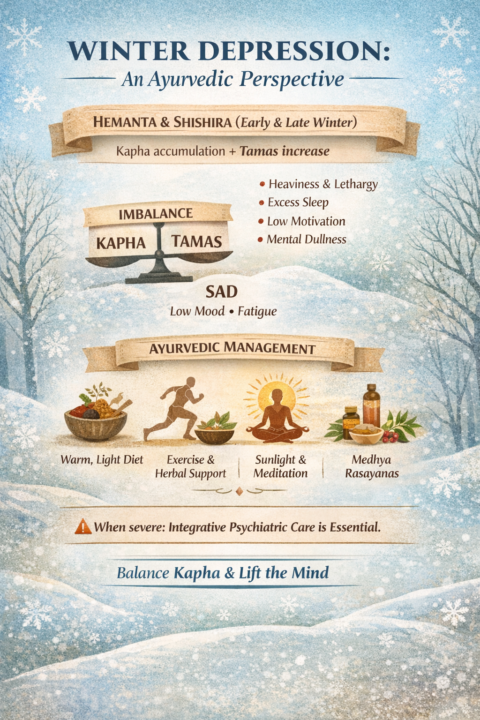
Winter Depression is Real- Ayurved Explained it Centuries Ago
Living in Canada, we clearly see it every year. •Low mood •Excess sleep •Carb cravings •Weight gain •Lack of motivation Modern medicine calls it Seasonal Affective Disorder (SAD). But Ayurveda has long described this seasonal shift through Ritucharya (seasonal physiology). What Do the Classics Say? In Hemanta & Shishira Ritu (early and late winter), Ashtanga Hridaya explains: • Agni becomes strong due to external cold • Kapha begins to accumulate (Sanchaya) • Heaviness, sluggishness, lethargy increase Kapha shares qualities of: Guru (heavy) Manda (slow) Sthira (static) Snigdha (dense) Now correlate this with winter symptoms. The similarity is striking. The Mind Connection Charaka Samhita describes the mind as influenced by: • Sattva (clarity) • Rajas (activity) • Tamas (inertia, dullness) Winter → Reduced sunlight → Reduced Tejas stimulation ↓ Kapha accumulation + Tamas predominance ↓ Emotional heaviness, withdrawal, low enthusiasm Ayurveda recognized this seasonal mental shift long before the term “SAD” existed. Ayurvedic Approach to Winter Low Mood Since this is primarily a Kapha–Tamas dominant state, management includes: Deepana & Kapha Shamana • Warm, light foods • Dry ginger, Pippali • Honey (in moderation) • Avoid excess sweets & heavy meals Vyayama (strongly advised in winter) Ashtanga Hridaya encourages more intense exercise in this season. Udvartana & Swedana Reduce Kapha stagnation. Sattvavajaya Chikitsa • Meditation • Breath work • Sun exposure • Structured routine • Meaningful engagement Medhya Rasayanas (when indicated) Brahmi, Shankhapushpi, Ashwagandha (individualized approach) Important Clinical Note Not every winter sadness is clinical depression. But when symptoms are severe, persistent, or affect daily functioning, integrated psychiatric care is essential. Ayurveda supports the terrain. Modern psychiatry manages acute pathology. Integration protects the patient. Seasonal rhythms affect physiology and psychology.
1
0
Feb 16 •
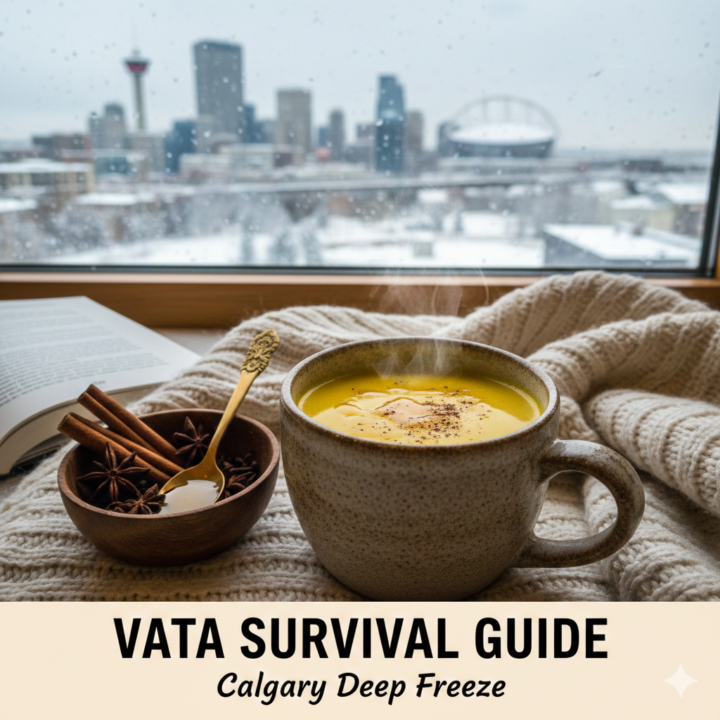
From +9°C to -30°C: The "Vata" Survival Guide for Calgary’s Deep Freeze
Calgarians, we knew the "False Spring" wouldn’t last, but a 40-degree drop in one week is more than just a wardrobe challenge—it’s a shock to the biological system. If you’ve been feeling a sudden onset of migraines or a persistent dry cough since Sunday, you aren't alone. In Ayurveda, this extreme shift is the definition of a Vata Imbalance. When the environment becomes "Vata" (cold, dry, and erratic), our bodies mirror those qualities. The dryness steals moisture from our respiratory tracts (the night cough), and the cold constricts our nervous system (the migraine). How to "Bio-hack" this deep freeze using Ayurvedic principles: • Lubricate from the Inside Out: Your body is losing moisture to the -30°C air. Add a teaspoon of Ghee or healthy oils to your meals. It’s not just food; it’s internal insulation for your throat and joints. • The "Golden" Rule: Swap the iced coffee for Warm Turmeric Milk. The warmth settles the "wind" in the body, while the turmeric and fats soothe the dry membranes causing that nighttime tickle. • Grounding over Grinding: When the weather is erratic, your routine shouldn't be. Stick to consistent mealtimes and try a 5-minute warm oil foot massage (Abhyanga) before bed. It signals your nervous system to "ground" despite the storm outside. • Warmth is Medicine: This isn't the week for raw salads or cold smoothies. Focus on "Agni-boosting" foods—soups, stews, and ginger tea. The weather is outside of our control, but our internal climate doesn't have to be. Stay warm, stay hydrated, and let’s get through this cold snap mindfully. ☕️🥣 #CalgaryWeather #YYC #Ayurveda #WellnessAtWork #VataSeason #HolisticHealth #CalgaryWinter
1
0
Feb 16 •
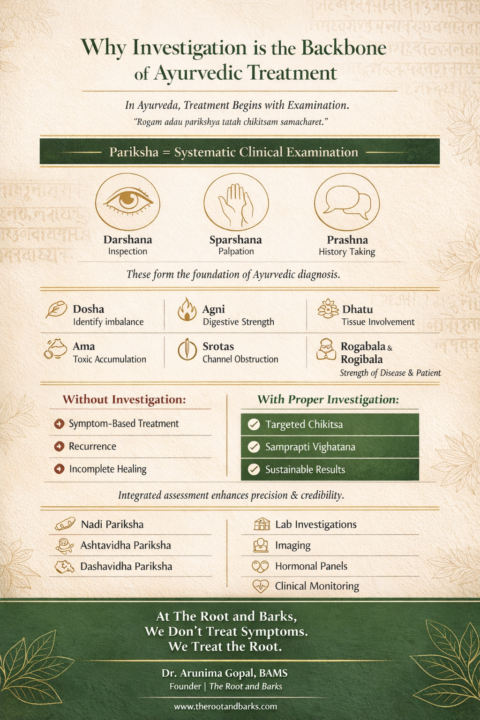
Why is investigation the backbone of treatment in Ayuveda
In classical Ayurveda, treatment is never symptom-based alone. It is rooted in Pariksha — systematic examination. Acharya Charaka clearly states : रोगम् आदौ परीक्ष्य ततः चिकित्सां समाचरेत्। First examine the disease thoroughly, then treat. This principle remains profoundly relevant in modern clinical practice. Why Investigation Matters in Ayurveda: Identifies Dosha involvement Assesses Agni status Detects presence of Ama Determines Dhatu & Srotas involvement Evaluates Rogabala & Rogibala Guides choice between Shamana and Shodhana Without understanding Samprapti (pathogenesis), treatment cannot be truly effective. Classical Tools of Examination: • Trividha Pariksha (Darshana, Sparshana, Prashna) • Ashtavidha Pariksha • Dashavidha Pariksha These allow individualized medicine — the true strength of Ayurveda. Relevance in Contemporary Practice In conditions like PCOD, Diabetes, Thyroid disorders, and Autoimmune diseases, integrating: Laboratory investigations Imaging Clinical documentation enhances diagnostic clarity, safety, and credibility. Ayurveda is not guesswork. It is analytical, structured, and deeply investigative. Proper Pariksha → Clear Samprapti → Targeted Chikitsa → Sustainable Healing
1
0
Feb 16 •
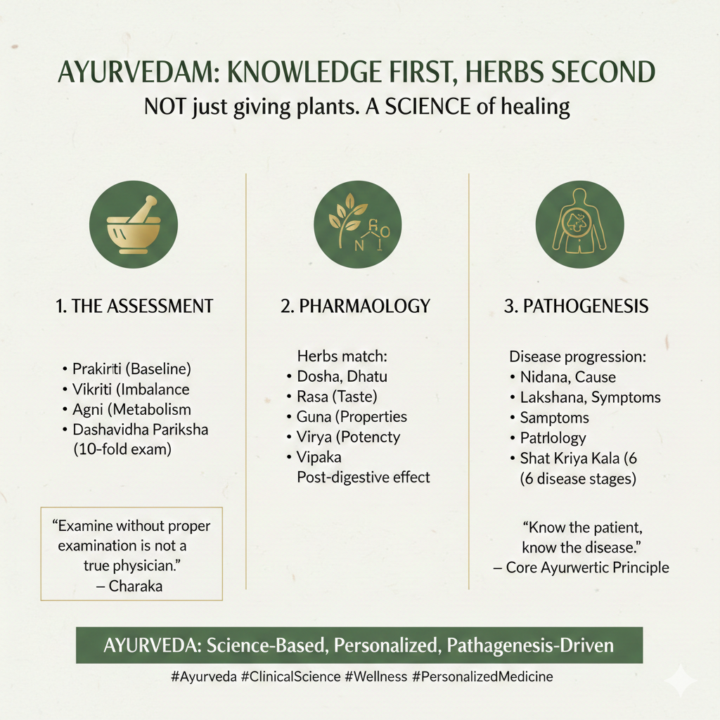
Beyond the Bottle: The Clinical Rigor of Ayurveda
Most people think Ayurveda "Take Ashwagandha for stress." That’s not Ayurveda. That’s a retail transaction. यो रोगं निरीक्ष्य विना चिकित्सते सः न खलु भिषक्। – चरक” One who treats without proper examination is not a true physician.” अज्ञानयुक्तः चिकित्सकः विषं वा अग्निः समानः। – चरक” “A physician lacking knowledge is as dangerous as poison or fire.” – Charaka True Ayurveda is a sophisticated clinical framework built on the intersection of biology, environment, and pathogenesis. As the Charaka Samhita reminds us: “One who treats without proper examination is not a true physician.” Before a single herb is ever prescribed, a practitioner must navigate a multi-dimensional diagnostic map: 1. The Clinical Assessment (Pariksha) We don't just look at the disease; we look at the host. • Prakriti: Your genetic/phenotypic baseline. • Vikriti: The current state of imbalance. • Agni: The metabolic integrity of the system. • Dashavidha Pariksha: A rigorous 10-fold examination of strength, age, and habitat. 2. The Science of Dravyaguna (Pharmacology) Ayurvedic pharmacology isn't "this herb for that symptom." It’s a complex chemical match: • Rasa (Taste): Initiates the neural response. • Virya (Potency): The thermogenic effect (heating or cooling). • Vipaka (Post-digestive effect): How the body transforms the substance after metabolism. 3. Shat Kriya Kala (Pathogenesis) We don't wait for a lab report to show an "out of range" value. Ayurveda tracks disease through six distinct stages—from the first sign of accumulation (Sanchaya) to the final manifestation (Bheda). We treat the trajectory, not just the destination. Knowledge first. Herbs second. Always. If the treatment isn't individualized based on Samprapti (pathogenesis), it isn’t Ayurveda—it’s guesswork. Let’s move the needle from "herbalism" to "personalized clinical science."
1
0
1-7 of 7
@arunima-gopal-5240
Ayurvedic Doctor,Hormonal & lifestyle disorders.Helping modern women reverse PCOD naturally through classical Ayurveda & practical lifestyle changes.
Active 240d ago
Joined Feb 6, 2026
Calgary