Activity
Mon
Wed
Fri
Sun
Jul
Aug
Sep
Oct
Nov
Dec
Jan
Feb
Mar
Apr
May
What is this?
Less
More
Owned by Angela
A global village for expat mums to grow, connect & feel at home in themselves wherever they are in the world. 🌍
Katie's Readers is a global community of youth volunteers bringing reading, creativity and connection to underserved schools in their communities. 🦋
Memberships
Sticky Business
22 members • Free
Confident Content Club
18 members • Free
Skoolers
184.8k members • Free
Grow With Evelyn
2.7k members • $33/month
Growers
2.3k members • Free
EverAds
384 members • Free
the skool CLASSIFIEDS
1.8k members • Free
UNSHKBL-WMN
89 members • Free
The Clarity Collective
12 members • Free
21 contributions to The Clarity Collective

Mar 6 •
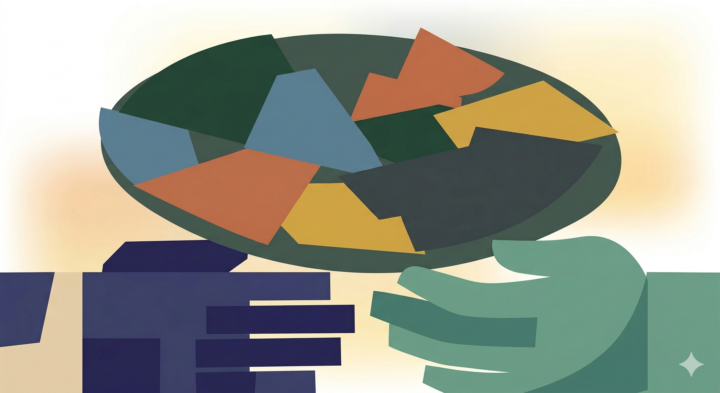
Lately, life has felt like a lot.
Our house is on the market, we’re preparing to move 45 minutes south, it’s the height of tax season, and Mike can’t lift anything while he waits for hernia surgery. On top of that, my 93‑year‑old father is recovering from a severe fall, and my heart is stretched across the world as people I love navigate frightening, unfamiliar events. In all of this, the practices that usually ground me — writing, reading, reflection — have been harder to reach. Some days it feels like the world is rushing by faster than I can move. I know I’m not the only one carrying a lot right now. If you’re in a season that feels heavy, disorienting, or simply full, you’re welcome to bring that here. This community is a place to show up as you are, steady, scattered, hopeful, overwhelmed, or anything in between. What’s on your plate today, and how are you holding it?

🔥
1 like • Mar 6
@Danna Owen, MS I'm so sorry to hear about your father, Danna, I hope he recovers quickly. You are certainly carrying a lot these days. It can be so hard to slow down and take care of ourselves when the world is asking so much of us. Take care of you, dear one. I'm sending you a big warm hug from across the pond, may it stretch far and wide to the many, many people who need a little extra love and compassion during these uncertain times. Big love to you 🩷🧡
🔥
0 likes • Mar 30
Hey there @Danna Owen, MS Just checking in.... howze life lately?
Mar 23 •
Where We Last Left Things
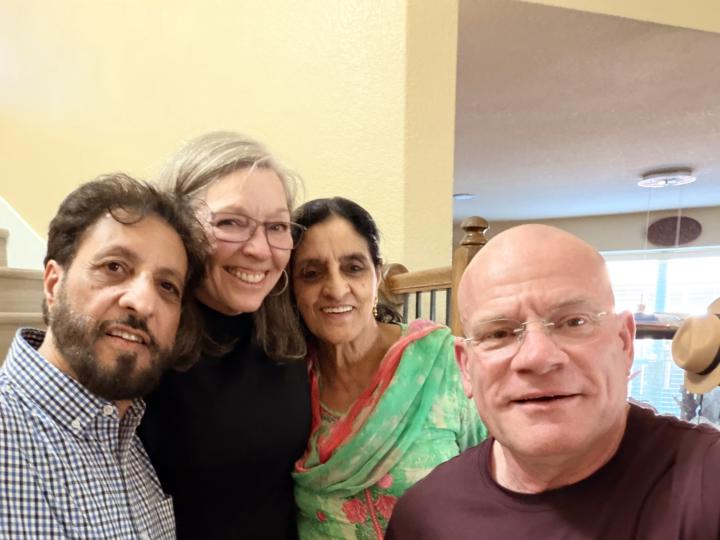
It’s been nearly fifteen years since I last sat across from my dear friend. The last time we were together, we were both in hard places, tired, stretched thin, carrying more than we could say out loud. Our conversations were heavy, honest, tear‑stained. It was a difficult moment to part, and for a long time I wondered if that was simply where the story would end. But this week, nearly fifteen years older, with more life lived and survived, we found our way back to each other. We acknowledged the hard years, yes, but more importantly, we remembered the joy. We caught each other up on the chapters we’d missed. We shared a meal. I met the older sister I had only ever known by name. He met my husband. We talked about the world, about family, about the strange and beautiful ways life keeps moving. And somehow, time felt irrelevant. We picked up exactly where we left off, as if the thread between us had never frayed. Before we parted, we made plans for the next meeting. This time in India, at his home, where we’ll celebrate our friendship again and tell the stories that have unfolded since this reunion. I know I’ll carry the anticipation with me, just as I did all those years ago. And if life allows, his sisters and my husband will be there too, and we’ll gather as we once did, older, softer, grateful. Friendship has a way of reminding us that some connections don’t disappear; they simply wait for us to return. If you’re holding a story of reconnection, of longing, of someone who remains woven into your life even across distance, I’d love to hear what’s stirring for you today.
🔥
0 likes • Mar 24
@Rhimah Ajlouni Right!? The only thing is, she's not coming until November and he's not going to tell her until October, so I have to keep it a secret for all that time! 😫
🔥
1 like • Mar 24
@Rhimah Ajlouni I know! I think I can’t speak to her until then! 🤐😂 I think we’re going to do a very traditional English birthday party, so your ideas are welcome! Also, she’s in my community, so 🤫
Mar 21 •
Book Club - CANCELLED!
Seems every one is out of pocket for today so we will plan to not meet for book club today. Enjoy your Saturday!
🔥
1 like • Mar 21
I'm so sorry, @Danna Owen, MS , it's been a absolutely crazy week for me. 😢
🔥
0 likes • Mar 22
@Danna Owen, MS oh my goodness. I’m ready to try again to put a call on the calendar, but only if it’s not adding to your workload! 🥰
Mar 9 •
Something you need to know about me…
SLEEP! I’ve been know to stand up in the midst of a party (yep, even ones I’ve hosted at my own home) and bid everyone “good night” and ask that the last person to leave lock the door. Sleep is #1 for me. I go to bed at a regular time and get up at a regular time. I like a place for everything and everything in it’s place. Not just any place but a thought out place related to how things will be used. Plus, I’m not a fan of getting off schedule so when I am off schedule I am on a mission to GET IT DONE! Am I hard to live with? Sometimes. 😅 But here’s the thing—this is also how I get results, protect my energy, and stay consistent. Structure gives me freedom. Sleep fuels everything. Systems save my brainpower. I’m sharing this because a lot of people think success comes from doing more, when often it comes from doing things on purpose. Curious—what’s the one non‑negotiable that keeps your life running smoothly? 👇

🔥
0 likes • Mar 9
I agree - Sleep. Is. Everything. 😴
Mar 6 •
When Betrayal Isn't About Them at All
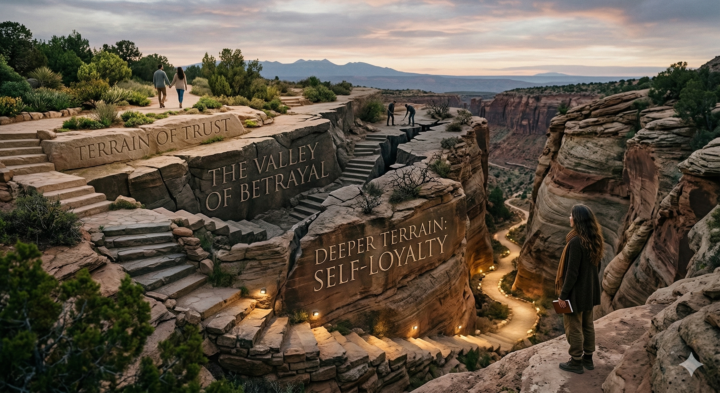
Betrayal is one of those words that lands with weight. It carries history, memory, and a kind of bone‑deep knowing. It’s no wonder literature, philosophy, and spiritual traditions treat it as sacred terrain. Betrayal touches the very thing that makes us human. TRUST. Can you be disappointed by another without betraying your own soul? It’s a question that doesn’t just ask us to look at what others have done. It asks us to look at the places where we abandon ourselves. And across time, thinkers and writers have been circling this same truth from different angles. James Hillman wrote that betrayal is the moment innocence ends. Like a rite of passage, not as punishment, but as initiation. Until trust is broken, we don’t fully understand what trust is. Betrayal forces us out of fantasy and into reality. It asks us to see the other person clearly and to see ourselves clearly, too. It's not easy. It's deeply maturing. Maya Angelou reminds us that people reveal themselves long before we’re ready to believe them. Dante places betrayers in the lowest circle of hell. Betrayal fractures the invisible threads that hold relationships and communities, together. It’s not just the act. It’s the quiet afterward. The look. The knowing. Shakespeare tells us, be true to yourself first. Most of us were taught the opposite. Keep the peace. Be loyal. Stay agreeable and don't disappoint. Self‑abandonment is still betrayal. It just happens quietly, in the places no one else can see. C.S. Lewis reminds us that only someone we love can betray us. Strangers can hurt us, but they cannot betray us. Which means betrayal is not proof of foolishness. It is proof that we dared to love. Where have you been more afraid of betraying someone else than betraying yourself?
🔥
1 like • Mar 6
@Danna Owen, MS I've come to realise in recent years that my entire life has been spent tip toeing around so as not to betray others and in that completely betraying myself. Making amends with myself, healing, forgiving and establishing boundaries has been quite the journey, one that I am still navigating.
1-10 of 21

🔥
@angela-walker-5899
Creating a global village 🌍 for expat mums to grow, connect & feel at home in themselves wherever life takes them. 🦋
Online now
Joined Nov 20, 2025
Liverpool, UK
Powered by