Activity
Mon
Wed
Fri
Sun
Nov
Dec
Jan
Feb
Mar
Apr
May
Jun
Jul
Aug
Sep
What is this?
Less
More
Owned by Andrew
Communication skills for tech professionals and leaders. Stop being overlooked. Start being heard.
Skoolers
154.2k
Free
20 contributions to Command The Room

May 9 •
Challenges that bring development
One of the biggest misconceptions about public speaking confidence is that confident speakers are somehow fearless. They’re not. Most people who appear calm, articulate, and composed in front of a room simply learned how to move forward despite uncertainty. For me, that lesson came in the most uncomfortable way possible. A few years ago, I was asked to fly to Belgium to deliver a 90-minute seminar. On paper, it sounded like a great opportunity. In reality, it was the kind of situation most professionals quietly dread. The night before the seminar, I was on the flight — and I still hadn’t even seen the presentation slides. No polished rehearsal. No perfectly memorised structure. No feeling of control. Just a long flight, growing pressure, and the uncomfortable awareness that in less than 24 hours I would be standing in front of a room expected to deliver value for an hour and a half. Normally, this is exactly the kind of scenario people believe destroys confidence. Ironically, it became one of the experiences that built mine. Because despite the lack of preparation around the slides themselves, I realised something important: I knew the subject deeply. And that changed everything. When the seminar started, something unexpected happened. Instead of obsessing over how I looked, whether I sounded polished enough, or whether every slide was perfect, my attention shifted entirely to the audience and the value I could give them. The pressure became secondary to the purpose. And the session went well. Not because it was flawless. Not because I suddenly became naturally confident. But because I stopped treating public speaking as a performance and started treating it as service. That experience completely changed the way I think about communication. Since then, whether speaking at work, teaching others, or presenting ideas professionally, I’ve learned that confidence rarely comes from eliminating discomfort. It comes from repeatedly facing situations that stretch you and realising you’re more capable than you thought.
0
0
Apr 18 •
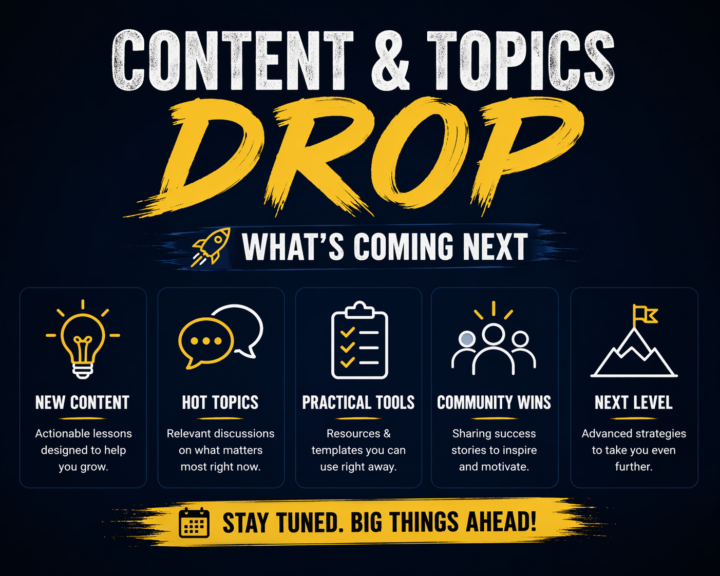
Content & Topics Drop — What's Coming Next
I've been doing some research into what actually drives engagement in this space, and a few things stood out that I want to share with you — because they shape what I'm building for this community. The content that resonates most blends real stories with data. Not one or the other. The best communicators in tech don't just tell you what worked — they show you why it worked. That's the approach I'm taking here. I'm also dialling in on a gap I keep seeing: content built specifically for tech managers and leaders. If you're in that space, you know the challenge. You've got the technical credibility — but stepping into the room and owning it as a communicator is a different skill entirely. Two topics I'm exploring for upcoming content: 1. Tech-Savvy Executive Presence — what communication actually looks like for modern managers, beyond the generic advice that doesn't account for how tech teams think and operate. 2. Debunking Communication Myths in Tech — the stuff you've been told about presence and persuasion that top leaders quietly ignore. If either of those lands with you — or if there's a specific communication challenge you're wrestling with right now — drop it in the comments. I'm building this around what you actually need. Want me to adjust the tone, make it shorter, or add a specific hook at the top? Andy
0
0
Apr 7 •
Your code ships. Your ideas don't. Here's why.
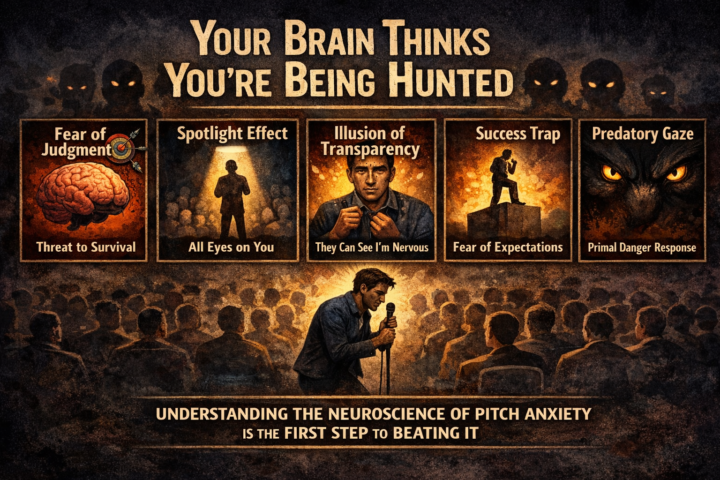
75% of professionals experience public speaking anxiety. In technical roles, that number is even higher — one study found over 56% of future technical professionals show moderate to high speech anxiety. You can be the smartest person in the room and still lose the room. Here's what your brain is actually doing — and why it's not a weakness. 1. Fear of negative evaluation The fear of being judged harshly by peers — especially in rooms full of people who know their stuff — is the primary driver. The more expert the audience, the higher the perceived stakes. 2. The Spotlight Effect You stumble over one word and assume everyone noticed. They didn't. Research shows audiences are focused on the message — or their own thoughts — not your filler words and hesitations. 3. The Illusion of Transparency You feel panicked inside, so you assume it's obvious. It isn't. Studies show internal physiological states are largely invisible to observers. Knowing this alone has been shown to measurably improve performance. 4. The Curse of Knowledge You think the audience knows you skipped a slide or lost your thread. They don't. They have no access to your internal plan — only what you actually said. 5. The Brain Freeze Cortisol — the stress hormone — can physically disconnect your prefrontal lobe from the rest of your brain under pressure. This is why even the most prepared engineer can go completely blank mid-presentation. It's biology, not incompetence. 6. The Evolutionary Threat Response Your brain hasn't caught up with the conference room. Multiple pairs of eyes fixed on you trigger the same primal threat response as being watched by predators. The fight-or-flight system fires whether the audience is investors or a room of your own colleagues. Here's the real cost: research is clear that public speaking proficiency often matters more than technical skill for career advancement. The engineer who can't present their ideas doesn't advance. The one who can, leads. The gap between technical excellence and communication confidence is where careers stall — and where they accelerate.
0
0
Apr 6 •
Three Trends That Just Changed the Communication Game (April 2026)
I've been tracking what's happening in the leadership communication space, and three massive shifts just crystallized this week. If you're coaching professionals or building your own speaking practice, you need to know about these: ─── 1. "Human Premium" Is Now a Competitive Advantage Audiences are actively rejecting AI-generated content—and they're willing to pay more for authentic human presence. Voice, body language, credibility at scale... these aren't "soft skills" anymore. They're economic moats. If you've been wondering whether to invest more in your on-camera presence or speaking skills: the market just answered. The premium is real. ─── 2. Executive Presence Just Flipped Upside Down Harvard Business Review dropped a bomb this month: "When Executive Presence Backfires." The old model—confidence, decisiveness, command-and-control authority—now undermines credibility at senior levels. What works instead? Vulnerability. Listening. Admitting limitations. This isn't touchy-feely theory. It's what separates leaders who plateau from leaders who scale. The game changed, and most people missed it. ─── 3. The 73% Skills Gap No One's Talking About 73% of professionals lack communication training. Managers don't understand emotional intelligence. High-volume communication drives burnout. But here's the real gap: Technical professionals who can't explain complex ideas to non-technical audiences. CTOs, engineers, founders—they have deep expertise but struggle to translate it. This is the most underserved niche in professional communication right now. And it's wide open. ─── Why This Matters: If you're building a speaking practice, these aren't just "trends"—they're positioning opportunities. The people who own "authentic executive presence for technical leaders" or "frameworks for explaining complexity" are going to dominate 2026-2027. The question isn't whether communication matters. It's whether you're teaching the right kind of communication for right now.
0
0

Apr 5 •
Three Communication Trends That Flipped This Week (And What They Mean for Tech Leaders)
I track what's working in leadership communication content across YouTube, HBR, Stanford, and top channels. This week's trends were... surprising. 1. "Speaking Less" Just Beat "Speak Up" 🤐 Stanford research just went viral: strategic silence increases perceived influence more than speaking frequently. The old advice was "contribute more in meetings." The new reality? Timing > volume. Tech leaders who speak less but nail the moment are getting promoted faster than the verbose ones. Why it matters for us: If you're naturally introverted or come from an IC background, this is your superpower. The game changed. 2. Executive Presence Can Actually Backfire 🎭 HBR just published "When Executive Presence Backfires" — and it's getting massive traction. The behaviors that got you promoted (bold, confident, decisive) can isolate you at senior levels. The "command the room" energy that worked as a manager reads as unapproachable when you're leading leaders. The twist: Vulnerability and composure > confidence and charisma at the top. 3. 82% of High-Achievers Have Imposter Syndrome... And It Gets WORSE at Leadership Levels 📊 New research shows imposter syndrome doesn't fade with seniority — it intensifies. The more capable you become, the more you feel like a fraud. Why? Because the stakes are higher, the room is more senior, and you're dealing with ambiguity instead of technical problems you can solve. The opportunity: Competence-based charisma beats validation-seeking confidence. You don't need to "fake it till you make it." You need frameworks that let your actual expertise show. ─── 💬 Question for the group: Which one resonates most with your current challenge? A) Learning when to stay quiet (strategic silence) B) Softening your presence without losing authority C) Dealing with imposter syndrome at a new level Drop a letter in the comments. Curious where everyone's at right now. ─── P.S. If you want the detailed breakdown of what's working in leadership communication right now (titles, formats, content gaps), I can share the full research notes. Just shout.
0
0
1-10 of 20

@andrew-henry-9455
Navy Veteran, Company Founder, Author, Speaker and Tech company entrepreneur who loves helping others overcome their fear of public speaking.
Active 95d ago
Joined Feb 28, 2026