Activity
Mon
Wed
Fri
Sun
Nov
Dec
Jan
Feb
Mar
Apr
May
Jun
Jul
Aug
Sep
Oct
What is this?
Less
More
Selling Online / Prime Mover
36.8k
Free
AI Academy
103
$67/m
Funnels University
1.1k
$97/m
Skool Course
36.7k
$29/m
OfferLab
9.4k
Free
1 on 1 Coaching
8.1k
Free
Freedom Fastlaner
6.5k
Free
Shibumi
357
$150/m
Creators
17.6k
Free
51 contributions to Selling Online / Prime Mover

Aug 18 •
Groove was losing 85% of new users. One refocus fixed it (+300% activation)
Groove had a solid-looking onboarding flow and still lost 85% of new users. Here's how they turned it around: 1. They removed several features (less to absorb). 2. They asked their most engaged customers what their "aha moment" was. The answer: when they created a mailbox and saw their new dashboard. 3. They checked the data and found users who created a mailbox in the first session were nearly 500% more likely to come back. 4. They rebuilt onboarding to focus on one thing, getting users to that single action. Activation rose over 300%. The lesson for any course, membership, or SaaS: people don't quit because your product is bad. They quit because they never reached the part where it gets good. Your job is to find the one action where it clicks, then relentlessly guide every new user to it. What's the single action a new customer must take before your thing becomes obviously worth it? And is your onboarding obsessed with that, or scattered across ten features?

Aug 17 •
Your return policy is costing you sales you never see
Most funnel builders never think about the return/refund policy as a conversion lever. The data says they should: - 88% of shoppers read the return policy before buying. - 15% abandon the cart if the return policy is unclear. - 51% won't buy at all if a return label isn't included. - Only 42% are satisfied with how returns usually work. That 15% is the killer. One in seven people are at your checkout, ready to buy, and a vague or scary return policy quietly talks them out of it. You never get an email about it. They just don't complete. A clear, generous, easy-to-find guarantee or refund policy isn't a cost center. It's a conversion tool, because it removes the "what if this doesn't work out?" fear right before payment. Go find your refund or guarantee policy. Is it clear, visible near the buy button, and reassuring? Or is it buried, fuzzy, and written to protect you instead of comfort them?

Aug 14 •
Writing the button in first person lifted conversions 24%
Most buttons are written from the company's point of view. "Try [Product] Free." Technically fine. Forgettable. Joanna Wiebe, the copywriter who basically defined conversion copywriting, ran a test. Control: "Try Schedulicity Free." Variation, switched to first person and led with the outcome: "End My Scheduling Hassles." The first-person, benefit-led version won by 24%. The shift is tiny but it's everything: write the button as the thought going through the customer's head, not the command you want to give them. "Start my free trial" beats "Sign up." "Send me the guide" beats "Submit." "Show me the funnel teardown" beats "Click here." It works because the button now finishes the customer's own sentence ("I want to…"), so clicking feels like their idea. Go read your main button out loud. Does it sound like something you're telling them to do, or something they'd say to themselves?

Aug 13 •
They made the guarantee scarier for themselves, and sales jumped 133%
This one takes nerve. A company changed their guarantee from a standard "30-day money-back guarantee" to something far bolder: "100% money-back within six months, and double-your-money-back within the first 30 days." The results: - Zero refunds in the first 30 days (nobody actually invoked the double-your-money clause). - Six-month refunds rose slightly, from 4% to 6.5%. - Sales rose over 133%. The math is wild. A 2.5-point bump in refunds bought a 133% jump in sales. The bold guarantee removed so much purchase risk that vastly more people bought, and the tiny increase in refunds was a rounding error against the extra revenue. A strong guarantee feels terrifying because you imagine everyone abusing it. In reality, a confident, generous guarantee signals that you believe in the product, and most buyers never use it. How strong is your guarantee? Strong enough to actually remove the fear, or hedged enough to protect you and convince no one?

Aug 6 •
A 10-second timer turned a popup into a 500% subscriber boost.
The University of Alberta increased email subscribers by 500% with one well-timed, well-worded popup. It waited until someone had spent more than 10 seconds on the site, then asked: "You seem interested in UAlberta news. Would you like to sign up for the Daily News email?" Two things made it work. The 10-second delay meant it only showed to people who'd shown genuine interest, not everyone who landed and bounced. And the wording acknowledged what the person was already doing ("you seem interested in…"), so it felt like a natural offer instead of an interruption. Most popups fail because they fire instantly and shout the same thing at everyone. A popup that waits for a signal of interest, then references that interest, converts on a different level. If you run a popup, when does it fire, and does its wording acknowledge what the visitor's actually there for?

1-10 of 51
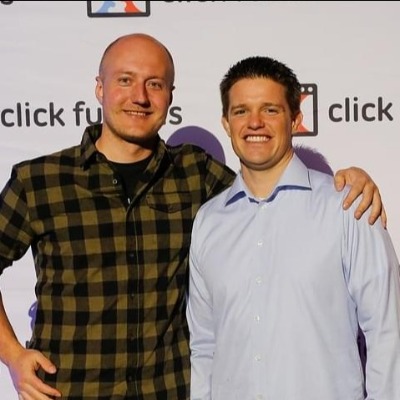
@andrew-bobchenok-9617
Certified Clickfunnels & Funnelytics Expert. I will optimize your funnel FOR FREE for 30 days
➡️ DM me
Active 2d ago
Joined Aug 20, 2024
Powered by