Activity
Mon
Wed
Fri
Sun
Dec
Jan
Feb
Mar
Apr
May
Jun
Jul
Aug
Sep
Oct
Nov
What is this?
Less
More
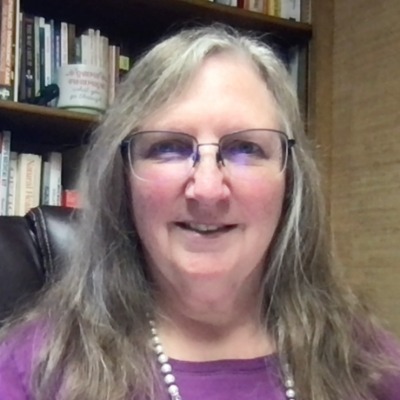
Owned by Christie
Life Restoration Pathways community is your guide to achieving health freedom. Community, education, support, and Balance for Health that Lasts!
For clinicians who understand mental health is tied to the body, gut, nervous system, and the daily rhythms shaping a person’s life.
Customer Engine Academy
367
5.0
$199/m
Lifestyle Founders Group™
14k
Free
GC
Growthworks Community
23.9k
Free
Skoolers
149.6k
Free
GoHighLevel w/ Robb Bailey
13.8k
Free
277 contributions to Life Restoration Pathways

9h •
Wellness Wednesday ~ Earliest Cues
Build a two-minute observation practice around a predictable transition. Record: - energy (low/medium/high) - attention (clear/scattered) - body cue - one need Do it on three separate days, then look for a pattern rather than a perfect score. If tracking increases vigilance, use a single word instead. Action: Choose your transition now and set a gentle reminder. Conversation: Did the cue change depending on the time of day? I shared my thing, share yours!

0 likes • 9h
At the end of a day in front of the computer, my shoulders and neck are yelling, I need to pay attention to the earliest signs and stretch and change position so it doesn't yell at me later in the day. I set a reminder to tell me between clients to take a stretch break for my neck and shoulders.
5d •
Food Friday ~ Build a Restoration Plate for the Capacity You Have
Write three versions of your restoration plate: a full-capacity meal you enjoy preparing, a low-energy assembled meal, and a very-low-capacity combination that still provides protein, energy, and fluid. List what must be stocked, prepared, or requested for each. Let's reflect: Which meals supported steadier energy? Which were easiest to digest? Which patterns suggest that avBioScan review, coaching, medical evaluation, or individualized nutritional guidance may be useful? If you need to consult reach out: Schedule a 60 minute appointment

0 likes • 20h
@Karen Blair Actually, sourdough is fermented (GF or otherwise) and is better for you than most bread due to both the fermentation and the soaking that breaks down phytic acid in the grains. Enjoy!
2d •
Mindful Monday ~ Protective Responses
A protective response can show up as extra energy, a pull toward withdrawal, or a sense of connection and steadiness. These are descriptions of experience, not boxes you live in. The same person can move among them in one day. To help you identify your protective responses, let’s begin a personal cue map. Choose one mild, recent example, not your most difficult experience. In 4 lines write: Situation / earliest body cue / what I needed next / one possible support before response grows A cue is information, not a verdict. If reflection feels too activating, use an imagined everyday scenario instead. I explain why understanding alone may not interrupt an automatic response in this week’s article here: https://alholistichealth.com/2026/10/31/when-your-mind-understands-but-your-body-still-reacts/ Save this baseline and revisit it at the end of the month. Which part of the map was easiest to recognize?
0
0

3d •
Learn the Language of Your Body’s Cues
This video introduces an important part of body awareness: different sensations carry different kinds of information. Some reflect ordinary contact, movement, temperature, or position. Others may draw attention to discomfort or a need for support. Understanding a cue takes context; one sensation does not have the same meaning for everyone. This week, practice moving through three steps: Notice → Consider the context → Choose a response 1. Begin with something neutral or comfortable. With your eyes open, notice the room around you. Then, if comfortable, choose one body sensation: your feet inside your shoes, your hands resting together, or the chair supporting your back. Stay with that one sensation briefly. 2. Describe the sensation precisely. Try words such as warm, cool, firm, light, moving, or still. Compare “I feel bad” with “My jaw feels tight.” The second description gives you something more specific to explore. 3. Separate the sensation from your interpretation. Ask: “What am I physically noticing?” “What meaning am I adding?” For example: · Sensation: My shoulders feel tight. · Interpretation: I’m already overwhelmed, and the day will go badly. · Context: I’ve been concentrating at my computer for an hour. The context offers another possibility to consider without requiring you to dismiss your experience. 4. Choose one small response. You might change position, take a brief break, reduce nearby noise, or ask for help with a task. Then notice whether the experience changes, stays the same, or becomes less comfortable. If focusing inward increases distress, shift your attention to an object or sound around you. Your three-day experiment Once a day, make a brief note: · I noticed… · The situation was… · My first interpretation was… · I chose… · Afterward, I noticed… Keep observations tentative. A pattern is something to explore, rather than proof of a cause. Progress can look like describing a cue more clearly, recognizing a need sooner, or choosing support with less judgment.
0
0

Aug '23 •
Introduce Yourself to the Community!
Welcome to the Online ALHH Academy Basics Community To kick things off, please comment below introducing yourself. Let us know… #1 - Who are you, where are you from, and what is your primary health goal? #2 - What do you want to get out of being in this community? #3 - What fun thing would you do if you met your health goal? #4 - Drop a photo of the fun thing you would like to do I'll go first... #1 - Hi, I'm Christie, currently living in Alabama, but I have moved a lot with my partner and the ARMY. My primary health goal is to maintain my health, strength, and energy as I age (I'm 62 now). #2 - What I want out of this community is to be of the utmost service... I want to connect with new friends, I want to serve our existing clients, and I want to help people find their best self, increase their belief in themselves, and what is possible in terms of gaining and maintaining great health, and I want to have a ton of fun, too! #3 - As I maintain my health, strength, and energy as I age, I look forward to continuing to take my grandkids on adventures, going camping, hiking, and traveling. #4 - An adventure with 2 of my 5 grands! Now it is your turn - Let's Goooo!

1 like • Jun 10
@Gwenne Gillum Hi Gwenne! So glad you came in the community to visit and share! Please take some time to go through the modules in the classroom. Let's continue to work together on your health journey!
0 likes • 4d
@Liz Moya Hey, my sweet friend! Start with the Start here module in the classroom to get comfortable with the platform, download the mobile app, and get ready for an amazing ride! Glad you are here!
1-10 of 277
@alhhacademybasics
Helping people who feel exhausted, anxious, or dismissed by doctors discover why they feel this way and guide them step-by-step into real healing.
Active 9h ago
Joined Aug 10, 2023
ENFP
Alabama
Powered by