Activity
Mon
Wed
Fri
Sun
Sep
Oct
Nov
Dec
Jan
Feb
Mar
Apr
May
Jun
Jul
Aug
What is this?
Less
More
Owned by Digital
Start your cybersecurity journey, learn core skills, prepare for certifications, and build a path into the industry. Get the roadmap you need.
Memberships
AI Automation Agency Hub
331.5k members • Free
Cybersecurity BootCamp
165 members • Free
MyFirstHack | Cybersecurity
93.1k members • $9/month
AI Tools & Training Club
7.9k members • $97/month
22 contributions to BREAKING INTO CYBERSECURITY

Apr 21 •
you need to practice communication.
Cybersecurity students: you need to practice communication. Nobody cares how smart or technical you are if you can’t communicate effectively. Honestly, a lot of people already in the field need to work on it too, but as as a student you have the bigger advantage of getting ahead of it now. Technical skills can be taught to almost anyone. Communication is what bridges the gap between you and someone more technical, and it's what wins interviews when the other candidate has more years on paper. Being a good communicator is like a cheat code. Three things to start practicing: 1. Writing a one paragraph risk summary that a non-technical person can act on. Choose a CVE, vulnerability, etc, and pretend you're drafting a risk assessment and recommendations to management. Act through the whole process. 2. Presenting a technical topic to someone with no technical background and holding their attention the whole way through. Ask your family and friends if you can explain a technical topic to them, see if they understand it. (Don't bore them too much) 3. Sitting in disagreement without getting defensive. A lot of security work is telling people things they don't want to hear. This is hard to practice, it takes a lot of reps. You also need to know how to say no, negotiate, and compromise. If you can somehow bring these skills up in an interview with relevant examples and you'll stand out. Not only that, but you will likely interview better as a result of better communication too. #cybersecurity #infosec #communication
0
0
Apr 11 •
You can start your cybersecurity journey today without spending a single dollar.
No connections. No expensive courses. No excuses. Here are free, high-quality resources that can take you from beginner to job-ready: 🛡️Learning & Certifications • Fortinet Training (NSE 1–3): https://lnkd.in/g9jyZ4-K • Cisco Skills for All: https://lnkd.in/ghwR9rmP • Splunk Free Courses: https://lnkd.in/g53jMVAU • Microsoft Learn (SC-900 / SC-200): https://lnkd.in/gxHdkU_m • Google Cybersecurity Certificate (Coursera – Free Trial Available) 🏁 Hands-On Practice (Where real skill is built) • CyberDefenders: https://lnkd.in/ghM7ruDJ • PortSwigger Web Security Academy: https://lnkd.in/gSutcjB8 • OverTheWire: https://lnkd.in/e_Q_-vKQ • LetsDefend: https://letsdefend.io/ • TryHackMe (Free Rooms Available) 🏗️ Project Ideas & Resources (What actually gets you hired) Add these to your portfolio or GitHub to show employers you can build and defend: • Wazuh (Build a Home Lab SIEM): https://lnkd.in/gbS2x5vj • OWASP Juice Shop (Practice Web App Exploitation): https://lnkd.in/gKapsvqU • The Malware Museum (Malware Analysis & History): https://lnkd.in/g5FPczrg • Splunk Free Training (Detection & Logging): https://lnkd.in/g53jMVAU • YARA Rules (Build a Simple Malware Scanner): https://lnkd.in/geBNQzkQ 💡 Pro Tip: Don’t just consume content. Document everything. Write LinkedIn posts. Build in public. Share what breaks, what you fix, and what you learn. That’s how you stand out. Consistency on these for 3–6 months will put you ahead of most beginners. Share it may help someone!!
0
0
Apr 10 •
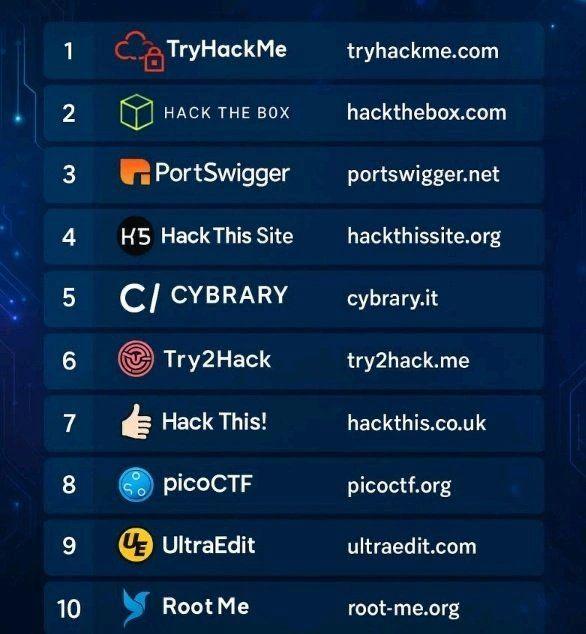
Top Cybersecurity Platforms for Beginners!
Top Cybersecurity Platforms for Beginners! If you want to start a career in cybersecurity and boost your skills, these are the best places to learn hands-on: TryHackMe | Hack The Box | PortSwigger | HackThisSite | Cybrary | Try2Hack | picoCTF | Root Me | UltraEdit Start your journey today and level up your cybersecurity career!
0
0
Apr 10 •
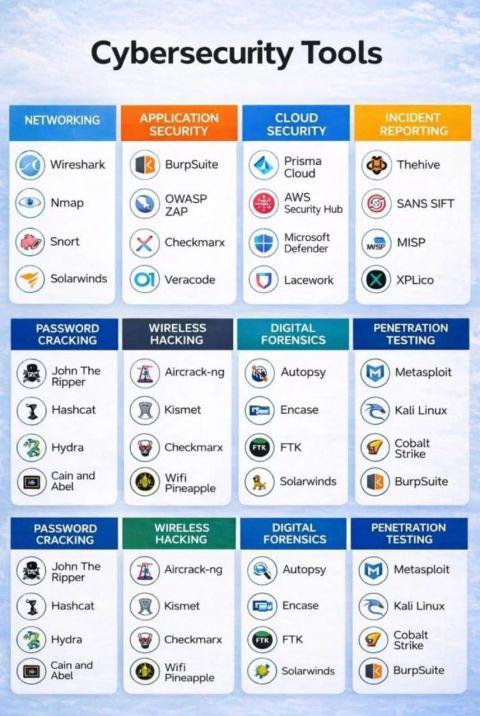
Companies Use These Cybersecurity Tools… And Still Get Hacked
90% of Companies Use These Cybersecurity Tools… And Still Get Hacked Cybersecurity isn’t about tools. But the wrong tools will expose you faster than any hacker. Most companies think they’re “secure” because they installed a few solutions. They’re just collecting tools… not building defense. Here’s what a real cybersecurity stack actually looks like 👇 🔹 Networking & Monitoring Wireshark | Nmap | Snort | SolarWinds → See what’s happening before it becomes a breach 🔹 Application Security Burp Suite | OWASP ZAP | Checkmarx | Veracode → Find vulnerabilities before attackers do 🔹 Cloud Security Prisma Cloud | AWS Security Hub | Microsoft Defender | Lacework → Because your data isn’t on-prem anymore 🔹 Incident Response & Intelligence TheHive | SANS SIFT | MISP | Xplico → Detect, respond, and learn from attacks 🔹 Password Cracking (Offensive Testing) John the Ripper | Hashcat | Hydra | Cain & Abel → If your passwords can’t survive this, they won’t survive attackers 🔹 Wireless Security Aircrack-ng | Kismet | WiFi Pineapple → Your WiFi is often your weakest entry point 🔹 Digital Forensics Autopsy | EnCase | FTK → Understand what really happened after the breach 🔹 Penetration Testing Metasploit | Kali Linux | Cobalt Strike | Burp Suite → Simulate real attacks before they happen Tools don’t make you secure. Blind confidence does the opposite. You can have the best stack in the world… and still get breached because no one knows how to connect the dots. Cybersecurity maturity = Tools + Strategy + People Miss one → You’re exposed. If you had to choose only 3 tools from this list to protect a company…
0
0
1-10 of 22

@aladin-umar-9259
✨ Helping People Sell Digital Products on IG 💸 Turn Your Ideas into Cash | UGC 🚀 50k Followers in 120 days 👇 FREE👇 Money Guides 💸 ↓
Active 3d ago
Joined Apr 5, 2026