Activity
Mon
Wed
Fri
Sun
Jan
Feb
Mar
Apr
May
Jun
Jul
Aug
Sep
Oct
Nov
Dec
What is this?
Less
More
Memberships
Global Careers Group
326 members • Free
69 contributions to Global Careers Group

14d •
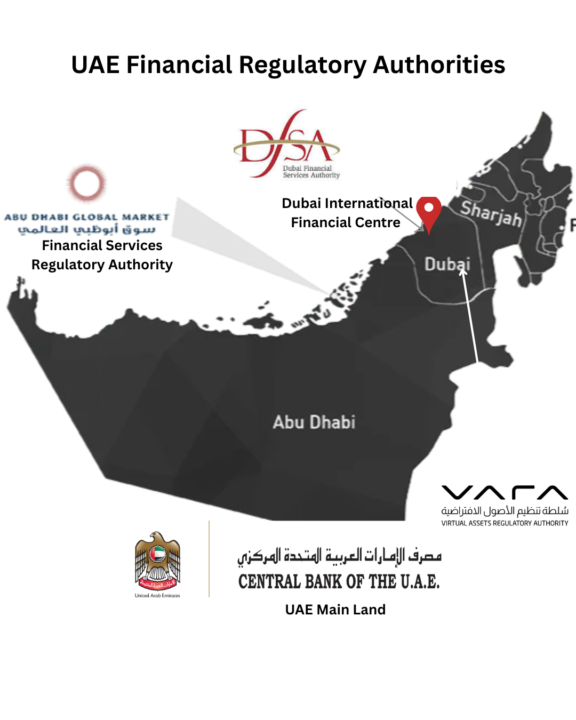
UAE Financial Regulatory Authorities
Key Regulators & Their Zones: - CBUAE: The Central Bank governs all banking and financial services across the UAE Mainland. - DFSA: Independent regulator for the DIFC (Dubai International Financial Centre). Go-to for investment, wealth management, and FinTech within this free zone. - FSRA: The authority for the ADGM (Abu Dhabi Global Market). Leading in digital banking, virtual assets (VASP), and FinTech innovation. - VARA: Dubai's specialized regulator for Virtual Assets & Crypto across the Emirate (excluding DIFC). A global first in comprehensive crypto regulation!

0 likes • 2d
That image uploaded is really good.
0 likes • 2d
@Dhaval Kakadiya good to know.
14d •
Fintech vs. Traditional Bank
Fintech and Traditional Bank can be differentiated by mainly two major points . 1. Technology & Infrastructure 2. Customer Experience and Cost FinTech : 1. Technology & Infrastructure : - Digital-First: Fintech built on modern cloud infrastructure and runs and operates entirely on mobile apps/web. - Agility: FinTech rapidly develops and launches new features as demand gen while on the go. 2. Customer Experience & Cost : - User Experience (UX): Prioritize sleek and personalized user experience. The better the experience, the better the user flow. - Accessibility & cost : use anytime, anywhere with no visit to the bank required. Lower the cost; no physical branch is needed for the customer handling. Traditional Bank: 1. Technology & Infrastructure: - Physical Presence : Maintain extensive physical branch networks alongside digital channels. - Legacy Systems: Often constrained by older, complex core banking systems that slow down large-scale innovation. 2. Customer Experience & Cost: - Service Model: Requires face-to-face service for verification and complex transactions. - Accessibility & cost : Services are often limited by branch operating hours and physical location. Higher operational costs (branches, staff) often translate to higher service and maintenance fees.
0 likes • 2d
Great summary

16d •
My Understanding of Fintech
In todays world, fintech has emerged as the revolution which has transformed the financial services industry. Fintech has several distinctive characteristics which separates itself from traditional banking. One such characteristic is that it allows one to open an account in minutes, and it also allows money to flow seamlessly between accounts. Some fintech platforms include Revolut, YAP, and STC Pay. On the other hand, traditional banking systems are often limited to branch operating hours and opening an account takes a long time. Some banks include FAB and HSBC. Overall, fintech is a trult revolutionary field which continues to transform the financial services industry.
0 likes • 2d
Nice summary.
12d •
Professional Standards of UAE
Hi, I've completed Activity 1 of Module 1 and here is a breakdown of my learning regarding the Core Professional Standards for success in Dubai (UAE). - Clarity: Communication must be direct and concise due to the multicultural environment. "Reading between the lines" is avoided. - Punctuality : Being on time is non-negotiable. Consistency builds professional trust quickly. - Compliance : Whether in FinTech or Consulting, understanding AML (Anti-Money Laundering), KYC, and Data Privacy is non-negotiable. Success in Dubai requires showing professional maturity- being reliable, communicating clearly, and treating compliance as a core part of job.
1 like • 2d
Definitely success requires reliability and good communication.

15d •
My Key Takeaways from the Fintech Training Tasks
Through these activities, I developed a clear understanding of how fintech companies differ from traditional banks and how the UAE fintech ecosystem is structured. I learned how to analyze whether a company is fintech or traditional by looking at its operating model, level of digital involvement, and reliance on physical branches. This helped me understand why digital platforms like Revolut, YAP, and STC Pay fall under fintech, while institutions like FAB and HSBC represent traditional banking. I also explored different fintech categories in the UAE, such as payments, BNPL, digital banking, wealth-tech, and virtual assets. Understanding these segments helped me see how each type of company contributes to the financial landscape and how the system works behind the scenes. I also learned about the main regulators in the UAE and how licensing ties into different financial activities.
0 likes • 2d
Good work, keep going
1-10 of 69

@akhila-shaji-8161
Law postgraduate with strong interest in financial crime compliance, AML and risk management.
Active 9m ago
Joined Nov 9, 2025
Powered by