Activity
Mon
Wed
Fri
Sun
Jul
Aug
Sep
Oct
Nov
Dec
Jan
Feb
Mar
Apr
May
Jun
What is this?
Less
More
Memberships
Core Peptides
106 members • Free
Peptides Calculator
569 members • Free
Pep Talk - For Better Health
3.1k members • Free
Peptac1 Tac Nutrition.
128 members • Free
Powerhouse Fitness for Women
17k members • Free
OfficialShelbyPepTalk
1.3k members • Free
Biohacking Peptide Playground
5.2k members • Free
Peptides 101
2.3k members • Free
Jamie's Peptide Education
134 members • Free
7 contributions to KRISTINA’S PEPTIDE JUNKIES 24

13d •
Community Poll: Would You Be Interested in Member-Only GLP Peptides?
I'm considering offering GLP peptides exclusively to members of this group. If I move forward with this, all products would be: ✅ Third-party laboratory tested ✅ Accompanied by Certificates of Analysis (CoAs) ✅ Sourced with transparency and quality as the priority Before I spend the time and resources researching this further, I'd like to know what the community would actually want. Which GLP peptide would you be most interested in purchasing? 🌟Tirzepatide (Tirz) 🌟Retatrutide (Reta) 🌟Semaglutide (Sema) In the comments, tell me: 1. Which peptide you would be most interested in. 2. What vial size (mg) you would prefer (e.g., 10mg, 15mg, 30mg, etc.). 3. What is most important to you when choosing a supplier (price, testing, purity, shipping speed, customer support, etc.). Your feedback will help determine whether this is something worth pursuing for the group.
Poll
52 members have voted

0 likes • 12d
Reta 20mg maybe 30 depends on where I am in dosing . testing is important to me.
13d •
Why GLP-1 Weight Loss Plateaus Happen (And What To Do About It)
Let's talk about something almost everyone experiences on a GLP-1: The dreaded weight loss plateau. In the beginning, the weight seems to fall off effortlessly. The scale moves every week, your clothes fit differently, and motivation is sky-high. Then one day... Nothing. The scale stalls. The frustration sets in. Before you assume the medication has "stopped working," understand this: Plateaus are normal. In fact, they happen to nearly everyone. Why Weight Loss Slows Down: Your body is designed for survival. Its primary job is to maintain balance (homeostasis), not continuously lose weight. As you lose body fat, your body begins adapting to its new normal: -Your metabolism becomes more efficient -You burn fewer calories at rest -Your body tries to conserve energy -Hunger-regulating hormones begin adjusting Clinical studies of GLP-1 medications like Semaglutide and Tirzepatide show impressive weight loss results, but most people eventually experience a slowdown or plateau after months of treatment. That doesn't mean you've failed. It means your body is doing exactly what it was designed to do. What's Happening Behind the Scenes? Your Metabolism Adapts As body weight decreases, resting metabolic rate naturally declines. The body starts requiring fewer calories to function than it did at a higher weight. At the same time: - Muscle mass may decrease if protein intake and resistance training are inadequate - Fewer calories are burned during digestion - Energy efficiency improves The result? The calorie deficit that once produced rapid weight loss may no longer be enough. You Move Less Without Realizing It: Researchers call this NEAT (Non-Exercise Activity Thermogenesis). As calories decrease and body weight drops, many people unconsciously: - Walk less - Fidget less - Stand less - Move less throughout the day These small changes can reduce daily calorie expenditure significantly over time. Hormones Fight Back: Weight loss affects several hormones involved in appetite and metabolism:

4 likes • 13d
I needed this. I feel like my weight is dropping slower . I feel like ive been under a bit more stress these last almost three weeks along with lots of anxiety. Im hopping what my husband and i are going through will soon heal.
19d •
HOW TO NAVIGATE THE PJ24 SKOOL GROUP
As our community continues to grow, I wanted to take a moment to highlight some of the resources available to you within the Skool platform. I know that for many members, Skool is a new experience. If you're coming from platforms like Facebook or Reddit, there can be a bit of a learning curve at first. However, once you become familiar with the layout, you'll find that a tremendous amount of valuable information is organized and easily accessible. This community is designed to provide educational content intended for research purposes. That means you are the researcher, and the admin team is here to help guide, educate, and point you in the right direction. Personal research and self-education are important parts of the learning process, and most of the information you're looking for can likely be found within this group. If you can't find something specific, please don't hesitate to reach out. To make navigation easier, I have organized key information into tabs at the top of the group page: GENERAL DISCUSSION This is where you'll find all member and admin posts, community discussions, questions, and educational content. CURRENT SALES Exactly what it sounds like—the latest promotions and discounts currently available. Sales information will be updated as new promotions become available. Before posting questions about active sales, please check this tab first so we can keep the main discussion feed focused on education and community engagement. SKINCARE This tab is for all things related to topical peptides and treating those irritating little laugh lines before they turn into a full blown CREVICE. Or, how to stop that insidious hair shedding and breakage that comes with GLP use. What topical peptides are, their benefits and a link to my online store for purchasing is located within this tab. FYI Think of this as your resource center. Here you'll find important information such as: - How to navigate the Skool platform - Reconstitution videos - Step-by-step EZ Pen instructions - Helpful guides and reference materials - Other frequently requested resources
1 like • 16d
@Annette Marks me too
22d •
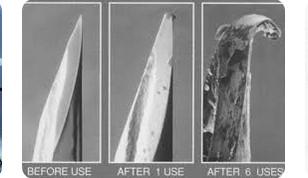
WHAT ACTUALLY HAPPENS WHEN YOU REPEATEDLY PUNCTURE THE PEPTIDE VIAL STOPPER?
What happens to the peptide vial after repeated puncturing: Repeatedly puncturing a peptide vial stopper with a very fine 31G needle may seem harmless because the needle is small, but over time it can still create several important problems — especially with multi-dose peptide vials. 1. Loss of Sterility Each puncture creates another opportunity for contamination. Even tiny needle entries can: - Introduce skin bacteria - Push microscopic debris into the vial - Allow environmental contaminants to enter - Increase biofilm formation risk over time This becomes more concerning when: - The vial is stored for weeks - Refrigeration is inconsistent - Nonsterile handling occurs - Alcohol prep is inadequate - The stopper is touched repeatedly With peptides, contamination risk matters because many are reconstituted with bacteriostatic water and stored for extended periods. 2. Coring / Rubber Fragment Risk Although a 31G needle is less likely to core than larger needles, repeated punctures in the same area can still damage the stopper. Over time the rubber may: - Become weakened - Develop microtears - Shed tiny rubber particles - Lose elasticity/self-sealing ability If coring occurs, microscopic rubber fragments can potentially enter the solution. This risk increases when: - The same puncture spot is used repeatedly - Needles are inserted at awkward angles - Blunt needles are reused - The stopper dries out or ages 3. Loss of Vacuum/Air Exchange Problems Repeated punctures can compromise the stopper’s seal. Consequences may include: - Slow air leakage - Moisture intrusion - Oxygen exposure - Reduced vial pressure integrity For sensitive compounds, excess oxygen exposure may contribute to: - Oxidation - Reduced stability - Accelerated degradation Some peptides are more fragile than others once reconstituted. 4. Leakage Around the Stopper After enough punctures, especially concentrated in one spot, the stopper may no longer reseal properly.
0 likes • 21d
Blunt? I thought that is what the needle was called due to the size? Maybe I am still confused.
0 likes • 21d
@Kristina Marie OH my gosh! Thank you so much for that information. I will no longer stress over that . Thank you for educating me. That makes a whole lot more sense to me.
Apr 23 •
TRUE BACTERIOSTATIC WATER IS NO LONGER AVAILABLE ON AMAZON
Why You Should No Longer Buy “Bacteriostatic Water” (AKA Reconstitution Solution) from Amazon: Many people assume all “water” products are the same. They are not. And when you’re reconstituting peptides, medications, or anything intended for sterile use, using the wrong solution can mean contamination, instability, infection risk, or complete product failure. Let’s break it down clearly: 1. Bacteriostatic Water = NOT Just Water True Bacteriostatic Water for Injection, USP is a sterile, nonpyrogenic preparation of water containing 0.9% benzyl alcohol as a preservative. That preservative helps inhibit bacterial growth after the vial is punctured, which is why it’s commonly used for multi-dose reconstitution. Why it matters: -Sterile -Preservative added -Designed for repeated withdrawals (when handled properly) -Intended for pharmaceutical use 2. Sterile Water = Different Product Sterile Water for Injection is sterile water with no preservative added. It may be appropriate for some single-use reconstitution situations, but once opened it has no built-in antimicrobial protection. That means contamination risk rises after first use. Why it matters: -Sterile -No preservatives -Often single-use *****Should not be treated like bacteriostatic water***** 3. Deionized / Distilled / Purified Water = NOT the Same Deionized water removes mineral ions. Distilled water removes many impurities through boiling/condensation. Purified water may be filtered or processed. But none of those labels automatically mean: -Sterile -Pyrogen-free -Safe for injection use -Suitable for reconstitution of sterile products These waters are often intended for labs, appliances, cosmetics, or general use—not sterile pharmaceutical preparation. Why Amazon Has Become Risky: The issue is not “Amazon” alone—it’s third-party marketplace quality control. Problems can include: - Misleading titles using words like “bac water” or “reconstitution solution” - Products that are sterile-filtered but not manufactured to pharmaceutical standards - Unclear ingredient sourcing - No USP compliance - No lot traceability - Poor storage conditions - Counterfeit or relabeled products - No verified Certificate of Analysis (COA)
0 likes • Apr 25
@Kristina Marie I only know I got it from Amazon and it is no longer there I have a picture though.
0 likes • Apr 27
@Kristina Marie OH wow I have been using that for the last three months. I have been ok but jeez I had no clue it was not the good stuff. This little box is my second one and I have not used it . Thanks for that info.
1-7 of 7

@aidina-ousley-3316
Hello, I am new to peptides and I have been on Retatrutide for 3 months. My journey is long and I am here to learn .
Online now
Joined Mar 21, 2026
Powered by