Activity
Mon
Wed
Fri
Sun
Aug
Sep
Oct
Nov
Dec
Jan
Feb
Mar
Apr
May
Jun
Jul
What is this?
Less
More
Owned by Agy
Body First. Plants Second. Clinical herbalism and herbal medicine taught through physiology, so you choose herbs with confidence, depth, and context.
Memberships
Simcha Hub of Pet Physiology
41 members • Free
Hekatean Healing & Herbalism
82 members • Free
Holistic Health Academy
412 members • $7/month
The Crystal Collective
38 members • Free
Skoolers
165.7k members • Free
21 contributions to The Buffalo Herbalist

2d •
Medicinal properties or survival tools?
Every medicinal property we find in a plant traces back to the plant’s own survival. These compounds evolved to keep the plant alive in its environment, and we just happen to benefit from them! Thankfully. We call them secondary metabolites, and every one is super interesting in terms of WHY the plant has them, for example: bitter alkaloids taste terrible to a rabbit looking for a snack, some plants secrete terpenes into the soil to keep neighboring roots from crowding their territory and certain flavonoids absorb harmful UV-B radiation, working almost like a built-in sunblock (kind of)! Nature wants to survive. Life finds a way to live. And it all comes down to phytochemistry, which I could nerd out over for hours!
2
0
Jun 2 •
What’s an immune-modulating herb anyway?
“What’s an immune-modulating herb anyway?” This question comes up a lot! So what is it? It’s an herbal action we lean on constantly in our materia medica, so let me tell you how I actually think about it. Your immune system is making decisions all day long, figuring out how hard to respond, how long to stay on the case, and when to stand down and start cleaning up. A modulating herb gets a say in those decisions instead of just cranking everything up, because it’s talking to the part of you that makes the call. That’s why the same plant can settle a response that’s running too hot in one person while supporting one that’s dragging in another. It works by speaking your immune system’s own language right there at the receptor! So next time you hear “immune-modulating,” think “this works with your immune system’s own judgment.” What’s your go-to immunomodulating herb?
Jun 1 •
Mechanism Monday: The Off-Switch That Wears Out
What actually turns off your stress response? I think most of us assume it just fades on its own once the stressful thing is over, but your body has a real, physical mechanism for shutting it down, and it lives inside the one hormone everybody loves to drag: cortisol. Let me back up and walk through how the whole thing fires. When your brain registers something as stressful, the hypothalamus (a little command center deep in the brain) kicks things off by releasing a messenger called corticotropin-releasing hormone, or CRH. That CRH travels a short distance to the pituitary gland and tells it to release a second messenger, adrenocorticotropic hormone, or ACTH, into the bloodstream. ACTH rides down to your adrenal glands, the two little caps sitting on top of your kidneys, and tells them to release cortisol. Hypothalamus, pituitary, adrenals, and that is the HPA axis, three structures passing a signal down a chain like a relay. Cortisol's whole job in that moment is keeping glucose flowing so your brain and muscles have fuel to deal with whatever is happening. The part that almost never makes it into the conversation is what cortisol does next. As it rises, it travels back up to the hypothalamus, binds to receptors waiting there, and tells the whole cascade to stand down (Herman et al., 2016). The hormone your stress response produces is the same one that switches it back off, so the system ends up telling on itself, which I find kind of wonderful. Now for the part that explains so much. When the stress just will not let up, month after month, those receptors get worn out from sensing high cortisol all the time and start to lose their sensitivity, so the brake stops catching the way it should. The off-switch wears down, the axis keeps running long past when it should have gone quiet, and that is a huge piece of what is happening underneath burnout. This is where ashwagandha (Withania somnifera) earns its place. A randomized placebo-controlled trial in chronically stressed adults found it significantly reduced serum cortisol (Salve et al., 2019), and it does that by working on the axis itself, helping the whole system find its rhythm again. You are retuning the brake, and that distinction, to me, is the whole game.
May 31 •
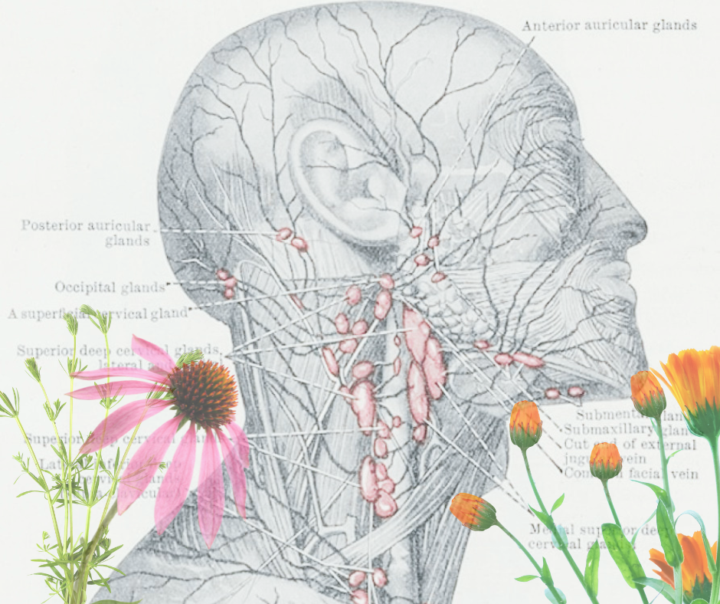
Why does cleavers show up in BOTH the lymphatic AND immune categories?
Quick one for you all, and I want to hear your thinking before I drop the full picture. If you’ve spent any time with lymphatic herbs, you’ve noticed cleavers, calendula, and echinacea keep appearing. Then you find them again in the immune category. Most explanations just say “it gets things moving,” which is a description with zero context. So, here’s my question: do you think these are two separate mechanisms that happen to live in the same plants, or do you think lymphatic actions and immune actions aren’t actually that separate to begin with?
May 30 •
I'm back!
Hey all! I totally dropped the ball here, and I owe you an apology. The truth is, I burned myself out. I needed to step away from content creation for a bit and just let my brain be for a while. I'm working on coming back to this space and bringing you more educational content. My original plan was to build a course and keep the whole thing accessible and free. What I didn't realize, since this is my first time creating this kind of structured content, is how time consuming it actually is to do it well. So moving forward, I will still have loads of free and accessible content here, and I am also adding a paid tier for the more complex, structured material. The Buffalo Herbalist is my full-time income, and putting up a paid tier is part of respecting that work and respecting myself in doing it. Thanks for sticking around!! :)
1-10 of 21

@agatha-merkel-9662
Herbalist and integrative health researcher. MD. MSc in Herbal Medicine. DSc candidate in Integrative Health.
Active 2d ago
Joined Feb 3, 2026
Buffalo NY