Activity
Mon
Wed
Fri
Sun
Aug
Sep
Oct
Nov
Dec
Jan
Feb
Mar
Apr
May
Jun
Jul
What is this?
Less
More
Owned by Cristal
Hollywood photographer and former international model. My gift is seeing the beauty in everyone — and knowing how to bring it out through the lens.
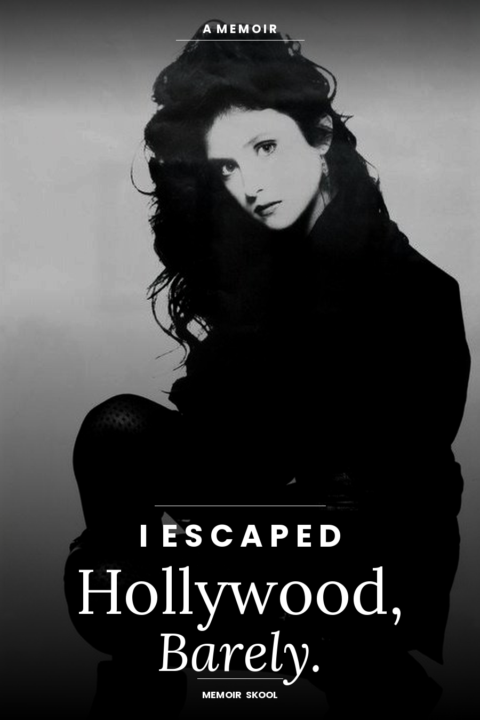
Real stories from Hollywood to Japan in the 80s. A place to share memories, experiences, and step inside a memoir unfolding in real time.
Memberships
Zen Den Mind - Signal Clarity
147 members • Free
Magnetic Memberships
3.9k members • Free
Travel Hacks Skool
68 members • Free
Claude Code Club
7k members • $9/month
Summit Backstage Mastermind
56 members • Free
Speech Therapy Tools
333 members • $3/month
She Builds Anyway
109 members • Free
Leadership Skool
1.6k members • Free
Deduct This Life
22 members • Free
344 contributions to 🎬 Memoir Skool 📸
🔥
10d •
My First Time Leaving the Country
The First Time I Left Love for Tokyo I was fifteen and deeply in love the first time I left for Japan. He drove me to the airport in Los Angeles, my suitcases packed for a three-month contract that felt like forever. I remember staring out the window so I wouldn’t have to look at him. I cried the entire way there. I cried walking through the terminal. I cried on the plane. I cried somewhere over the Pacific, wondering what I had just done. I thought I was brave. I didn’t know I was terrified. When I landed in Tokyo, the world felt louder, brighter, faster than anything I had ever known. The signs were unreadable. The air smelled different. Even the silence between people felt foreign. I didn’t realize how overwhelmed I was until two weeks later when I demanded to be sent back to Los Angeles. I told my agency I couldn’t handle it. I was fifteen, thousands of miles from home, and drowning in culture shock I didn’t have language for. And yet — my very first job? I helped open Tokyo Disneyland. I shot the cover and fourteen pages of Olive magazine. On my first night in my model apartment, there were clothes laid out on my bed. Not wardrobe for a shoot — wardrobe for me. Outfits I was expected to wear to castings. Plaid patterns. Oversized blazers. Men’s shoes. Hats. Structured pieces that swallowed my California softness whole. I loved it. It felt like stepping into another identity — one that was sharper, stranger, braver. Back home I had a convertible Alfa Romeo. In Tokyo, they gave me a bicycle. They chauffeured me to auditions, but the bike was for riding around the neighborhood, weaving through narrow streets that smelled like soy sauce and rain. I pedaled through a life that didn’t resemble mine at all. I had left love at the airport. And somehow, in the middle of my tears and terror, I was opening Disneyland in Tokyo. I didn’t understand what overwhelmed me at the time. I only knew my chest felt tight and everything felt unfamiliar. The language. The silence in elevators. The way people didn’t hug. The way I stood out without trying.

🔥
1 like • 8d
@Alex Beviss Thank you so much for sharing that. It really means a lot to me. 💛 I think anyone who's been immersed in a completely different culture can understand that feeling of being overwhelmed. At 15, I didn't have the life experience to process it—I just had to keep going, one day at a time. Looking back now, I realize how much those experiences shaped me. Japan challenged me in ways I couldn't have imagined, but it also helped me grow stronger, more independent, and more resilient. Thank you for recognizing that. It makes me feel seen, and I appreciate you taking the time to share your own experiences in Switzerland and Wales. It's comforting to know that, no matter our age, stepping into the unknown can feel overwhelming—and that we can come through it stronger on the other side. 💛
🔥
1 like • 8d
@Alex Beviss Thank you so much. Your words mean more than you know. 💛 You're right—I really didn't have a choice. Looking back now, I can see that those experiences shaped me into the person I am today. At 15, I couldn't fully understand what I was going through. I just kept putting one foot in front of the other. Japan is a remarkable country with a beautiful culture, but it is also incredibly different. Unless you've lived there, it's hard to explain what it feels like to be so young, so far from home, and so aware that you're an outsider. I'm grateful for the experience because it taught me resilience, independence, and empathy. Those lessons have stayed with me my entire life. Thank you for seeing that and for taking the time to understand what that chapter of my life was really like. It means a great deal to me. 💛
🔥
10d •
9 Auditions a Day
CHAPTER 6 — Nine Auditions a Day Tokyo modeling was a machine — and I became one of its gears. People think modeling in Japan is glamorous, but they don’t understand the schedule, the grind, the exhaustion, the running, the subway transfers, the bicycles, the van rides, the heat, the humidity, the snow, the endless outfits stuffed in a bag, the composite cards, the smiles, the “arigato gozaimasu,” the bowing, the waiting rooms, the hallways filled with girls from every country in the world. Nine auditions a day. Every day. And then — seven days of work. That was the rhythm of my life. One day of running around the city for castings… and then a full week of jobs because I booked almost everything I went out for. It wasn’t arrogance — it was reality. I was extremely popular there. The clients loved my look. My energy. My expressions. My reliability. My timing. My professionalism — even at fourteen, fifteen, sixteen. I was the girl they kept calling back. Seven out of nine jobs? Sometimes eight. Sometimes all nine. Tokyo was a city that tried to break most girls — but it built me. I thrived in it. And the wildest part? The last three years I spent in Japan… I didn’t even have to do auditions anymore. I would land in Tokyo, walk into the agency, and within hours the phone was already ringing off the hook with bookings. No castings. No competition. No waiting rooms. No swimsuit-in-a-lobby moments. I would just roll into town, work nonstop, and roll right back out. That’s how strong my name was. That’s how wanted I was. That’s how much Japan loved Kuri-chan. But before I got to that level, before I became the girl who didn’t need castings anymore… there was one audition — one casting among the nine-a-day madness — that changed everything. The Okinawa job.

🔥
0 likes • 8d
@Nick Nebelsky 🤩Thank you! My first attempt at film instead of anime!!
🔥
10d •
📚✨ Welcome to Memoir Skool, Bree Wood! ✨
Please join me in giving a warm welcome to @Bree Wood ! 💛 Bree is passionate about helping ADHD solopreneurs bridge the gap between learning and taking action. I love her philosophy of not just collecting knowledge but actually building, implementing, and moving forward. Bree, we're so happy you've joined Memoir Skool! Every entrepreneur has a unique story, and I hope you'll find inspiration, meaningful connections, and a community that celebrates every chapter of your journey. Welcome! We can't wait to get to know you and hear your story. Everyone, please say hello and give Bree a warm Memoir Skool welcome! 📖✨💛

🔥
1 like • 10d
@James McDonald
🔥
0 likes • 8d
@Nick Nebelsky
🔥
May 11 •
✨ START HERE — Welcome to Memoir Skool ✨
If you’re new here, breathe 💜 You don’t have to figure everything out at once. This is a space for storytelling, creativity, reflection, connection, photography, memoir, and being fully human. This community is for:📖 Writers & storytellers📸 Creatives & photographers💜 Deep feelers & thoughtful humans✨ People finding their voice again🌎 Anyone wanting real connection over performance Here’s how to begin: 1️⃣ Introduce yourself in the community. Tell us who you are, where you’re from, what you create, or what brought you here. 2️⃣ Explore the categories. You’ll find spaces for memoir, creativity, photography, conversations, inspiration, and community connection. 3️⃣ Participate freely. Comment, share thoughts, ask questions, post your work, celebrate wins, or simply observe until you feel comfortable 💜 4️⃣ Be kind. This is a supportive, encouraging, judgment-free space. We grow together here. 5️⃣ Have fun with it ✨You do not need to be perfect to belong here. This isn’t just a community. It's a place to remember who you are through story, creativity, and connection. I’m so happy you’re here 💜— Cristal
🔥
1 like • 10d
@Sakthivel M Oh my goodness, thank you so much! 🥹💛 What an incredible surprise! I'm truly honored that you created such a special tribute. The idea of Wonder Bird and Friends telling a kid-friendly story where Mia carries my light is so touching and incredibly meaningful to me. Thank you for your kindness, creativity, and generosity. I can't wait to read it and follow Mia's adventures. This is a gift I'll always treasure. Congratulations again on your beautiful series, and thank you for including me in such a heartfelt way. It means more than you know. 💛📚✨
🔥
1 like • 9d
@Sahnye Waldrum How exciting! Don’t forget to come back and share your link and about your community! Please keep us posted!
🔥
11d •
📚✨ Welcome to Memoir Skool, Mary Nunlay! ✨
Please help me give a warm welcome to @Mary Nunaley ! 💛 Mary is the creator of Connected Through Play, a wonderful Skool community dedicated to helping parents, grandparents, caregivers, and families create meaningful moments through play, imagination, and connection. I love the heart behind your community. Helping families build memories together is such a beautiful mission, and those moments often become the stories we treasure for a lifetime. Mary, I'm so happy you've joined Memoir Skool! I hope you'll enjoy connecting with fellow storytellers, sharing your experiences, and being inspired by the incredible journeys within this community. Everyone, please give Mary a warm welcome and be sure to check out Connected Through Play. If creating stronger family connections through fun and creativity speaks to you, you'll love what she's building! 💛📖

🔥
1 like • 10d
@Robert Gault
🔥
1 like • 10d
@Mary Nunaley
1-10 of 344

🔥
@cristal-vancarson-6810
Los Angeles–based photographer and former international model helping people elevate their image, build confidence, and show up powerfully on camera.
Active 4h ago
Joined Nov 12, 2025
ISTJ
Agoura Hills, California