Activity
Mon
Wed
Fri
Sun
Aug
Sep
Oct
Nov
Dec
Jan
Feb
Mar
Apr
May
Jun
What is this?
Less
More
Memberships
Chess Centurion's Academy
981 members • Free
GekalAI 🤎 byGeraldGerlich
16 members • Free
ActivityPro 💜 byGeraldGerlich
22 members • $19/month
Understanding Chess
62 members • Free
Activity |/\_- byGeraldGerlich
67 members • Free
The Chess Apprentice Club
10 members • Free
Positivity 🧡 byGeraldGerlich
44 members • Free
SuperLab 🩶 byGeraldGerlich
23 members • Free
Dr. Mike's Chess Academy
1.4k members • Free
30549 contributions to Top Chess Community

8h •
guys i lost my discord acc 😭
check in lichess gang remastered @Luciano Ivanovich im 12 but i need a discord acc to chat with lucas and tom

🔥
0 likes • 8h
Cool, I'mma check it out
🔥
0 likes • 8h
‼️🔥🗿
9h •
les go
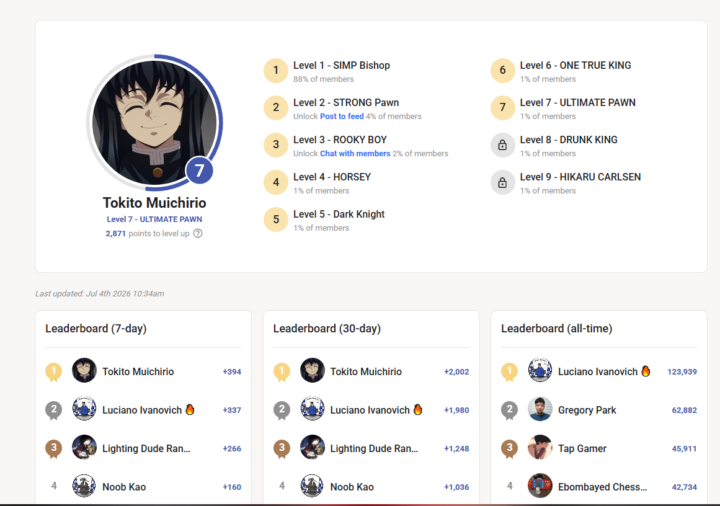
from now on i will post more and get my name on the leaderboard like 2 years ago i will bring back the og version of me #SacrificeStrikesBack
🔥
0 likes • 8h
Lesss gooooo🔝🔥🗿
🔥
0 likes • 8h
‼️🔥🗿

🔥
0 likes • 9h
Cool
🔥
0 likes • 9h
‼️🔥🗿

11h •
guys
any advices how to get 1000 on blitz? like after i reached 900 i kept stuck between 930 and 890, my calculations are bs and i chess.c*m got me the mf treatment after got to 930
🔥
1 like • 9h
Take a break. It refreshes your mind
🔥
0 likes • 9h
‼️🔥🗿
1-10 of 30,549

Active 3h ago
Joined Sep 30, 2025
Chess Hyperverse