Activity
Mon
Wed
Fri
Sun
Aug
Sep
Oct
Nov
Dec
Jan
Feb
Mar
Apr
May
Jun
What is this?
Less
More
Memberships
#BelieveNation
4.3k members • Free
358 contributions to #BelieveNation
3h •
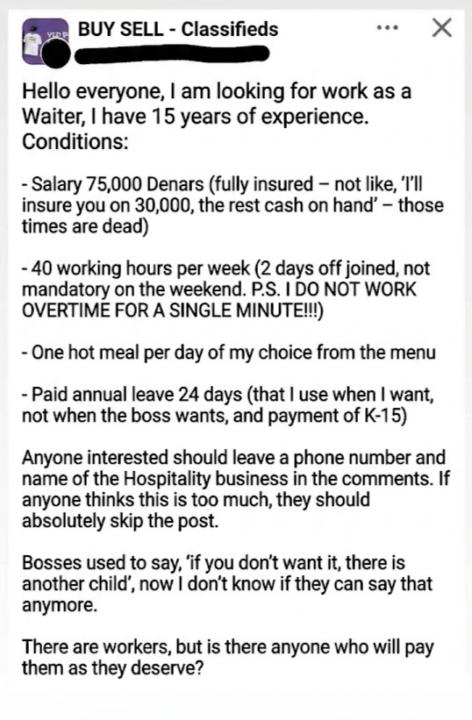
VALUE FIRST, DEMANDS SECOND: HOW NOT TO PITCH YOURSELF 🤦😂
Hey Believe Nation family! ☺️🚀 I stumbled upon a viral post from a local job group today, and it got me thinking about mindset, positioning, and how we approach opportunities. Take a look at the attached image (translated to English). This candidate is looking for a waiter position and starts the conversation with a massive list of hard demands, ultimatums, and a negative tone before even stepping foot into an interview. To give you some context: while the official average statistics might show a higher baseline, the reality on the ground is that many standard workers take home around 24,000 Denars ($420 USD) as a base salary—and unfortunately, a large number of workers are realistically paid even less than that. This person is demanding nearly triple the reality of what many hard-working people earn, right out of the gate, all while maintaining a defensive attitude. As a business owner myself, I always say: I am more than willing to pay above the market rate, and I realistically pay way above the average—but only if the worker brings genuine value and real skills to the table. You earn premium pay through premium contribution, not through social media ultimatums. In business and career growth, we always talk about the "Value First" framework. -If you want to earn premium results, you have to showcase a premium work ethic first. -Entitlement closes doors; adding value opens them. -Your reputation is built on how you solve problems for others, not on how many demands you make before you even start. Yes, workers deserve fair treatment and good pay, but true leverage comes from excellence and mutual respect, not from an ultimatum on a Facebook group. What are your thoughts on this approach? How do you maintain the balance between knowing your worth and staying professional? Let’s discuss! 👇 @Kim Ivy Busa @Evan Carmichael @Eva Kozlowski @Candy Caine @Thủy Lê @Amelia Darwin , @Robert Baker , @Milos Stankovic @Olanrewaju Praise @John Berfelo @Jackie Wood , @Williams Robert @Bohdan Pylypchuk
14h •
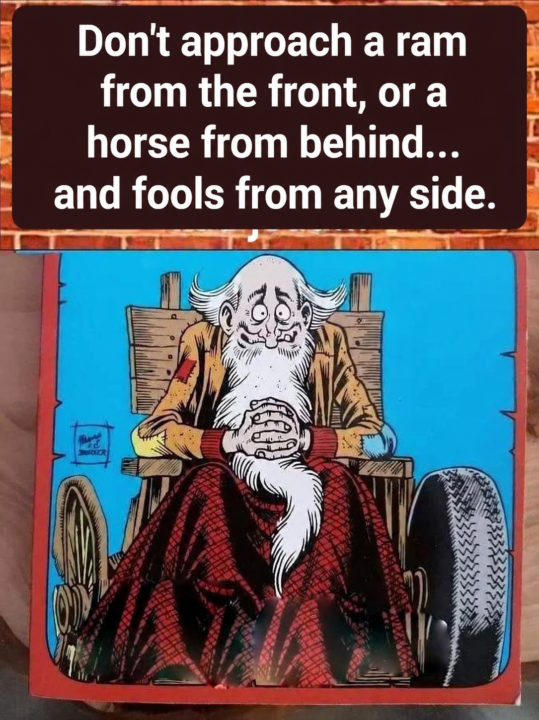
FOOLPROOF SAFETY GUIDE AND THE STRATEGIC CHOICE OF COLLABORATORS 🚫🤡
Think facing a ram that wants to headbutt you is scary? 😂 Try debating business and economics with someone who lives completely out of touch with reality. At least that battle with horns is honorable and predictable! In the entrepreneurial world, the distance rules are very simple: 🚫 The Ram: Don't approach from the front – "face to face." 🤔 🚫 The Horse: Never approach from behind, or you'll be seeing stars. ✨ ⚠️ The Fool: DO NOT APPROACH FROM ANY SIDE! This isn't just a regular hazard; it’s a radiation zone for your brain and your budget! ☢️😂 Think of their "wisdom" as a terrible pizza topping – it completely ruins the whole experience. 🍍🍕 Keep your focus tight, but keep your eyes wide open! 💸👀 Don't let people with empty talk and zero backing sink your ship. Look for hard evidence, watch the results! 🚢🚫 💡 LEADERSHIP LESSON: KEEP A SHARP EYE ON THE DETAILS! Great ships don't sink because of the ocean around them; they sink because of the small cracks left unnoticed. In business, details are EVERYTHING. This is why you must be incredibly wise and selective when choosing your collaborators, partners, and specialists. 🦅 The truth is simple yet brutal: one wrong collaborator, one incompetent or reckless person in a key position can destroy what you have spent years building. Your business can collapse because of just one person who does not understand the gravity of the work. Do not let carelessness, ignorance, and superficiality jeopardize your entire vision. Develop a sharp eye for character, professionalism, and the smallest details during your selection process. Surround yourself with people who bring value, not chaos. Trust in results, and build your circle with experts who share your high standards! 🎯🔥 @Kim Ivy Busa @Evan Carmichael @Eva Kozlowski @Candy Caine @Amelia Darwin , @Robert Baker , @Peter Ong , @Milos Stankovic , @Olanrewaju Praise , @John Berfelo , @Jackie Wood , @Williams Robert , @Bohdan Pylypchuk @Elina Diaz @Elisha S.

3d •
You Either Win or You Stop
You either win or you lose and there is no middle ground. Some people never start because they’re scared they’ll fail. Maybe they're worried their first pitch or idea won’t be good enough. Others try, but quit too soon when things get tough, thinking it’s not going to work after just one mistake. Then, there’s the fear of what others will think. Like when you hold back in a big meeting or hesitate to speak up because you’re afraid of being judged. Vincent van Gogh only sold one painting while he was alive. Today, his art is worth millions, proving that success doesn’t always come right away. Akio Morita, co-founder of Sony, made a rice cooker that didn’t work well. It didn’t sell much, but he didn’t quit. He kept trying and built Sony into a company worth nearly $150 billion. The winners are the ones who keep going, even when it’s hard. They face their fears, take risks, and don’t give up. What will you choose today?

2 likes • 16h
Fantastic post, @Kim Ivy Busa ! 🔥 This message is a powerful reminder for all of us. If we look at the Van Gogh example—with a bit of humor—the goal is definitely not to wait until we pass away for our art or business to be worth millions! 🥸🤦😂 Jokes aside, the point is to fully believe in what we do and understand that our actions in life will always succeed as long as we learn the right skills. Continuous learning and growth are the success! 📈 Throughout my long journey, I used to hide my emotions and keep them to myself. But I’ve learned not to be afraid of being honest and authentic, even if it means looking funny or facing irony. Of course, we don’t share everything with everyone, but it is incredibly important to openly state what we stand for and what we don't tolerate. Winners don't stop; they learn, they grow, and they speak with their true voice! 🚀❤️🔥💪✨🗽

1d •
"I’m an animator & author. I have the art, but I'm missing the people."
"As an animator and author, I’ve been a solopreneur building my projects completely alone for a long time. I wear every single hat, but despite doing all the heavy lifting, I still feel entirely hidden. How do you transition from isolated building to actually getting people to show up, see your art, and read your work?"
1 like • 16h
@Donn Ka Welcome to the community, @Donn Ka! 🌟 Your story truly resonates with many of us. Being a creator and wearing every hat is a massive grind, but remember: your art has immense value, and the world deserves to see it! ✨ Also, @Milos Stankovic gave you excellent advice—definitely utilize AI tools like Claude to build a clear, step-by-step strategy for your marketing. It makes a huge difference! Here at #BelieveNation, you are no longer alone. This is the perfect place to step out of isolation and start building your tribe. Don't hesitate to share your work with us here—we are ready to support you and help you become visible. Keep pushing forward with faith, your people are on their way! 🚀🤝🫂❤️🔥💪🗽🔥
21h •
This month's top contributors asked me these questions, and I answered!
"Based on your experience, what are the three to five key steps I should focus on during the first 90 days of launching my business, and what is the first practical step I should take starting tomorrow?" - @Khalid Alraihan Starting a business can feel overwhelming, especially in the beginning. This question gets to the heart of what matters most in those critical first 90 days. Thank you to our Top Contributors for asking thoughtful questions and helping create valuable discussions for the entire #BelieveNation community. Your curiosity and commitment to growth help everyone learn and move forward together. #Believe

1 like • 16h
Even though I wasn't tagged, I had to jump in because this topic is priceless for every entrepreneur. Having clarity in the first 90 days changes the whole business game. Thanks for the guidance, Evan! 💡🙌🏼🔥
1-10 of 358
@george-markovic-9849
Specialist in the new scientific discipline of Quantum Podology and Biomechanics. Dedicated to precision, movement, and the success mindset. 🚀
Active 3h ago
Joined Jan 7, 2026
Powered by