
Apr 4 • General discussion
When “Better” Isn’t Better: The Illusion of Improvement in Modern Medicine
In modern Western medicine, “improvement” is often defined by numbers on a chart.
Blood pressure drops.Cholesterol lowers.Blood sugar stabilizes.
On paper, this is called success.
But let’s ask a deeper question…
Does the patient actually feel better?
The Metrics of Medicine vs. The Experience of Healing
Western medicine operates largely within a data-driven framework—lab values, imaging, and measurable biomarkers. These tools are valuable, but they have quietly become the primary definition of health.
If the number improves, the patient is labeled “better.”
Even if:
- They feel more fatigued
- They have new symptoms
- Their quality of life has declined
- They require multiple additional medications to manage side effects
This creates a dangerous illusion:
👉 The body appears healthier on paper while the person feels worse in reality.
The One-Size-Fits-All Model
Modern care is built on standardized protocols:
- Diagnosis → Drug
- Symptom → Suppression
- Condition → Guideline
This is efficient.This is scalable.But it is not individualized.
Two patients with the same diagnosis may receive identical treatment—even though:
- Their root causes are different
- Their emotional states are different
- Their environmental exposures are different
- Their spiritual and neurological landscapes are different
The system treats the disease label… not the human being.
The Missing Voice: The Patient
In many clinical settings, the patient’s lived experience becomes secondary.
Appointments are short.Conversations are directed.Outcomes are pre-defined by lab targets.
But healing cannot be reduced to a number.
A patient may say:
- “I’m more anxious than before.”
- “I don’t feel like myself anymore.”
- “My energy is gone.”
Yet if the labs look good, these voices are often minimized or reframed as unrelated.
👉 This is where medicine begins to disconnect from healing.
A Different Model: Whole-Person Medicine
In contrast, systems like acupuncture, Traditional Chinese Medicine, and other holistic approaches begin with a fundamentally different question:
“How are you experiencing your body?”
Not:
- What does your lab say?But:
- What does your life feel like?
Acupuncture: Listening Beyond the Numbers
Practices like Acupuncture are rooted in observation, dialogue, and pattern recognition.
Improvement is not just measured—it is felt, described, and tracked through the patient’s experience.
A practitioner asks:
- Is your sleep deeper?
- Is your digestion smoother?
- Has your emotional state shifted?
- Do you feel more at peace in your body?
These are not “soft metrics.”
They are primary indicators of regulation and healing.
Individualization Over Standardization
In holistic systems:
- No two patients are treated the same
- No protocol is rigid
- No symptom is viewed in isolation
Instead, the practitioner evaluates:
- Energy flow
- Organ system relationships
- Emotional imprints
- Environmental influences
Two people with migraines may receive completely different treatments.
Why?
Because their bodies are telling different stories.
Healing vs. Managing
Western medicine often excels at management:
- Lower the number
- Control the symptom
- Stabilize the condition
But holistic medicine seeks transformation:
- Restore balance
- Address root causes
- Rebuild internal regulation
One asks:👉 “How do we control this?”
The other asks:👉 “Why is this happening?”
The Danger of Mistaking Control for Cure
When improvement is defined only by numbers:
- Symptoms may be silenced, not resolved
- Underlying dysfunction may continue
- New imbalances may be created
This is the foundation of the polypharmacy cascade—one drug to fix a number, another to manage the side effect, and another to stabilize the system further.
All while the patient drifts further from true vitality.
Redefining Improvement
What if improvement meant:
- Waking up with energy
- Feeling calm in your nervous system
- Experiencing joy in your body
- Having clarity of mind
- Living without constant dependence on intervention
What if the patient’s voice became the primary metric?
The Integration Opportunity
This is not about rejecting modern medicine.
It is about restoring balance.
Imagine a model where:
- Labs inform, but do not dominate
- Patients are heard, not managed
- Treatments are individualized, not standardized
- The body is trusted, not overridden
Final Thought
Numbers can guide us.
But they cannot define us.
Because healing is not just something you measure…
It is something you experience.
Because true medicine doesn’t silence symptoms.
It listens to them.
0
0 comments
When “Better” Isn’t Better: The Illusion of Improvement in Modern Medicine
powered by
skool.com/true-medicine-3260
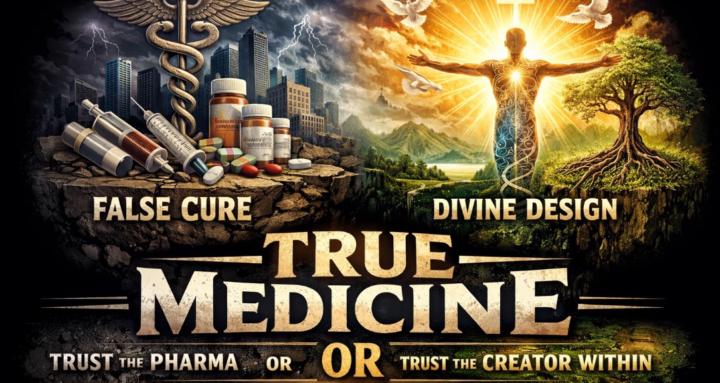
Revelation of Innate intelligence or the human body -contradicting big pharma and modern medicines hypothesis that we need their "magic" to heal.
Suggested communities
Powered by