
1d • General discussion
Fallacy #14: Ignoring the Spiritual Dimension
Reducing humans to biochemistry alone
Modern medicine has achieved remarkable advances in molecular biology, pharmacology, and imaging. Yet alongside these gains, a conceptual narrowing has occurred: the tendency to reduce the human being to chemistry alone.
This reductionism assumes that disease is purely biochemical and that healing is purely mechanical correction. However, a growing body of peer-reviewed research demonstrates that hope, meaning, faith, and relational connection measurably alter physiological outcomes.
The data are clear: humans are not only biological organisms. We are bio-psycho-social-spiritual beings.
1. Hope Alters Outcomes
The placebo effect is one of the most replicated findings in medical research. It is not “imaginary healing.” Neuroimaging studies show measurable biochemical changes when patients believe they are receiving effective treatment.
Research demonstrates that:
- Expectation activates endogenous opioid pathways (Benedetti et al., 2005).
- Positive belief alters dopamine signaling in Parkinson’s disease (de la Fuente-Fernández et al., 2001).
- Patient outlook predicts cardiac recovery and survival (Kubzansky et al., 2001).
Hope modifies neurochemistry. Belief changes biology.
If expectation alone can trigger measurable molecular cascades, then the interior life cannot be dismissed as irrelevant to healing.
2. Meaning Alters Immunity
Psychoneuroimmunology has repeatedly demonstrated that psychological states influence immune function.
Key findings include:
- Chronic stress suppresses natural killer (NK) cell activity (Kiecolt-Glaser et al., 2002).
- Bereavement increases inflammatory markers and infection risk.
- Individuals with strong sense of purpose show lower levels of inflammatory cytokines (Hill & Turiano, 2014).
- Meaning-centered therapy improves immune markers in cancer patients (Breitbart et al., 2010).
Purpose and perceived meaning correlate with reduced inflammation and improved immune surveillance.
The immune system listens not only to pathogens—but to perception.
3. Faith Alters Resilience
Over 40 years of epidemiological research demonstrates that religious involvement and spiritual engagement are associated with:
- Lower rates of depression
- Reduced substance abuse
- Faster recovery from illness
- Increased longevity (Koenig, 2012)
Mechanisms include:
- Increased social bonding and relational buffering
- Enhanced parasympathetic activation (improved vagal tone)
- Reduced stress hormone levels
- Greater adaptive coping under adversity
Faith provides coherence. Coherence stabilizes physiology.
4. Despair Worsens Disease
Despair is not merely emotional discomfort—it is biologically corrosive.
Research links hopelessness and chronic loneliness with:
- Elevated cortisol
- Increased systemic inflammation
- Higher cardiovascular mortality
- Reduced cancer survival rates
A landmark meta-analysis found that social isolation carries mortality risk comparable to smoking 15 cigarettes per day (Holt-Lunstad et al., 2015).
When relational and spiritual dimensions collapse, physiology follows.
5. The Incomplete Model of Biochemical Reductionism
The biomedical model, while powerful for acute intervention, struggles to explain:
- Why two patients with identical pathology have different outcomes.
- Why optimism predicts post-surgical survival.
- Why community involvement predicts longevity.
- Why meaning-centered therapy improves quality of life in terminal illness.
The World Health Organization defines health as complete physical, mental, and social well-being—not merely absence of disease. Increasingly, scholars argue that spiritual well-being is an additional essential domain.
Reducing humans to molecules ignores:
- Neuroplasticity shaped by belief
- Immune modulation shaped by perception
- Hormonal regulation shaped by relational safety
- Genetic expression influenced by environment and meaning (epigenetics)
Biochemistry is real.But it is not the whole story.
6. Integrative Science Supports a Broader View
Emerging disciplines reinforce this expanded model:
- Psychoneuroimmunology – Links between mental states and immune function
- Epigenetics – Gene expression modified by environment and stress
- Neurocardiology – Emotional regulation affecting cardiac coherence
- Polyvagal Theory – Safety and relational cues regulating healing states
These fields do not replace molecular biology.They complete it.
The Human Being is More Than Chemistry
The fallacy of ignoring the spiritual dimension arises from methodological convenience—not scientific necessity.
Hope changes neurotransmitters.Meaning alters immune function. Faith strengthens resilience.Despair accelerates disease.
The human being is not only biological—but emotional, relational, and spiritual.
When medicine ignores these dimensions, it treats fragments instead of persons.
When medicine integrates them, outcomes improve—not by superstition, but by physiology.
Healing is not only chemical correction. It is coherence restored.
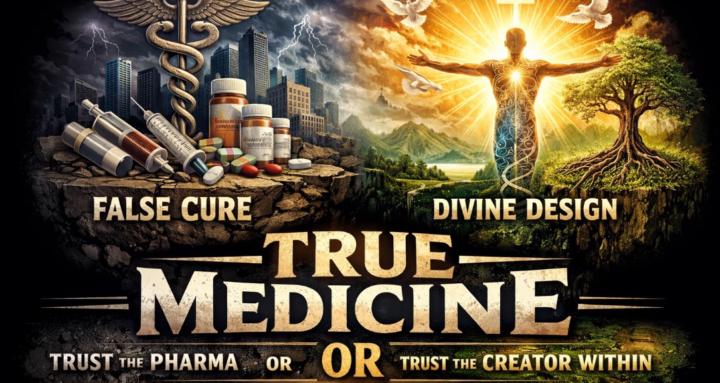
Remember: You were designed to heal. Trust the Blueprint.
0
0 comments
Fallacy #14: Ignoring the Spiritual Dimension
powered by
skool.com/true-medicine-3260
Revelation of Innate intelligence or the human body -contradicting big pharma and modern medicines hypothesis that we need their "magic" to heal.
Suggested communities
Powered by