
1d • General discussion
Why do you need your Rife to be able to produce different wave patterns?
There are different wave patterns square being the one used most commonly and Sine is another.
When using the square wave, it’s literally a square wave and the frequencies bounce around and create a spectrum of frequencies. This is important because we cannot replicate the original Royal Rife machine which by memory went up to 10 million hz.
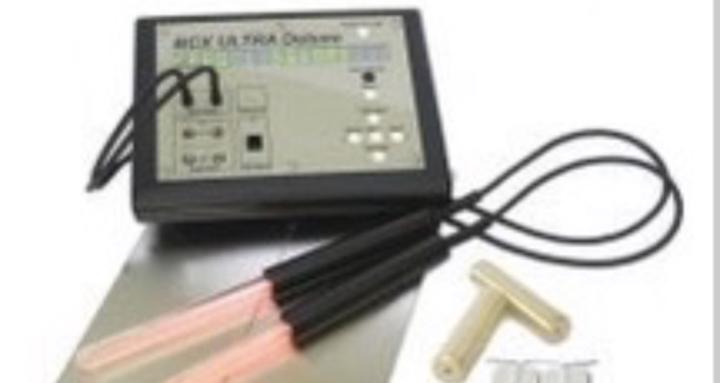
The BCX goes up to 4 million hz. By using a square wave we can bounce the frequencies up to those higher original frequencies of Royal Rife, which is one of the reasons why BCX is the one of the closest machines to the original.
Although when bouncing you will loose power in the frequency intended, so you also have to have to right duty cycle and time. The BCX has this already set up for you in the pre-stored and custom programs with clinical studies to prove.
Another common question I get as a distributor for the BCX is the GB4000 goes up to 20 million hz. What you need to understand is the RF (radio frequency) has to be higher than the frequency. GB4000 has a RF of 3.8Mhz so anyhing above that is not effective. The BCX has a RF up to 4 million hz variable. Very close in comparison with BCX slightly performing a little higher.
A Sine wave is a nice flowing wave which will give you the targeted frequency with no bouncing. So if you know that is the frequency you want and need then the sine wave is the option you want. Using sine waves can miss mutations of pathogens when they get used to a frequency and may not be reliable programs for pathogens.
That is important especially for Lyme, cancer and candida.
0
0 comments
Why do you need your Rife to be able to produce different wave patterns?
powered by
skool.com/rife-for-life-3440
Rife therapy simplified—machine comparisons, frequencies, protocols, and Lyme, co-infections and cancer support in one community.
Suggested communities
Powered by