
Dec '25 • General discussion
Importance of Branding for Restaurants and Bars
In an industry where thousands of restaurants and bars compete for attention, one question sits at the center of every successful operation: What makes your place an interesting place to go to?
It is the most important question in hospitality—separating memorable concepts from forgettable ones, and profitable destinations from “just another place to eat.” Many restaurants open their doors, serve food, and hope guests will notice. But hope is not a strategy. Branding is.
Branding is not a logo, a color scheme, or just a slogan. It is the total impression your restaurant makes on guests—the picture they carry in their minds, the emotional story they tell after visiting, and the sensory memory that brings them back. Effective branding establishes expectations before a guest ever walks through the door and shapes how they interpret every detail of their dining experience. It gives meaning to your menu, personality to your service, and direction to your decisions.
Branding: The Identity Behind the Experience
Hospitality leaders like Danny Meyer remind operators to “write their own story before someone else writes it for them.” Guests today want a restaurant with a clear point of view—a defined identity that tells them what you stand for and why your business exists. Branding is the way that identity is communicated.
Branding answers four essential questions. And, for a real-life example, I’ll answer them for the original concept of Fish Camp on Lake Eustis in Tavares, FL:
- What do we stand for? Raising up the community, revealing unique offerings from local farms, food and beverage businesses. My wife and I love road tripping in Florida, but were always disappointed after passing farms and seafood stands, when we were served pre-breaded Sysco shrimp out of a box at the nearby restaurant. Our priority was bringing the best a culinary road trip had to offer – focusing on vendors within a 2 ½ hour drive.
- What do we offer that others do not? “What the others do not” equals the “problem” that any business plan hopes to solve. And, for Fish Camp, the problem was a lack of local shine on the menus in the area. We literally created a restaurant we’d love to go to, and you need to do the same.
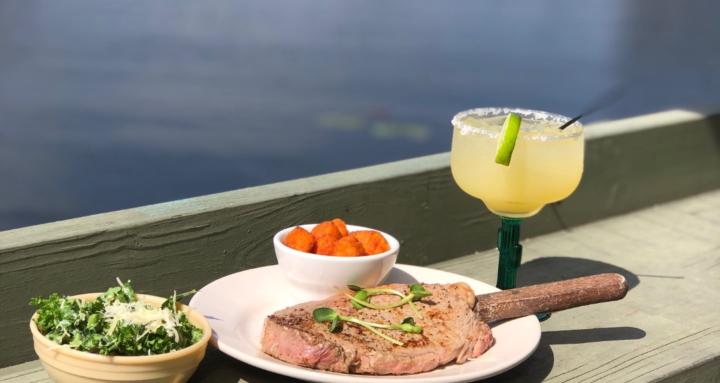
- How do we want guests to feel when they’re here? This is where hospitality and connecting your brand to your experience comes in. Everyone is royalty who walks through the door. Hospitality is the easiest way to stand out. But then there’s the branding; featuring local musicians (Fish Camp again), art for sale on the walls by local artists, and decor that celebrates the uniqueness of your zone. For Fish Camp, that included historic photos of iconic local places, decor showcasing alligators, anhingas, herons, lake life, bass fishing, etc.
- Why does our existence matter? Without a deliberate brand, a restaurant becomes interchangeable with everything around it. And once that happens, the only battlefield left is price—a race to the bottom. A strong brand, however, redefines competition. Guests choose you not because you are the cheapest or closest, but because your brand fulfills an emotional and sensory promise that only you offer.
The Power of Being Unique
A successful restaurant brand must be meaningfully different. Not through gimmicks, but through authentic, consistent uniqueness—the kind that inspires a guest to say, “You have to try this place.”
Your slogan should sum up the brand, as in Fish Camp, “Locally sourced foods, craft beers, liquors, and wines”. This is the brand’s mission statement and every employee should know it well.
This type of saying—simple, specific, and true—is more than a marketing line. It is a compass for every menu change, purchasing decision, partnership, and guest-facing message. As branding experts Al Ries and Jack Trout famously argue, branding succeeds only when it focuses on a single, memorable message. A restaurant that tries to be everything to everyone ends up being nothing to anyone.
A clear branding statement should summarize:
- your concept
- your identity
- your promise
- and the unique reason guests should choose you
When done well, it becomes the foundation of all hospitality and marketing strategy.
Branding as a Sensory Experience
Branding is not purely intellectual—it is fundamentally sensory. Guests remember:
- the smell of the dining room
- the sound of the bar
- the comfort of the seating
- the way cocktails are presented
- the visual layout of the food
- the feel of the atmosphere
- the way the staff made them feel
- These moments become “memory anchors.” As Joe Pine, co-author of The Experience Economy, notes, guests remember experiences not because they were instructed to, but because they cannot help remembering them.
Branding is the intentional creation of these emotional and sensory imprints.
Marketing can get a guest in the door the first time, but branding determines whether they return. Marketing creates awareness; branding creates loyalty.
Consider the metaphor of branding cattle—not for the brutality of the practice, but for the clarity of its purpose. A brand marks something in a way that cannot be confused or forgotten. Likewise, a successful restaurant “brands” its guests with unforgettable impressions that stay with them long after their visit ends.
Branding Is the Goal; Marketing and Hospitality Are the Tools
Many operators mistakenly place marketing at the top of their priorities. Marketing is essential, but it is not the core. Marketing is an amplifier—advertising, social media, events, and promotions broadcast your message, but they cannot fix a weak brand. If the message itself is unclear, marketing only spreads that confusion further.
Hospitality, meanwhile, is the execution of the brand’s promise. As Will Guidara explains, hospitality is “giving people more than they expect.” Branding sets the expectation; hospitality delivers it.
A strong brand follows a simple structure:
- Branding defines the promise.
- Marketing communicates the promise.
- Hospitality fulfills the promise.
Branding is the strategy. Marketing and hospitality are the tactics. All three must be aligned to create a cohesive, memorable experience.
Why Branding Matters More Than Ever
In a world of endless dining options—delivery apps, food halls, ghost kitchens, pop-ups, specialty bars, national chains, and local staples—attention has become scarce. Diners choose quickly, often based on emotion. A strong brand cuts through this noise.
A compelling brand helps a restaurant:
- command higher prices
- build loyalty
- reduce competitive pressure
- attract staff who feel pride in the mission
- generate organic word-of-mouth
- create a legacy that lasts
- remain consistent even as it grows
If guests cannot clearly describe what your restaurant is about, then you do not yet have a brand—and without a brand, the business is vulnerable.
Developing a Restaurant Brand
A complete brand framework includes:
- Brand Purpose – Why you exist beyond serving food.
- Brand Values – What principles guide your decisions.
- Brand Personality – The style and tone of your concept.
- Brand Promise – What guests can rely on every visit.
- Brand Slogan – A concise phrase that captures your essence.
- Brand Sensory Cues – The sights, sounds, and flavors tied to the experience.
- Brand Story – The narrative that explains who you are and why it matters.
When these elements align, the brand becomes a living, breathing ecosystem.
Branding as the Guest’s Story
The strongest brands understand that guests don’t remember what you said— they remember how you made them feel.
A successful brand:
- fulfills a desire
- creates excitement or comfort
- inspires trust
- sparks nostalgia or curiosity
- connects guests to something larger than themselves
“Why would anyone want to go to your establishment?” is answered not just by your décor or your menu alone, but by the emotional space your brand occupies in a guest’s mind.
The Experience Becomes the Brand
Every moment of the visit reinforces or weakens your brand:
- the first impression at the entrance
- the greeting
- the menu design
- the music level
- the personality of the bartender
- the timing and presentation of the food
- the farewell at the door
Branding is not what you say. Branding is what guests consistently experience.
If guests can describe your restaurant in one sentence—and that sentence matches your intention—your branding is working.
Conclusion
Branding is the foundation of a successful restaurant or bar. Without it, a business competes only on price, convenience, or chance. With it, a restaurant builds loyalty, differentiation, and lasting value.
Marketing attracts the first visit. Hospitality earns the second. Branding shapes every visit after.
A powerful brand imprints emotion, identity, and memory on every guest. It answers the essential question—clearly and convincingly:
Why would anyone want to go to your establishment?
If you can articulate that answer and deliver it with authenticity, your brand will thrive—and so will your business.
1
0 comments
Importance of Branding for Restaurants and Bars
skool.com/restaurant-pros-9184
In the pyramiding complexity that is the modern restaurant & bar industry, get quick advice from a pro that could save you thousands of dollars.
Powered by