
12d • 🧠⚙️📊Weekly workshops
Lesson Title: Notice — Law vs. Strategy
━━━━━━━━━━━━━━━━━━━━━━━━━━━━━━━━
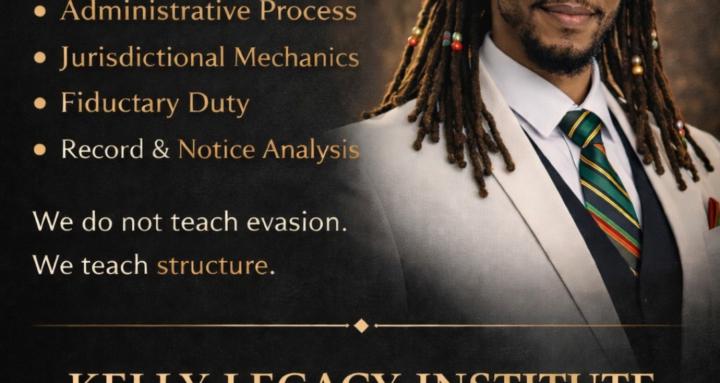
KELLY LEGACY INSTITUTE
Lesson Title: Notice — Law vs. Strategy
━━━━━━━━━━━━━━━━━━━━━━━━━━━━━━━━
OBJECTIVE:
To distinguish between what the law requires and what strategic commercial practice recommends regarding notice.
I. WHAT IS “NOTICE” LEGALLY?
Notice is formal communication reasonably calculated to inform a party of:
• A claimed right
• A default or breach
• A demand
• A pending action
• An opportunity to cure
Notice is not intimidation.
Notice is not ritual.
Notice is procedural fairness.
Due process is built on notice and opportunity to be heard.
II. IS THREE (3) NOTICES REQUIRED?
No universal statute or commercial rule requires “three notices” to form a contract or establish default.
The controlling authority is:
• The contract itself
• The governing statute
• The applicable procedural rules
• Standards of reasonableness
One properly drafted and properly served notice can be legally sufficient.
III. WHY DO PEOPLE SEND THREE?
Three notices is a strategic reinforcement method.
It serves to:
• Eliminate claims of non-receipt
• Demonstrate good faith
• Show opportunity to cure
• Strengthen evidentiary posture
• Build administrative record
This is strategy not magic.
Repetition does not create validity.
Documentation creates defensibility.
IV. TACIT AGREEMENT CLARIFIED
Silence alone does not automatically create a contract.
Courts look at:
• Objective conduct
• Duty to speak
• Acceptance of benefit
• Prior course of dealing
An unrebutted affidavit may carry evidentiary weight.
It does not automatically manufacture contract formation.
Offer + Acceptance + Consideration + Intent
These are still required.
V. THE INSTITUTIONAL DISTINCTION
At Kelly Legacy Institute we teach:
Law = What is required.
Strategy = What is prudent.
Procedural efficiency is not about volume.
It is about compliance, proof, and structure.
ASSIGNMENT:
1. Draft a single, legally sufficient Notice of Default.
2. Identify the governing authority (contract clause or statute).
3. Define a reasonable cure period.
4. Design a proof-of-service method.
Submit for structural review.
CLOSING PRINCIPLE:
Strength in commerce is not created by ritual repetition.
It is created by enforceable structure.
— Kelly Legacy Institute
4
1 comment
Lesson Title: Notice — Law vs. Strategy
powered by
skool.com/kelly-legacy-institute-9231
Private institute for the structured study of law, jurisdiction, record, and procedure.
Education only. No legal representation.
Suggested communities
Powered by