
🔥
May 13 • 🎬 Season 1: The Story Begins
A Chapter on Hollywood, Identity, and Japanese-American Culture
My Real Story
Hollywood, Survival, and Becoming Who I Really Was
A Chapter on Hollywood, Identity, and Japanese-American Culture
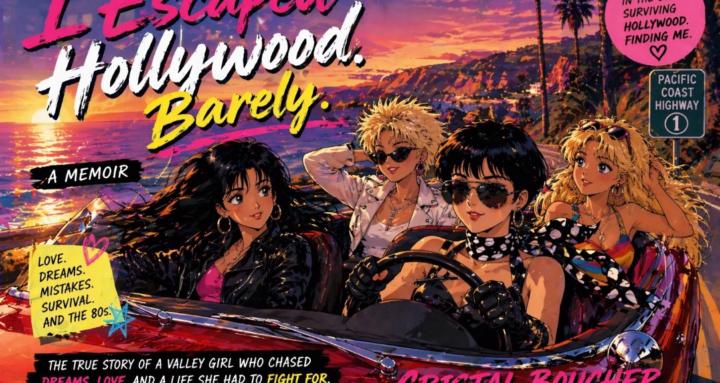
Los Angeles in the 1980s was a city built on illusion — beautiful on the surface, but emotionally chaotic underneath. Palm trees swayed above cracked sidewalks while teenagers chased dreams through malls, skating rinks, casting calls, and smoke-filled clubs glowing with neon signs. Hollywood sold fantasy to the world, but beneath the surface lived an entire generation of young people trying to survive the pressure of image, fame, beauty, and escape.
Back then, America was obsessed with celebrity culture. Music television ruled the afternoons. Fashion magazines dictated what girls should look like, and movies taught boys how to act tough. The Sunset Strip became a living stage where rock bands, models, actors, and runaways crossed paths every night. Cocaine flowed through parties like champagne. Everyone seemed to be performing a version of themselves.
But culture is never only entertainment. It is survival. It is what people create when they are trying to belong.
For many American models working internationally during the 1980s, identity became complicated in unexpected ways. Inside the home, there were expectations rooted in discipline, humility, respect, and sacrifice. Outside the home was America — loud, individualistic, rebellious, and hungry for attention.
The contrast between Japanese and American culture shaped the experiences of many young American models who suddenly found themselves living and working inside a completely different world.
In Japanese culture, silence often speaks louder than words. Respect for elders is deeply embedded in daily life. Families carry invisible emotional contracts built around duty and endurance. Shame is not simply personal; it reflects upon the family unit. Emotional restraint is considered maturity.
American culture in the 1980s was almost the opposite. Self-expression was celebrated. Teen rebellion became fashionable. Pop stars shouted their pain into microphones while movies romanticized freedom and reinvention. Young people were encouraged to stand out.
Living between those two realities created emotional whiplash.
In America, I understood one version of life.
In Japan, I discovered another.
And somewhere between those two worlds, I was trying to figure out who I really was.
For young American girls entering the modeling industry, beauty quickly became complicated — especially when working internationally in places like Japan. In America, Asian women were often stereotyped as quiet, exotic, obedient, or mysterious. In Japan, Western beauty standards also began influencing fashion and media during the economic boom of the 1980s. Blonde hair, American music, and Hollywood glamour became symbols of modern sophistication.
Tokyo itself was transforming during that era.
Japan’s economic bubble created a futuristic atmosphere unlike anywhere else in the world. Department stores glittered with luxury goods. Young people flooded districts like Shibuya and Harajuku searching for identity through fashion, music, and nightlife. American pop culture mixed with Japanese aesthetics to create entirely new subcultures.
Anime also evolved during this period into something darker and more emotional. Stories were no longer just for children. Themes of loneliness, technology, destruction, and identity began appearing everywhere. Japan’s postwar trauma, rapid modernization, and fear of losing tradition quietly lived inside these animated worlds.
Meanwhile, many young women entered modeling not simply for glamour but for escape.
Modeling offered travel, money, attention, and reinvention. It allowed girls to become someone else, even temporarily. But the industry could also be ruthless. Agencies controlled appearances. Men controlled opportunities. Young women were often treated as products long before they understood their own worth.
Hollywood and Tokyo were mirrors of each other in strange ways.
Both cities sold fantasy. Both consumed youth. Both rewarded beauty. Both hid loneliness behind bright lights.
For immigrant families and mixed-culture children, survival often meant shape-shifting. One version of yourself existed at school. Another existed at home. Another appeared on the cameras.
Sometimes the hardest part was not escaping danger. It was discovering who you really were after spending years becoming what everyone else wanted.
The older generations rarely discussed trauma openly. Japanese families especially carried pain quietly through war memories, migration, sacrifice, racism, and economic hardship. Many mothers protected their children through caution and control because fear itself had become inherent.
Protection could look like strictness. Protection could sound like silence. Protection could feel like distance.
But underneath it was love.
A mother who survived instability often watched the world differently. She recognized danger before others noticed it. She understood how quickly beauty, fame, or attention could turn predatory. In cities like Hollywood, that instinct could save lives.
By the late 1980s and early 1990s, the dream of Hollywood began cracking for many people. Behind the glamorous image were stories of exploitation, addiction, abuse, and burnout. Young artists disappeared into depression. Models aged out overnight. Child actors struggled to become adults.
The world worshipped celebrity but ignored humanity.
And yet, despite all of it, there was beauty too.
There were skating nights under fluorescent lights. There were Japanese convenience stores glowing at midnight. There were mixtapes, anime openings, handwritten letters, Polaroid photos, and friendships that felt eternal. There were mothers trying to protect their daughters. There were daughters trying to become free.
History is not only about wars and governments. It is the emotional atmosphere people live in.
The 1980s carried excess, glamour, loneliness, rebellion, and cultural collision all at once. For those of us who moved between America and Japan during that era, it felt like standing between two completely different worlds — one chasing the future at full speed and the other trying not to lose its soul.
That tension shaped an entire generation.
And for some people, surviving that era became the real story.
4
8 comments
A Chapter on Hollywood, Identity, and Japanese-American Culture
powered by
skool.com/free-fallin-1989-1364
Real stories from Hollywood to Japan in the 80s. A place to share memories, experiences, and step inside a memoir unfolding in real time.
Suggested communities
Powered by