
Pinned

🍀
3d •
Claude + Clay = Endless Lead Generation!
Learn how to use Clay Workflows with Claude Code to turn Claude into a lead generation machine. This hack lets you find qualified leads in any industry and location, pull verified emails from proprietary data sources, and enrich contacts with thought leadership data for personalized outreach. Instead of manually filtering leads through Clay's interface, you simply ask Claude in plain English and it handles everything autonomously, sourcing, enriching, and organizing leads while you sleep. Check it out 👇👇👇
Pinned
🍀
4d •
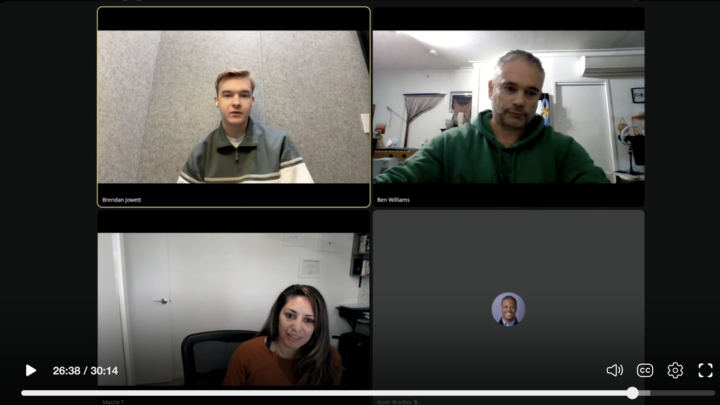
🎥 Inside This Week's Q&A: How to Actually Price Voice AI
Every week inside the AI Launchpad we run a live, themed Q&A. This week's was Voice AI pricing, and it's one of the most common things people get wrong when they start charging. Here's a taste of what we covered 👇 - Setup fees: we charge ~$6K to $12K per build, priced on complexity. Most beginners undercharge by 5-10x. - The retainer trap: a $500/mo retainer is money for nothing when things go fine, and a huge headache when they don't. There's a smarter tier structure that fixes this. - Setup fee vs retainer: when to lean on the upfront fee and hand over the IP, and when to hold out for the monthly. Get this wrong early and you get locked into industries you don't want. - Deposits before you build: why we never wireframe until a deposit is paid, and how the first call is really just about selling that deposit. - Hard APIs = opportunity: a painful integration is actually your chance to build a product, not just bill a client. In the full session we go deep on exact retainer pricing tiers, the 2-page contract setup we use, dashboards, the discovery process, and a Claude Code build breakdown, plus you can ask about YOUR specific deals live on the call. 👉 Join here: https://www.skool.com/brendans-ai-launchpad
Pinned
🍀
Aug '24 •
✅ GETTING STARTED 👉 (READ THIS)
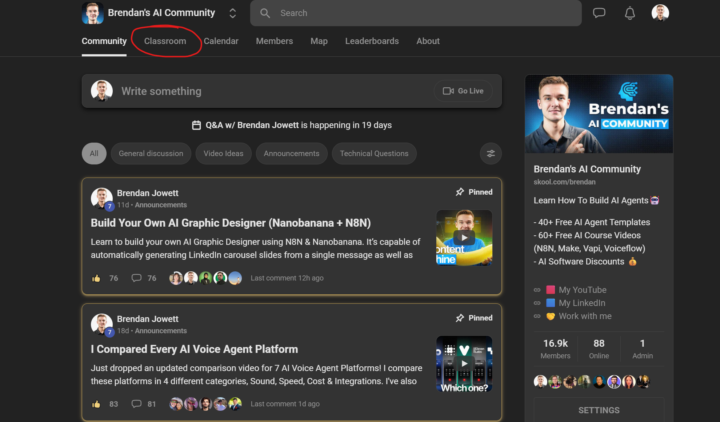
Hey there, Thanks for joining the community, it's great to have you here! It'd be great to get to know each other! You can use this simple format to make an intro post: Hey, I'm from ____________. For fun I like to _____________. Here's a pick of my workspace. ------ To access the resource hub, please click 'Classroom' at the top, then click 'Resource Hub'.

4h •
Single agent (inbound + outbound in one prompt) vs. two specialized agents — what's the right call?
Building a B2B outbound voice agent on Retell (n8n picks who gets called and when, hands the context to the agent, Retell executes the call). Works well for outbound — the agent always knows exactly who it's calling and why, so the prompt is fully tailored to that one scenario. Now I want to support inbound too — someone sees a missed call and calls back, or hears about us and calls in cold. Problem: my current prompt assumes outbound context everywhere. It opens with "Is this [name]?" and assumes it already knows her city — none of that holds for an inbound call from an unknown number. I see two ways to solve this: 1. One agent, bigger prompt — add a full inbound branch: "if this is inbound with no known context, do X instead." One agent, one number to manage, but the prompt grows a lot, and now the model has to figure out which branch applies on every single call, on top of holding both sets of instructions. 2. Two specialized agents — a lean outbound-only agent and a lean inbound-only agent, each with a fully dedicated single-purpose prompt, routed by call direction at the phone number level (inbound_agent vs outbound_agent on Retell). My honest concern with option 1: does a longer, branchy prompt with in-call conditional logic measurably hurt response quality or latency, or meaningfully raise cost, compared to two lean single-purpose prompts? Or am I overthinking it and modern models handle this fine? Curious how people running production voice agents (Retell or similar) handle this — one flexible agent, or multiple specialized ones per direction/use case? Real experience > theory here, especially anything on cost or quality tradeoffs you've actually measured.

3h •
claude skills referenced in Youtube videos
Hey I have seen several videos now where he sais he shares all the skill files (like humaizer, front end design, etc. ) in his Skool Community. Can someone show me how to get to those?
1-30 of 7,071
skool.com/brendan
A free community for AI Voice Agents, Claude Code & n8n.
Join to learn, share ideas, and build real systems for the future.
Leaderboard (30-day)
1

+36
2

+20
3

+17
4

+13
5

+12
Powered by