
Dec '25 • General discussion
A testimony of the seven years of tribulation and the seven churches
God’s order, the battle of the soul, and the dwelling that is formed
Before speaking of the seven years of tribulation and the seven churches, it is essential to understand how Scripture speaks of time and meaning. When Christ was asked about timing, He answered clearly: “It is not for you to know times or seasons, which the Father has put in His own authority” (Acts 1:7). God gives numbers in Scripture not so that we calculate dates, but so that we recognize order, pattern, and spiritual process.
The seven years spoken of in Revelation are not confined to a single moment in history, nor do they belong only to one future generation. They do not mean “seven calendar years” in the way the flesh counts time. These seven years describe seven stages of confrontation between Light and darkness that every soul must face. This battle has unfolded in every generation that has walked the earth.
There will indeed come a time when the darkness of human hearts reaches such fullness that this confrontation will unfold collectively, all at once, upon the earth. Scripture speaks of this
First year of tribulation — false light and the loss of first love
Linked to the first day of creation
The first seal and the church of Ephesus
On the first day of creation, God speaks the first word that makes all things possible:
“Let there be light” (Genesis 1:3).
This light is not yet the sun, the moon, or the stars. It is the initial awakening, the entrance of divine illumination into darkness. Immediately, God separates the light from the darkness. From the very beginning, Light is not meant to coexist with what opposes it.
This first day reveals God’s order: Light must be received and guarded.
But when Revelation opens the first seal, a white horse goes forth, conquering and to conquer (Revelation 6:1–2). This is not the darkness that openly opposes God. It is false light — authority that looks righteous, convincing, enlightened, and victorious, yet is not rooted in surrender to God. It is illumination without intimacy, power without humility, truth without love.
This is the first battle of the soul, and it is the most subtle.
Christ warned directly about this stage when He said:
“Take heed that no one deceives you. For many will come in My name, saying, ‘I am the Christ,’ and will deceive many” (Matthew 24:4–5).
This deception is not always external. Often, it happens within. The soul encounters truth, faith, or awakening, but slowly begins to replace relationship with God with identity about God. Knowledge grows. Activity increases. Discernment sharpens. Yet intimacy quietly fades.
The soul may still speak of God, serve God, and defend truth — but love is no longer the center. Prayer becomes a habit rather than a meeting place. Worship becomes routine rather than communion. The Light is present, but it is no longer warm.
This is why this year corresponds so deeply to Day One. The Light has entered, but the separation between true Light and false light is still being tested.
People in this stage often do not feel rebellious. They feel tired. They may say, “I know the truth, but I don’t feel close anymore.” Or, “I’m faithful, but something is missing.” This is not always sin — it is often drift.
When this first year of tribulation is not fully passed, the soul becomes what Christ names as the church of Ephesus.
Ephesus is not condemned. It is acknowledged. Christ says:
“I know your works, your labor, and your patience… Nevertheless, I have this against you, that you have left your first love” (Revelation 2:2–4).
Notice what Christ does here. He does not deny their faithfulness. He does not dismiss their discernment. He remembers their beginning. His heart toward Ephesus is not anger — it is longing.
He says:
“Remember therefore from where you have fallen; repent and do the first works.”
He is calling the soul back, not to activity, not to knowledge, not to effort — but to love.
The inner temple exists. The Light entered. But love was not guarded. The church becomes the result of how the soul lived in the flesh: active, discerning, faithful — yet distant.
So the pattern becomes clear:
- Day One: God gives Light and separates it from darkness.
- Year One: False light challenges discernment and intimacy.
- Ephesus: The soul keeps truth but loses first love.
This is where many journeys begin to stall — not because the soul rejected God, but because it forgot why it began.
Second year of tribulation — division, separation, and the mercy of unrest
Linked to the second day of creation
The second seal and the church of Smyrna
On the second day of creation, God does something that feels unsettling to the human heart. He does not yet bring forth land or life. Instead, He divides the waters, separating what is above from what is below (Genesis 1:6–8). The waters are still present, but they are no longer mixed. A boundary is established where confusion once flowed together.
Notably, God does not say “it is good” on this day. Not because His work is flawed, but because separation is painful. It is necessary, but it is not yet complete. Day Two reveals that before anything stable can grow, mixture must be divided.
This is the order of God: clarity before foundation.
When the second seal is opened in Revelation, a red horse goes forth, and peace is taken away (Revelation 6:3–4). This is not random violence alone. It is the removal of false peace — peace that was built on compromise, silence, or coexistence between Spirit and flesh.
Christ spoke directly into this stage when He said:
“Do you think that I came to bring peace on earth? I tell you, no, but rather division” (Luke 12:51).
This second year is where the soul begins to feel inner unrest. What once seemed compatible no longer is. Old habits resist change. Old relationships strain. Old identities begin to fracture. The soul feels tension, sometimes confusion, sometimes grief, because what used to flow together is now being separated.
Many experience this year as loss. They may feel misunderstood. They may feel alone. They may feel like their inner world is being torn apart. But what is actually happening is that God is exposing mixture so that life can eventually be built on truth.
This unrest is mercy.
Christ also says:
“Whoever is not with Me is against Me” (Matthew 12:30).
Neutrality ends here.
In this year, the soul is tested in allegiance. It must begin to choose what belongs above and what belongs below. Spirit and flesh can no longer share the same waters. But the soul is still learning how to stand in that separation.
When this second year of tribulation is not yet fully passed, the soul becomes what Christ calls the church of Smyrna.
Smyrna represents the soul that is faithful under pressure. It has not compromised truth, but it is still wounded by the cost of separation. Christ does not rebuke Smyrna. Instead, He speaks with compassion and strength:
“I know your tribulation and your poverty (but you are rich)… Do not fear what you are about to suffer” (Revelation 2:9–10).
Christ’s heart toward Smyrna is deeply tender. He sees the pain. He sees the fear. He sees the endurance. This is not a soul that has failed. This is a soul still in the fire, still enduring the consequences of separation.
Many people in this place feel weary. They may say, “I believe, but everything is hard.” Or, “I chose truth, and now everything feels unstable.” Smyrna is the soul learning to stand without leaning on what it once depended on.
So again the order becomes clear:
- Day Two: God divides the waters — clarity without comfort.
- Year Two: Peace is removed so allegiance can be revealed.
- Smyrna: The soul remains faithful, but is still enduring the pain of division.
This stage is not the end. It is the necessary passage that leads toward solid ground.
Third year of tribulation — foundation, trust, and where the soul chooses to build
Linked to the third day of creation
The third seal and the church of Pergamum
On the third day of creation, God gathers the waters together so that dry land may appear (Genesis 1:9–10). For the first time since Light entered, something stable emerges. Chaos recedes enough for ground to be revealed. And upon that ground, God causes vegetation to grow—seed-bearing plants and fruit-bearing trees, each according to its kind (Genesis 1:11–12).
This day reveals something essential about God’s order: life cannot grow in instability. The seed of Light that entered on the first day, and the separation that began on the second, now require a foundation. Roots need soil. Growth needs firmness. What is planted will reproduce according to what it truly is.
Christ later echoes this same truth when He speaks of houses built on rock versus houses built on sand, and again when He says:
“Destroy this temple, and in three days I will raise it up” (John 2:19).
He is speaking of the inner temple, the soul itself. What is torn down and rebuilt depends entirely on the foundation.
When the third seal is opened, a black horse appears, and its rider holds scales (Revelation 6:5–6). Everything is weighed. Everything is measured. Scarcity enters the experience. Pressure begins to touch practical areas of life—security, provision, future, control.
This is the year when faith moves from belief into dependence.
Christ speaks directly into this battle:
“No one can serve two masters… You cannot serve God and mammon” (Matthew 6:24).
In this third year, the soul is tested in trust. It is no longer enough to say, “I believe.” The question becomes, “What am I actually building my life on?” The soul begins to feel the cost of obedience. Choosing truth may threaten comfort. Surrender may feel risky. The temptation arises to adjust convictions just enough to feel safe.
Many people in this stage say things like:
“I still believe, but I have responsibilities.”
“I can’t afford to fully obey right now.”
“God understands why I need to bend a little.”
This is not always rebellion. Often it is fear of instability. The soul wants firm ground, but is afraid to let go of what once provided security—even if that security came from below.
This is why this year mirrors the third day so precisely. Dry land has appeared, but the soul must choose whether to stand on it, or retreat back into the waters.
When this third year of tribulation is not fully passed, the soul becomes what Christ calls the church of Pergamum.
Pergamum is a soul that still holds faith. Christ acknowledges this clearly:
“You hold fast My name” (Revelation 2:13).
But He also reveals the problem: compromise has entered the foundation. Truth and accommodation now coexist.
Christ says:
“You dwell where Satan’s throne is.”
This does not mean the soul has chosen evil. It means the soul has allowed two foundations to remain. Part of life is built on God. Another part is built on fear, control, or survival. The seed is planted, but the soil is divided.
Pergamum reveals the inner temple when the foundation is mixed. Life continues. Faith is confessed. But the ground is not wholly surrendered.
So the pattern becomes unmistakable:
- Day Three: God reveals dry land so life can take root and bear fruit.
- Year Three: Scarcity tests trust and exposes where the soul is truly built.
- Pergamum: The soul remains divided, standing partly on truth and partly on compromise.
This stage asks the soul a quiet but piercing question:
Am I building on what is solid, or on what feels safe?
Fourth year of tribulation — true light, reflected light, and the death of false identity
Linked to the fourth day of creation
The fourth seal and the church of Thyatira
On the fourth day of creation, God places the sun, the moon, and the stars in the heavens (Genesis 1:14–19). This day is not about introducing light for the first time — Light already entered on Day One. This day is about governance. God establishes which light gives life, which light reflects, and which lights guide.
The sun is constant. It gives warmth, life, and growth. Without it, nothing lives.
The moon has no light of its own. It reflects what it receives and changes in phases.
The stars do not rule; they guide through darkness.
This reveals God’s order clearly: true Light must rule. Reflected light has a purpose, but it cannot govern life. Guidance is helpful, but it must never replace the source.
Spiritually, the fourth day asks the soul: What is actually governing you?
When the fourth seal is opened, a pale horse appears, and its rider is named Death (Revelation 6:7–8). This is not arbitrary destruction. This is the exposure and collapse of what was never truly alive. False identities, borrowed light, and tolerated illusions begin to lose their power.
Christ speaks directly into this moment when He says:
“Whoever desires to save his life will lose it, but whoever loses his life for My sake will find it” (Matthew 16:25).
This fourth year is deeply unsettling for the soul. What once seemed to sustain identity no longer works. Roles, habits, beliefs, or self-images that once provided meaning begin to feel empty. The soul may experience grief, confusion, or fear because something familiar is dying.
But this death is not punishment. It is mercy.
God is allowing what is false to die so that what is true may live. The soul is being invited to stop living by reflected light — by appearances, by others’ faith, by borrowed certainty — and to return to the source.
Many people in this stage say things like:
“I don’t recognize myself anymore.”
“What used to work doesn’t work now.”
“I feel like something is being taken from me.”
What is being taken is not life — it is illusion.
When this fourth year of tribulation is not fully passed, the soul becomes what Christ calls the church of Thyatira.
Christ begins by acknowledging what is good:
“I know your works, love, service, faith, and patience” (Revelation 2:19).
This is not a cold soul. It loves. It serves. It endures.
But then Christ reveals His grief:
“Nevertheless, I have this against you, that you tolerate…” (Revelation 2:20).
Thyatira represents the soul that knows the Light, but still allows something destructive to remain inside. It confuses patience with permission, love with avoidance, compassion with compromise. False light is no longer obvious — it is integrated.
The sun is present, but the moon is ruling.
Christ’s words here are strong because His concern is deep. He sees that what is tolerated is slowly suffocating life. Yet even here, He offers space for repentance. His desire is not to destroy the temple, but to restore true governance within it.
So the pattern continues:
- Day Four: God establishes the sun to rule, the moon to reflect, and the stars to guide.
- Year Four: False identities die so true Light can govern.
- Thyatira: The soul loves God, but still tolerates what replaces His rule.
This stage asks the soul a difficult but freeing question:
What light am I truly living by?
Fifth year of tribulation — appearance, breath, and the question of true life
Linked to the fifth day of creation
The fifth seal and the church of Sardis
On the fifth day of creation, God fills the waters with living creatures and the sky with birds (Genesis 1:20–23). Life begins to move, to breathe, to multiply. This day is about animation — not just form, but motion; not just structure, but breath.
The waters represent the inner depths, the emotional and unseen currents of the soul.
The birds represent breath, movement, and what rises upward.
Day Five reveals God’s order: life must be alive. It must move, breathe, and respond. A form without breath is not yet complete.
When the fifth seal is opened in Revelation, the scene shifts inward. The souls under the altar cry out (Revelation 6:9–11). These are not external disasters; this is an internal cry. Faith exists, but it is weary. Life exists, but it is restrained. The soul is waiting.
Christ speaks directly into this stage with urgency and compassion:
“Stay awake, and strengthen what remains” (Revelation 3:2).
And elsewhere He says:
“The words that I speak to you are spirit, and they are life” (John 6:63).
This fifth year is dangerous precisely because it looks stable. Nothing dramatic is collapsing. The soul continues to function. It may pray, serve, attend, speak the language of faith. But inwardly, something has grown quiet.
Many people in this stage say things like:
“I’m still here, but I don’t feel much.”
“I know what to say, but I feel disconnected.”
“I’m not rebelling — I’m just tired.”
This is not open sin. It is loss of breath.
The soul has shape, but not vitality. Movement has slowed. The waters are still, but no longer alive. The birds remain, but they no longer soar.
When this fifth year of tribulation is not fully passed, the soul becomes what Christ calls the church of Sardis.
Christ’s words to Sardis are sober and piercing:
“I know your works, that you have a name that you are alive, but you are dead” (Revelation 3:1).
This is not condemnation. It is diagnosis.
Sardis is the soul with reputation but no pulse. Appearance without breath. Form without Spirit. Christ does not say nothing remains. He says:
“Strengthen what remains… Remember… repent.”
He sees embers. He calls for awakening.
This stage is often the result of prolonged endurance without renewal. The soul learned to survive, but forgot how to breathe. It did not abandon God — it simply stopped responding inwardly.
So the order continues:
- Day Five: God fills the waters and sky with living, breathing life.
- Year Five: The soul is tested in authenticity and inner vitality.
- Sardis: The soul looks alive, but has lost its breath.
This stage asks a quiet but urgent question:
Am I merely functioning — or am I truly alive in the Spirit?
Sixth year of tribulation — the flesh revealed, the breath of God resisted or received
Linked to the sixth day of creation
The sixth seal and the church of Laodicea
On the sixth day of creation, God brings forth humanity (Genesis 1:26–27). This is the day of image and authority. Humanity is formed from the earth, yet something distinct happens that did not occur with any other creature: God breathes. Life is not merely created — it is inhabited. Humanity becomes a living soul because the breath of God enters it.
This day reveals God’s order clearly: the human being is meant to be a dwelling place for God. The body is formed from the earth, but life comes from the breath. Flesh without breath is only dust. Authority without surrender is only self-rule.
When the sixth seal is opened, Revelation describes cosmic shaking: the sun darkened, the moon like blood, the stars falling, and every mountain and island moved out of place (Revelation 6:12–17). This is not merely external catastrophe. Spiritually, it is total exposure. Everything that once gave stability is shaken. All illusions collapse. Nothing remains hidden.
Christ speaks directly into this stage when He says:
“If anyone desires to come after Me, let him deny himself, take up his cross, and follow Me” (Matthew 16:24).
This sixth year is the most confronting. The soul can no longer rely on knowledge, endurance, compromise, patience, or appearance. The question is no longer, “Do I believe?” but, “Who rules?”
The flesh resists this moment fiercely. Independence feels threatened. Self-sufficiency feels justified. The soul may say, “I have everything I need.” It may believe it lacks nothing — yet something essential is missing.
This is why this year aligns so precisely with the sixth day. Humanity was created to bear God’s image, not to replace it. The breath was given so that God could dwell — not so that the self could reign.
When this sixth year of tribulation is not fully passed, the soul becomes what Christ calls the church of Laodicea.
Christ’s words to Laodicea are among the most misunderstood, yet they are spoken with tender urgency, not rejection:
“You say, ‘I am rich, have become wealthy, and have need of nothing’ — and do not know that you are wretched, miserable, poor, blind, and naked” (Revelation 3:17).
Laodicea is not ignorant. It is complete — materially, intellectually, outwardly. And that completeness has replaced dependence. The temple exists. The structure is finished. But the Breath is no longer governing.
Christ does not force entry. He does not tear the door down. He knocks.
“Behold, I stand at the door and knock. If anyone hears My voice and opens the door, I will come in and dine with him” (Revelation 3:20).
This is not a call to unbelievers. It is a call to a finished temple that has shut the Light outside.
So the order reaches its most serious test:
• Day Six: God forms humanity and breathes life into it.
• Year Six: Everything is shaken to reveal who truly reigns.
• Laodicea: The soul is complete in form, but ruled by self instead of God.
This stage asks the most piercing question of all:
Is the breath of God still governing me — or have I taken the throne myself?
Seventh year of tribulation — silence, sealing, and the return to Sabbath
Linked to the seventh day of creation
The seventh seal and the completion of the inner temple
On the seventh day of creation, God rests (Genesis 2:2–3). This rest is not exhaustion. It is completion. Nothing more needs to be added. Nothing more needs to be separated, built, exposed, or tested. God blesses this day and calls it holy because His work is finished and perfectly ordered.
The seventh day reveals God’s ultimate intention: rest in full alignment.
When the seventh seal is opened in Revelation, something unexpected happens. There is no noise, no destruction, no announcement. Instead, “there was silence in heaven for about half an hour” (Revelation 8:1).
This silence is profound. It is the silence that comes after a decision has been made. Nothing more needs to be revealed. Nothing more needs to be shaken. The battle has already spoken.
Spiritually, this seventh year is not about struggle — it is about settling.
By this point, the soul has already chosen. Throughout the previous years, Light was offered, separation was enforced, foundations were tested, false identities were exposed, breath was examined, and authority was revealed. Now, the soul stands as what it has become.
This is why there is no eighth church.
Because the seventh year is not diagnosis — it is completion.
Some souls enter rest.
Some souls remain unrested.
But all souls are sealed according to what they have chosen.
Christ spoke of this readiness when He said:
“Watch therefore, for you do not know the day nor the hour” (Matthew 25:13).
This is not fear — it is sobriety.
The seventh year corresponds directly to the seventh day because both speak of alignment. Sabbath is not inactivity. It is harmony. It is the state where the inner temple is fully ordered, fully inhabited by God, and no longer resisting His rule.
This is also why Christ’s final act before entering rest was complete forgiveness. On the cross, just before surrendering His Spirit, He said:
“Father, forgive them, for they do not know what they do” (Luke 23:34).
This was not weakness. This was the final release. Nothing of darkness could enter Sabbath. Everything that did not belong to Light was let go.
Only then could He say, “It is finished.”
The seventh year is where the soul is invited to do the same — to release fully, forgive fully, surrender fully. Not after Sabbath, but before entering it.
So the order reaches its fulfillment:
- Day Seven: God rests because His work is complete.
- Year Seven: Silence falls because the soul has chosen.
- Sabbath: The inner temple either rests in God — or remains unrested by its own refusal.
There is no striving here. No argument. No coercion.
Only truth.
“Let the one who is righteous be righteous still, and the one who is filthy be filthy still.” (Revelation 22:11)
This is not condemnation. It is honesty.
The Sabbath does not change us.
It reveals who we have become.
A closing prophetic reflection
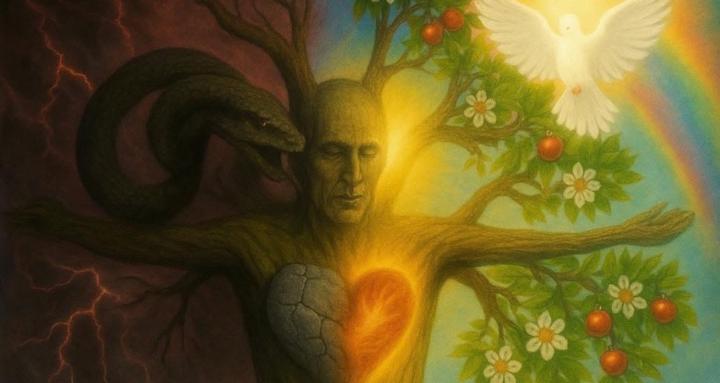
This journey is not written so that we fear the future, but so that we recognize the present. The seven years of tribulation are not only something the world will face together one day — they are something each soul faces now, quietly, inwardly, in the choices made while living in the flesh.
Darkness works hard to push this battle into a distant future so that the soul remains asleep. But the Spirit speaks now, because now is where the decision is made.
The church is not a building.
The church is the soul once Light has entered.
And every soul becomes a dwelling.
The only question is: Who dwells within?
May these words find you well.
In God’s timing, I trust that this testimony will reach the one who needs it — the one who has ears to hear and eyes to see.
0
0 comments
A testimony of the seven years of tribulation and the seven churches
powered by
skool.com/awakened-by-christs-light-4098
A Christ-centered community for sharing the living light, awakening the Bride, and walking in spirit, truth, and love.
Suggested communities
Powered by