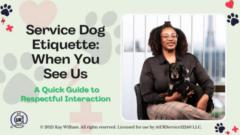
Feb 12 • SERVICE DOG TRAINING Q&A
A SD Handlers Obligation Defined
A handler saying “please don’t distract my dog” is setting a safety boundary — not being difficult.
When a handler with a service dog takes time to educate others about their dog’s work and proper etiquette, it is a professional courtesy — not an obligation.
Service dogs are working medical support, not pets. When handlers ask that others not interact with, speak to, or distract their working dog, it is about safety, focus, and accessibility — not being unfriendly.
Many individuals navigating disability already expend significant physical and cognitive energy managing their day. They are not required to provide on-the-spot education in public spaces or the workplace. A respectful “no” should be received as a boundary, not a personal offense.
For businesses, proactive education around service animal etiquette reduces liability, prevents misunderstandings, and strengthens inclusive practices. Clear communication protects employees, customers, and handlers alike.
Respecting boundaries strengthens access, safety, and dignity for everyone.
If your organization would benefit from professional training on service animal laws, etiquette, and real-world scenarios, AtURService52240 L.L.C. offers practical, engaging education designed to build confidence and compliance.
Let’s create environments where access and respect work together.
#ServiceDogEtiquette
#WorkplaceInclusion
#DisabilityInclusion
#ADACompliance
#InclusiveLeadership
#AccessibilityMatters
#DiversityEquityInclusion
1
0 comments
A SD Handlers Obligation Defined
powered by
skool.com/aturservice-animal-etiquette-7247
Learn about Service Animals etiquette, their importance and other helpful ways animals are beneficial to disabled & communities!
Suggested communities
Powered by