
Pinned

Nov '25 •
Welcome to Build Software with AI! (START HERE 👇)
So pumped you're here. This is the #1 community in the world for building real software businesses using AI and I mean that. Whether you have an idea already or have no clue what to build yet, you are in the right place. We're going to help you go from zero to a launched, revenue-generating software business using AI with zero coding required. Here's your game plan to get started right now: ✅ Step 1: Download the Skool App (Apple or Android). Search for "Build Software with AI" and join us inside. ✅ Step 2: Create your Welcome Post! Introduce yourself, share your name, where you're from, and what industry you're thinking of building in. I personally comment on every single one. 👀 ✅ Step 3: Go to getmakerai.com and start your first project. Pick an industry, let AI generate your idea, validate it, and get your full build guide. All in one place. ✅ Step 4: Head to the Classroom. That's where you'll find the full step-by-step training walking you through the complete MakerAI system: - How to find a validated software idea - How to build it using AI tools like Lovable and Base44 - How to get your first paying customers ✅ Step 5: Check the Calendar for upcoming coaching calls with me and Stefan. This is where we go deep on building and marketing your software live. https://www.skool.com/aivibecoding/calendar 💬 The more you post, engage, and share your wins, the faster you level up and unlock access to prizes and private chat. This community is special. The people in here are actually building. Drop your intro post below and let's get to work. Let's build. 🚀

Pinned
Mar 30 •
INSTANT TRAFFIC TO YOUR SOFTWARE! Maker ai marketplace!
We Send YOU FREE TRAFFIC to Your Ai Software! Say 👇 MARKETPLACE 👇 If you want me to personally send you the video on how to do it... Takes 2 Minutes to do, I show you here: https://youtu.be/2Mggn_jQzds You can list here: https://getmakerai.com/marketplace If you are a maker AI user you will get premium listings and you will be shown at the top. If you are not a user you will still be able to add your software to our Marketplace.
Pinned
Feb 25 •
Watch Me BUILD a $5,000/month AI Software LIVE
Join Here for the Demo: https://getmakerai.com/jm

10h •
Freedom Threads video generator
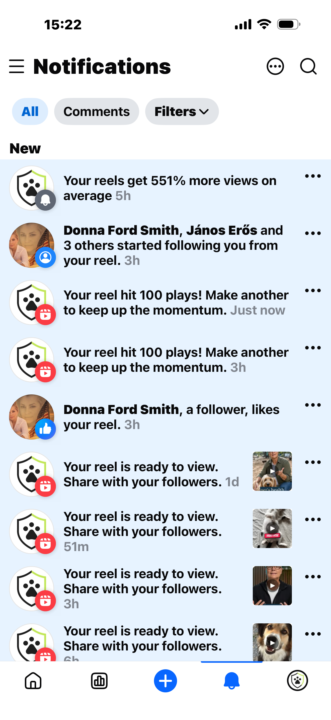
Im super happy with the results 🤩🤩 I’ve now started seriously posting around 10 to 12 posts a day on Facebook, instagram and TikTok. At first I was using the viral post threads but had zero interaction. Then I’ve started the video generator using HeyGen to compile the video with my avatar and the proof is in the pudding! My reels got 551% more views on average so I’m not going back to text posts 😅 now I just need to rinse and repeat and have patience. Hopefully in a few months these views and likes will become customers 🤞🏻 These tools are Amazing 😻 Thank you so much @Jonathan Montoya for the opportunity 💪🏻💪🏻

6h •
Security Resources for AI Founders: The Essential Reading List
So I get asked fairly regularly for a starting point on this stuff, and up until now I've just been sending people individual links as they come up in conversation. This is my attempt to put all of it in one place, because most of what gets written in the security space is aimed at enterprise teams with dedicated security staff, not a solo founder shipping an AI product who just wants to understand what they're actually dealing with. That said, everything below seeks to be non technical enough to be useful to somebody without requiring in depth security knowledge, and would be a great resource to bookmark and keep on hand while building out applications. 1. The OWASP LLM Top 10 (genai.owasp.org) If there is one document worth reading before you ship anything with an AI component, this is it. OWASP has been producing security guidance for developers since 2001, and their Web Application Top 10 became the industry standard for traditional web security. In 2023 they released a version specifically for LLM applications, updated again in 2025, covering the ten most critical vulnerabilities specific to AI powered products. Prompt injection sits at number one on that list, which on its own should tell you something. It doesn't need to be read cover to cover, but even skimming the names and one line descriptions should give you a meaningful vocabulary for understanding what your product is and isn't exposed to. Also worth noting: they released an Agentic Applications Top 10 in 2026 specifically for founders building with autonomous AI agents. If this is applicable to your build, I would definitely give that document a further look into as well. 2. Georgia Tech's Vibe Security Radar (scp.cc.gatech.edu) Launched in May 2025 out of Georgia Tech's Systems Software and Security Lab, the Vibe Security Radar does something nobody else was doing at the time: actually tracking CVEs directly traceable to AI generated code. Researcher Hanqing Zhao's reasoning for building it was straightforward: "everyone is saying AI code is insecure but nobody is actually tracking it."
1-30 of 856
skool.com/aivibecoding
The #1 community for building MicroSaaS with AI. Never coded? Perfect. Build your first profitable app or software in 72 hours using AI. Vibecoding!
Leaderboard (30-day)
1

+34
2

+31
3

+23
4

+22
5

+20
Powered by