Activity
Mon
Wed
Fri
Sun
Oct
Nov
Dec
Jan
Feb
Mar
Apr
May
Jun
Jul
Aug
Sep
What is this?
Less
More
Chlorine Dioxide Testimonies
629 members • Free
AI Business Trailblazers Hive
15.3k members • Free
WavyWorld
51.6k members • Free
Cancer Warriors Vault
44 members • Free
KetoforCancer
637 members • $9/m
Cancer Warriors
555 members • Free
214 contributions to Cancer Warriors

Oct '25 •
🔥 Dr Mikolaj Raszek - IVM Toxicity + Safety
Ivernectin papers are below his video. More info in his youtube channel. https://m.youtube.com/watch?v=UAKhH3vxm2A&pp=0gcJCR4Bo7VqN5tD

1 like • 14h
@Lemon P Agree. While I respect that people who use SOC might find value in it, this is my understanding based on few doctors and experts I trust: The SOC focuses on killing the C with poison, not building the body's immune system. While they kill the C, at the same time, they weaken or kill the body's immune system, instead of increasing it. Without improving the body's immunity, the growth of C's cells cannot be stopped, even after the C has been eliminated from the body by the SOC This is because the C's stem cells are likely still present, and in the next few weeks/months they will grow back, while the body's immunity is no longer there due to the effects of the SOC
24d •
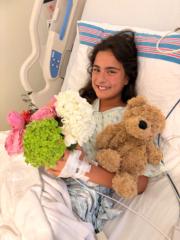
Update
My daughter had her post radiation MRI on Monday and she had a 60% reduction in her DIPG tumor!! All Glory to God! We have been doing a few supplements along with the radiation but God is hard at work with her and nothing is impossible for him! Don’t give up , keep praying and believing for you and your loved ones ❤️
0 likes • 14d
@Mili Kader Big congratulations! I would appreciate it if you could share your daughter story, journey, and protocol, including her diet. It would be incredibly useful, thanks

28d •
We are all blessed to be alive!
In life, there are truly moments that awaken you to what is really important. On one hand, we had a devasting Fire a couple days ago. We are EXTREMELY lucky. I have a big practice in a large home in the Netherlands (you hear me speaking Dutch in the video) At 3am, the police woke us up... There was a FIRE in the back of our practice.. . One of the fireman is a patient of mine, so he knew the building and it was put out quickly. 5 more minutes, and we would have lost the building. BUT, nobody was hurts. We are all okay, and I have great insurance so that isn't an issue. In truth... this is really a BLESSING. Our neighbor happen to have her window open. She got up, saw the fire, and alerted everyone. SHE IS A HERO!! And we are lucky to be alive. My amazing partner, Kaiyann Isa, says this is the summer of the Chinese Fire Horse... A time of rebirth. I love this perspective. Her practice is basically destroyed. We are finding a new space for her and the other amazing practioncers at our location that suddenly have no place to treat their clients... All will be well, eventually. The fire started spontaneously in the dryer. It was not even on. You can look at this like we are cursed... But we do not. With all things, there is balance. With every light, there attracts a balancing darkness. It all evens out. Here, we ARE BLESSED. Nobody was hurt... and if the fire burned a bit more, we would have lost our home. We feel this will create an amazing new start... and we are FOR IT! Lemons into lemonade! I feel personally DEEPLE grateful. And am MASSIVELY touched by all the gratitude and concern and care from everyone. I'm SO BLESSED and lucky... and can feel that. You guys here all understand how the suddenly your life really comes into PERSPECTIVE. What REALLY matters... as opposed to what we often stress about.
1 like • 25d
@Dr Benjaminz Zacherl Wow, God bless you. I love your perspective

Aug 7 •
Great news
Hi Team, I got some fabulous news. PET scan and Natera blood work both says cancer is gone. Plan going forward is to keep getting Jemperli Immunotherapy every 6 weeks for the rest of my life. I am also continuing with Febendazole and Ivermectin,
3 likes • Aug 11
@Wayne Marlowe Big congratulations! I would appreciate it if you could share your story, your journey, and your protocol, including your diet. It would be incredibly useful, thanks

Jul 27 •
high dose pulse vitamin K2 is associated with fighting cancer
This video summarizes some study findings. The video states that the highest dose per capsule is 1.8 mg. He seems to be unaware that vitamin K2 is available in bulk at vastly lower cost than anything that he recommends, see the below link to the Bulk Supplement K2. I take 2 mg K2 twice a day by adding the Bulk Supplement powder in my glasses of water., and I do not have cancer as far as I know. https://www.amazon.com/dp/B087L367W8?ref_=ppx_hzsearch_conn_dt_b_fed_asin_title_1 https://www.youtube.com/watch?v=Gxrew8iFaY4
1 like • Jul 30
Thanks! My search result of Vit K2 in food: Vitamin K2 is found mainly in fermented foods and animal products, with the highest amounts in nattō, hard cheeses, and egg yolks. Fermented Foods Nattō: A traditional Japanese dish of fermented soybeans that contains the highest level of vitamin K2 (MK-7), around 1,100 mcg per 100 grams. Sauerkraut: Fermented cabbage that provides smaller amounts of K2. Dairy and Animal Products Hard and Soft Cheeses: Aged cheeses like Gouda, Cheddar, and Brie are rich sources, often containing 10 to 75 mcg per 100 grams. Egg Yolks: Contain roughly 15 to 30 mcg of K2 per portion, especially when from pastured or free-range chickens. Butter: Grass-fed butter contains about 15 mcg per 100 grams. Liver and Meats: Chicken liver, beef liver, and grass-fed meats contain moderate amounts of the MK-4 form of K2. Caveat: Not all of this food items are appropriate for every cancer patients
1-10 of 214

@fitch-t-8478
I've faced past storms, unsure if I'd escape.
Yet, here I stand.
Facing another storm, unsure if I’d escape.
But I believe I'll escape once more
Active 12h ago
Joined Dec 9, 2024
Indonesia
Powered by