Activity
Mon
Wed
Fri
Sun
Oct
Nov
Dec
Jan
Feb
Mar
Apr
May
Jun
Jul
Aug
Sep
What is this?
Less
More
Owned by Alex
Learn how to build your own natural, non-toxic house with cob and straw-clay. Save money, live debt-free, and be healthy!
141 contributions to Cob & Natural Building School

11d •
How to Transform a Conventional Home into a Natural, Non-Toxic Home
Want to do a natural building renovation to an existing conventional home? Here's how I would go about doing it. It's not as complicated as it might seem!

1 like • 4d
@Jen Pawlett You could most likely leave the outside siding on. Just make sure the siding doesn't create moisture buildup between it and the wall infill.

25d •
Slip straw insulation
I've started a project! I'm still looking for suitable and affordable land for my cob home so in the meantime I'm getting familiar with some natural building materials. I live in an old house, built around 1890 with multiple additions. My west wall isn't well insulated and my kitchen pipes freeze every winter (I'm in central IL,USA). My plan is to tear out the entire kitchen wall, pack the space between studs with slip-straw, and finish with an earthen plaster. I'm starting with a small section as a learning lab. Yesterday was demo which I finished today, and started my first foray into slip-straw. Lessons on day 1: I definitely need to round the handle of my pounder. Even though I sanded the edges and corners, my hands are still feeling it. Slip-straw has a bounciness I didn't expect. I hope I compacted it enough. We'll see tomorrow. I'm starting to understand slow, yet immensely enjoyable building. Heart and soul are ingredients you don't see on any materials list. I have read differing opinions on how quickly you can remove the forms. Some say let it dry at least overnight, some say you can remove it right away and keep building the next level. I wonder when you keep working right away if the base put. Anyone have experience in that?

0 likes • 11d
Looks great! Nice project. The straw-clay does feel bouncy. But just keep packing more layers on top, and it'll all compress nicely. It is deceiving though with that bounce. From my experience, it's best to remove forms the next day to prevent any mold growth behind the form boards. It will be dry enough to remove the boards by then and move them up.
Aug 12 •
Earthen Floors - Some How-To Information
Hey everyone, Here's some video compilation of the earthen floors I've been working on this Spring/Summer. Lots of bits of knowledge in here for anyone interested in doing earthen floors. They're really wonderful, but they are definitely a challenge! See what trial and error we've had to go through so far with these floors and this soil.
5
0
Mar 6 •
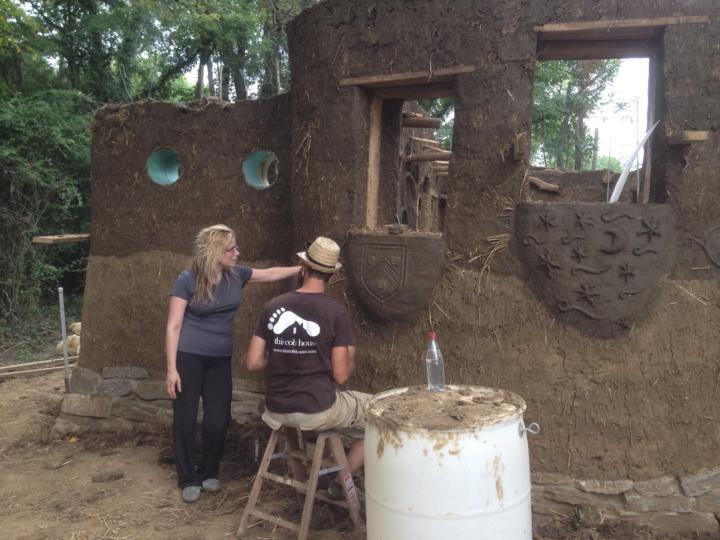
Cob Hobbit House photos
I wanted to post some of the photos from the Cob Hobbit House build. I was thinking of doing a live Q&A call for you to ask questions about this build, but let's start here...post any questions you have regarding this one. I have more case studies in the works. I'm currently compiling one for the Florida Cob Cottage and the Cob Quonset Hut. Spring projects are ramping up though, so I'm a bit behind on all the digital online work. Thanks for your patience!
1 like • Mar 12
@Keith Corona Yes, this foundation was dry stacked, and I only pointed the exterior joints with mortar. Now, I would not do it this way though. I would mortar all of the stone together for a stone foundation if you have mortar available. Probably best to use a lime mortar since you don't want mortar that's harder than the stone itself.
0 likes • Aug 11
@John Thomas This one was completed! I have a few photos here.
Aug 6 •
Wattle & Daub (Thin Earth Walls)
Wattle & Daub is an earth building technique that's not often talked about these days. It's basically a thin cob wall built between post & beam and woven lattice. I don't normally recommend wattle & daub for exterior walls unless you live in a tropical climate. The walls are too thin for substantial insulation or thermal mass. But they're quick to build and work great for natural, non-toxic interior walls in any home or building.
1-10 of 141

@alex-sumerall-5026
Professional cob house builder and instructor at This Cob House. I teach people how to build their own natural earthen homes.
Active 4d ago
Joined Jan 30, 2025
Greeneville, Tennessee
Powered by