Activity
Mon
Wed
Fri
Sun
Jul
Aug
Sep
Oct
Nov
Dec
Jan
Feb
Mar
Apr
May
What is this?
Less
More
Owned by Dani
Turn your story into a finished book in 6 months. For heart-led writers creating transformational or fiction books. Paid Tiers: Has Professional team
Memberships
AEN Town Square
105 members • $1
Claude for Coaches
485 members • $47
ACES Connection Group
853 members • Free
Lifestyle Founders Group™
12.1k members • Free
The Entrepreneur Village
389 members • $1/year
⭐️The Skool Hub⭐️
5.3k members • $5/month
Focused Founders Coworking
614 members • Free
RiseUp Together
475 members • Free
Skoolers
185.3k members • Free
8 contributions to Compelling Communicators

4d •
Weekly Coffee & Chat 23rd May 2026
Welcome to new members @Lara Knutzen and @Yvonne Lines! 👏🏼😃 Yvonne and I will be doing a LinkedIn Live in a couple of weeks on the topic of using slides correctly for presentations. We will add the recording to the Expert Resources library, but if you attend live you can get your questions answered through the chat! -Details to come. I am also working on a couple of collaborative workshops, one on Influence with @Hanna Kinez (my job this week is to come up with a name for this workshop - no pressure 😉). And @Dani Rosenblad James and I are looking to collaborate on a workshop as well. I will keep you posted with the times and dates of these as they are locked in. 😎 That has kept my week busy... Comment below with how your week is going.


1 like • 3d
Yay! I’m so excited!
8d •
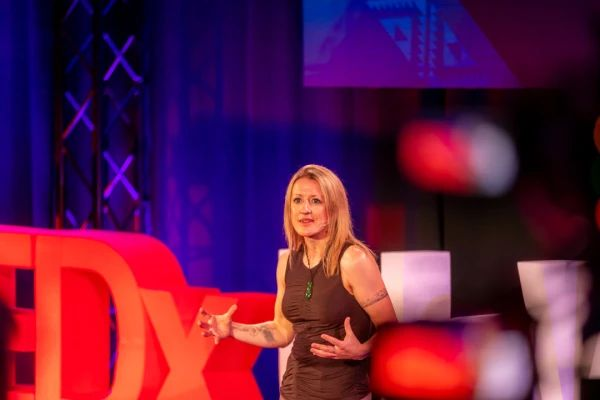
The counterintuitive advice that transforms TEDx openings.
Most speakers want to start by introducing themselves and their topic. "Hi, I'm Emma Nicholson, and I'm a volcanologist. Today I want to talk about sustainable mining..." 𝗗𝗼𝗻'𝘁 𝗱𝗼 𝘁𝗵𝗶𝘀. Instead, I tell my speakers to do one of two things: 𝟭. 𝗗𝗿𝗼𝗽 𝘁𝗵𝗲 𝗮𝘂𝗱𝗶𝗲𝗻𝗰𝗲 𝗶𝗻𝘁𝗼 𝘁𝗵𝗲 𝗺𝗶𝗱𝗱𝗹𝗲 𝗼𝗳 𝗮 𝘀𝘁𝗼𝗿𝘆. Emma's actual opening: "I'm crouched in the ice and snow on the side of a mountain with two delicate pieces of scientific equipment, desperately wishing I had a third arm. This was a bad time to discover that duct tape doesn't work in sub-zero temperatures..." You're hooked. You don't know who she is or what the talk is about yet—and you don't care. You're on that mountain with her. 𝟮. 𝗢𝗽𝗲𝗻 𝘄𝗶𝘁𝗵 𝗮 𝗿𝗵𝗲𝘁𝗼𝗿𝗶𝗰𝗮𝗹 𝗾𝘂𝗲𝘀𝘁𝗶𝗼𝗻 𝘁𝗵𝗮𝘁 𝗰𝗿𝗲𝗮𝘁𝗲𝘀 𝘁𝗲𝗻𝘀𝗶𝗼𝗻. Emma could have started: "Mining is one of the most wasteful, inefficient processes on the planet. Tonnes of waste rock, massive energy expenditure. But what if we could suck the metal straight out of the magma—creating no waste, with far greater efficiency?" Now you're leaning in, wanting to know if this is even possible. Here's why this works: 𝗬𝗼𝘂𝗿 𝗮𝘂𝗱𝗶𝗲𝗻𝗰𝗲 𝗱𝗲𝗰𝗶𝗱𝗲𝘀 𝗶𝗻 𝘁𝗵𝗲 𝗳𝗶𝗿𝘀𝘁 𝟭𝟱 𝘀𝗲𝗰𝗼𝗻𝗱𝘀 𝘄𝗵𝗲𝘁𝗵𝗲𝗿 𝘁𝗼 𝗴𝗶𝘃𝗲 𝘆𝗼𝘂 𝘁𝗵𝗲𝗶𝗿 𝗮𝘁𝘁𝗲𝗻𝘁𝗶𝗼𝗻. Starting with credentials or topic explanations is like starting a movie with the credits. Nobody came for that. Story or question. Middle of the action or the tension of possibility. That's how you earn the next 14 minutes.
2 likes • 7d
And then there was a mic drop!! 🎤
14d •
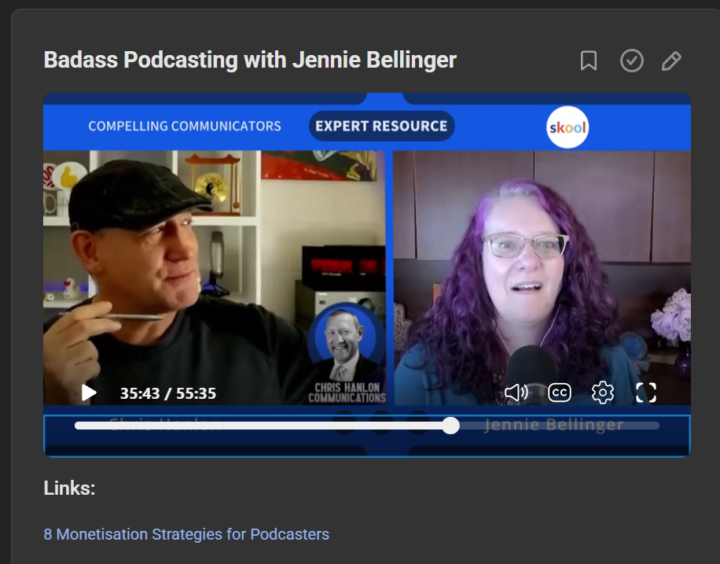
Badass Podcasting with Jennie Bellinger
I am pretty stoked with this! 🤩 I have just added in the Expert Resources classroom, an interview I did this weekend with my friend Jennie Bellinger who helps people monetise and set up their podcast. I think it is worth a listen even if you have never thought about creating your own podcast. She mentions how she got clients by being a guest on other's podcasts, and how she leveraged a few guest appearances into a lot of guest appearances. We had a fun conversation, and I hope you enjoy it as much as I did. 😃
1 like • 14d
Thanks for the share!
29d •
The most memorable moment in any talk is rarely a slide. It's a live demo.
There's something about watching a speaker do something real — in front of you, unscripted, with the possibility of failure — that captures attention like nothing else. 𝗟𝗶𝘃𝗲 𝗱𝗲𝗺𝗼𝘀 𝗰𝗿𝗲𝗮𝘁𝗲 𝘁𝗲𝗻𝘀𝗶𝗼𝗻. 𝗔𝗻𝗱 𝘁𝗲𝗻𝘀𝗶𝗼𝗻 𝗰𝗿𝗲𝗮𝘁𝗲𝘀 𝗺𝗲𝗺𝗼𝗿𝘆. I coached Mahonri Owen for his TEDxRuakura talk on prosthetic technology. He'd built a mechanical hand — a working prototype that could grip and release. We could have shown photos. We could have played a video. Instead, he brought it on stage. He slipped the neural net on the head of an audience member. Told her to think about closing her hand to demonstrate the grip mechanism, and let the audience watch it work in real time. You could feel the room lean in. Not because it was flashy — but because it was real. Happening right there. With the chance it might not work perfectly. That vulnerability is the point. When something can fail, the audience pays attention. When it succeeds, they remember it. The stakes are what make it land. Not every talk needs a live demo. But if you have something you can show rather than tell — something tangible, something that moves or works or transforms — consider bringing it on stage. A photo tells them what you did. A demo lets them experience it. What could you demonstrate instead of describe? 😉

2 likes • 28d
Oh yes! A live demo is where it's at!
1 like • 27d
@Chris Hanlon hmm... into the book launch. I'm unaware of someone doing that. But I can see the benefit depending on the kind of book it is.
Apr 22 •
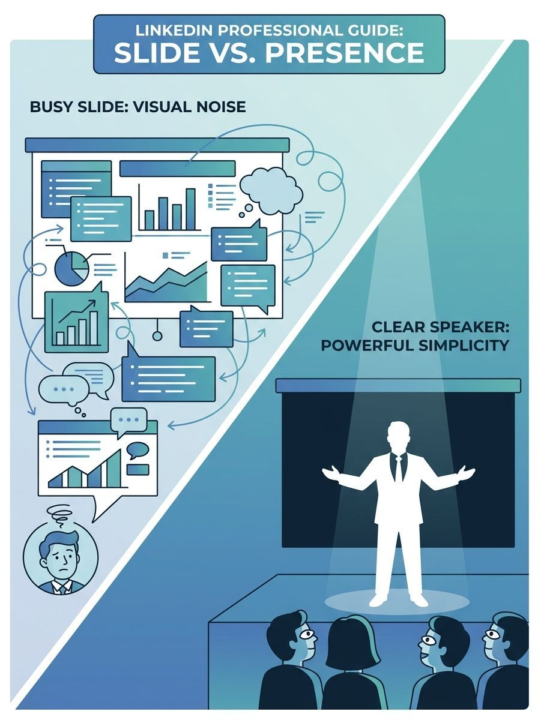
The most underused slide in any presentation is a blank one.
Most speakers feel the need to fill every slide with something. A chart. A bullet point. An image. Anything to avoid that uncomfortable emptiness. But here's what they're missing: 𝗔 𝗯𝗹𝗮𝗻𝗸 𝘀𝗹𝗶𝗱𝗲 𝗶𝘀𝗻'𝘁 𝗲𝗺𝗽𝘁𝘆. 𝗜𝘁'𝘀 𝗮 𝗱𝗶𝗿𝗲𝗰𝘁𝗶𝘃𝗲. When your screen goes blank, your audience has nowhere else to look. No diagram to study. No text to read ahead. Just you. That's not a mistake. That's intention. The best speakers use blank slides strategically: ✅ Before a key point, to build anticipation ✅ During a personal story, to create intimacy ✅ After a big idea, to let it land It feels counterintuitive. Speakers often tell me a blank slide feels like something's broken. Like the tech failed. Like they forgot to add content. But audiences don't see it that way. They see a speaker confident enough to stand alone without visual support. They see someone who trusts their message. Here's a practical tip: in PowerPoint or Keynote, pressing 'B' blacks out the screen instantly. Press it again, and your slides return. You can do this mid-talk without anyone knowing it was planned. Try it. Insert one blank slide in your next presentation — right before your most important point. Watch what happens to the room. You'll feel the attention shift. To you. When was the last time you gave your audience nothing to look at but you? 😉
1 like • Apr 23
Oh! That's good to know and makes complete sense! All eyes on you! No distractions!
1-8 of 8

@danirosenbladjames
I’m an international bestselling author, speaker, and writing coach.
I will help you turn your story into a book in just 6 months!
Active 3h ago
Joined Mar 28, 2026
Sweden
Powered by