Activity
Mon
Wed
Fri
Sun
Aug
Sep
Oct
Nov
Dec
Jan
Feb
Mar
Apr
May
Jun
Jul
What is this?
Less
More
Memberships
WavyWorld
49.7k members • Free
Pinterest Skool
5.5k members • $7/month
🎬 Memoir Skool 📸
101 members • Free
28-Day Action Plan™
200 members • Free
🎬 Ai Storytellers📖
522 members • Free
Skoolyard 🧃
1k members • Free
🌎Our Peaceful Liberation✌🏽
59 members • Free
AI Automation (A-Z)
164.4k members • Free
Free Skool Course
71.5k members • $1
5 contributions to 🎬 Memoir Skool 📸

🔥
May 17 •
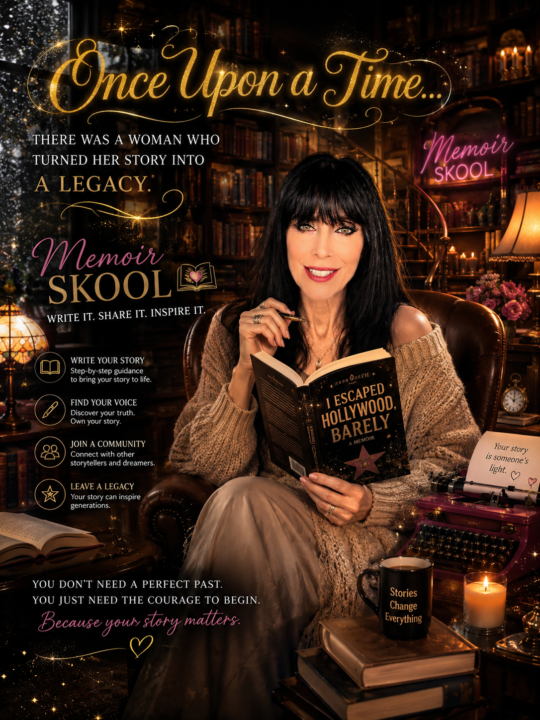
Every Life Holds a Story Worth Telling ✨
What is one memory from your life that still feels vivid when you think about it? 🌿 Memoir Skool is filled with incredible people from different backgrounds, generations, careers, and life experiences — and every single person here carries stories that matter. 🤍 Maybe it’s:✨ a childhood memory✨ a life-changing moment✨ a funny family story✨ a dream you chased✨ a lesson you learned the hard way✨ a place you never forgot Sometimes the smallest memories become the most meaningful ones when we finally share them. Drop one memory, moment, or life lesson below that still stays with you today. ✍️📖 #From Story to Published: The Modern Memoir Path

1 like • May 17
One memory that still feels vivid for me is Hokkaido, Japan, in 1987. I was a young Operation Raleigh venturer on the Shiretoko Peninsula, surrounded by snow mountains, fishing families, hot spring baths, school visits, tea ceremonies, Japanese drums, seaweed, and extraordinary kindness. It was one of those rare times in life where I felt I had stepped completely outside my normal world, but somehow learned more about being human. The lesson that has stayed with me is this: Sometimes travel is not really about the place you visit. It is about the version of yourself that wakes up because of the people who welcome you. That memory has never left me.
🔥
May 13 •
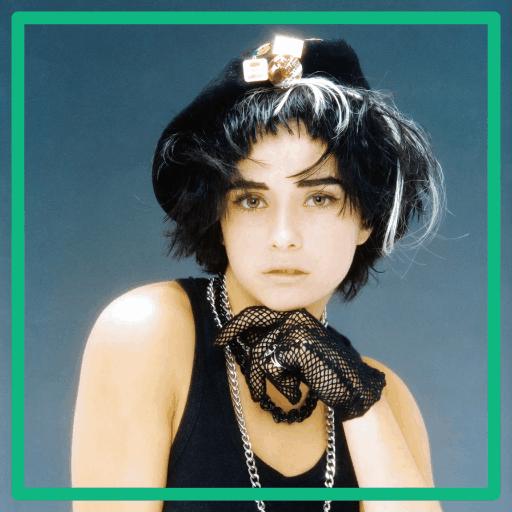
A Chapter on Hollywood, Identity, and Japanese-American Culture
My Real Story Hollywood, Survival, and Becoming Who I Really Was A Chapter on Hollywood, Identity, and Japanese-American Culture Los Angeles in the 1980s was a city built on illusion — beautiful on the surface, but emotionally chaotic underneath. Palm trees swayed above cracked sidewalks while teenagers chased dreams through malls, skating rinks, casting calls, and smoke-filled clubs glowing with neon signs. Hollywood sold fantasy to the world, but beneath the surface lived an entire generation of young people trying to survive the pressure of image, fame, beauty, and escape. Back then, America was obsessed with celebrity culture. Music television ruled the afternoons. Fashion magazines dictated what girls should look like, and movies taught boys how to act tough. The Sunset Strip became a living stage where rock bands, models, actors, and runaways crossed paths every night. Cocaine flowed through parties like champagne. Everyone seemed to be performing a version of themselves. But culture is never only entertainment. It is survival. It is what people create when they are trying to belong. For many American models working internationally during the 1980s, identity became complicated in unexpected ways. Inside the home, there were expectations rooted in discipline, humility, respect, and sacrifice. Outside the home was America — loud, individualistic, rebellious, and hungry for attention. The contrast between Japanese and American culture shaped the experiences of many young American models who suddenly found themselves living and working inside a completely different world. In Japanese culture, silence often speaks louder than words. Respect for elders is deeply embedded in daily life. Families carry invisible emotional contracts built around duty and endurance. Shame is not simply personal; it reflects upon the family unit. Emotional restraint is considered maturity. American culture in the 1980s was almost the opposite. Self-expression was celebrated. Teen rebellion became fashionable. Pop stars shouted their pain into microphones while movies romanticized freedom and reinvention. Young people were encouraged to stand out.
1 like • May 13
We Were Not Celebrities, But Japan Treated Us Like Symbols Hokkaido, 1987, and the strange currency of being seen @Cristal Vancarson Cristal, your post really landed with me. I spent three months in Japan in 1987 as a young Operation Raleigh venturer, based in Rausu, Hokkaido, on the Shiretoko Peninsula. My Japan was not Hollywood or Tokyo. It was snow mountains, fishing families, hot spring baths, school visits, home stays, Japanese drums, tea ceremonies, seaweed, Genghis Khan barbecues, and extraordinary kindness. But I recognised so much in what you wrote about youth culture, image, Western beauty, and Japanese fascination with blonde icons. We had one young British venturer with us who was blonde, long-haired, and looked like he had walked straight out of a Duran Duran video. Everywhere we went, especially around schools and public events, he was swamped by Japanese schoolgirls and young women. At the time I found it funny and fascinating. Looking back, I realise I was watching culture move through image: pop music, youth, foreignness, glamour, and projection. Your line about Hollywood and Tokyo being mirrors of each other struck me. I saw a gentler, rural version of that mirror in Hokkaido. We were not celebrities, but sometimes we were treated like symbols. What stayed with me most, though, was not the attention. It was the kindness. My home stay family treated me like one of their own. A deputy mayor gave me Japanese calligraphy for “friendship” and “peace”. When we left Rausu by ferry, people stood on the dock holding streamers until the last strands fell into the sea. Your post reminded me that history is not just what happened. It is also what it felt like to be young inside the atmosphere of a time. Thank you for opening that door. You have reminded me that this memory probably deserves to become part of my own story too. A few pics of the times: Euan Rellie is in the group pic, top left…
1 like • May 15
@Cristal Vancarson Cristal, what a beautiful and generous response. Thank you. And I smiled at your first line too. I will happily accept that as an unexpected 1987 confidence boost! 🔥 and I’m no longer going to keep my reciprocal thoughts about you inside either 😍 🤗😇 You have named the thing I did not fully understand at the time. We were young, travelling through a culture that had its own mythology around Western music, fashion, image, and youth. In some moments we became walking postcards from another world. But as you say, the deeper memory was never the attention. It was the humanity. The home stays. The kindness. The schoolchildren. The ceremonies. The laughter across language barriers. The streamers falling into the sea as we left Rausu. Your phrase “that’s memoir” really stayed with me, because I think you are right. Memoir is not just remembering events. It is recovering the emotional atmosphere around them. Thank you for helping me see that this memory belongs in the story properly.
🔥
May 13 •
🔥 The flame represents the part of you that refuses to go out.
Your creativity. Your purpose. Your voice. Your dreams. Your passion to keep creating, learning, growing, and becoming, even after life tries to dim your light. In Skool, the flame represents remembering who you really are underneath the algorithms, the pressure, the fear, and the noise. It’s the spark that brings people together to inspire, build, teach, heal, and rise together. ✨

2 likes • May 13
Cristal, this really lands. “The flame represents the part of you that refuses to go out” is such a beautiful way to describe the creative life. Not the polished version. Not the algorithm-friendly version. The real inner spark that survives pressure, fear, silence, and all the times life asks us to become smaller. I think many of us arrive in memoir because that flame is still there, quietly asking to be witnessed. Thank you for naming this so beautifully. 🔥💜
May 13 •
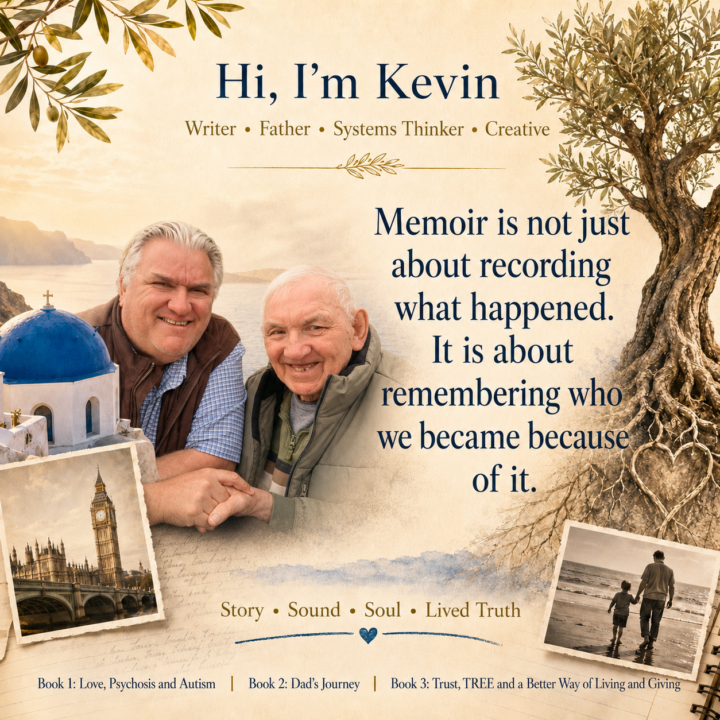
Introducing Myself: Remembering Who We Became
Hi everyone, I’m Kevin, joining from Greece, though much of my lived story is rooted in the UK. I’m here because I’m finally giving proper shape to a memoir that has been waiting inside me for a long time. The working heart of Book 1 is love, psychosis, autism, family, recovery, authenticity, and what it means to rebuild a life after the old version of yourself has been broken open. That memoir is also part of a wider book arc. Book 2 follows my father’s journey through the care system, and my fight to protect his dignity, voice, and right to be seen as a person, not a process. Book 3 then widens the lens into the future, looking at humanity, trust, technology, AI, and whether we can find a more heart-centred way of living, giving, and surviving together. I’ve lived through intense professional ambition, personal collapse, a near-death psychological crisis after 9/11, and the long road of learning how to give meaning and truth to trauma that once felt impossible to explain. I’m also a father, husband, writer, systems thinker, and creative. These days I work at the crossroads of story, sound, soul, lived experience, and trust. The incubator for my music lives here: https://suno.com/@soulshiftsounds Songs about love and family live here: https://suno.com/s/fcDIxqDKtathCWNZ Songs about dad and his care journey live here: https://suno.com/s/JSSbU7TyufJ3OhtZ What drew me here is the feeling that memoir is not just about recording what happened. It is about remembering who we became because of it. For me, writing is part of that remembering. It is also part of a larger path I sometimes think of through the image of a tree: roots in lived experience, branches reaching toward better ways of being human, and trust as the living system between them. I’m looking forward to learning from the stories, photographs, voices, and reflections shared here. I’m especially interested in how people find the courage to tell the honest version, not just the acceptable version.
🔥
May 13 •
✨ Welcome to Memoir Skool ✨
@Kevin Michael Brown ✨ We’re so happy you’re here. 💫 I see you’re a writer — thank you so much for joining us. ❤️ This is a space for storytelling, healing, creativity, truth, transformation, and connection. A place where real life experiences matter and every story has value. Take a moment to introduce yourself, share a little about your journey, and let us know what brought you here.
1 like • May 13
Thank you, Cristal, and thank you everyone for the warm welcome. ❤️ I’m Kevin, joining from Greece, with deep roots on the South Coast of England. I’m a writer, systems thinker, and creative, currently working across memoir, music, AI, and what I tend to call the space where systems, story, and soul meet. I’m currently writing a memoir drawn from lived experience, family, neurodiversity, trauma, recovery, love, and the long road of turning difficult chapters into something useful, honest, and hopefully healing. Alongside that, I’m also developing a series of musical reflections through my SoulShiftSounds catalogue, using songs, sound, and story as another way of exploring memory, meaning, and transformation. I’m especially drawn to this space because I believe real stories matter. Not polished-perfect stories, but human stories. The ones that help us understand ourselves, forgive ourselves, and maybe help someone else feel less alone. I’m looking forward to reading, listening, learning, and sharing when the moment feels right. Thank you again for the welcome, Cristal. ✨
1-5 of 5
@kevin-brown-2649
✨ From Trauma to Transcendence ✨
Through Eterna Works Creative, I craft books, music, and worlds that help humanity remember who we truly are.
Active 13h ago
Joined May 13, 2026
North West England & Greece