Activity
Mon
Wed
Fri
Sun
Jun
Jul
Aug
Sep
Oct
Nov
Dec
Jan
Feb
Mar
Apr
May
What is this?
Less
More
Owned by Robin
You found your people! Let's talk nature, herbalism, crystals, metaphysics, healing trauma, meditation, intuition, art, music, & more!
Remember when you were a kid and excited to show someone the cool rock you found? Let's bring that back! Show off your rocks!
Memberships
Sisterhood of Intuitive Empath
694 members • Free
Somatic Architecture Lab
18 members • Free
SpiritBiology
2.5k members • Free
Excel Mastery
502 members • Free
Regenerative Gardening
227 members • Free
Rewilding the Soul
2.2k members • Free
Chill the Fuck Out
51 members • Free
Chinese Medicine MedicalQigong
59 members • Free
Plumbing Skool!
36 members • Free
375 contributions to Crystal Appreciation Society
🔥
16h •
Snitches get stitches
If crystals could talk, which one in your collection would absolutely snitch?

🔥
19h •
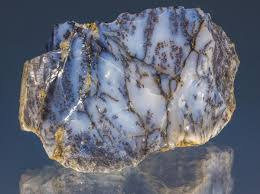
Crystal Spotlight - Dendritic Opal
Dendritic Opal has a very quiet, reflective kind of presence. It often feels connected to stillness, observation, patience, and seeing the deeper patterns running through life. This is one of those stones that many people are drawn to during periods of introspection, emotional processing, spiritual growth, or reconnecting with nature and inner wisdom. The branch-like inclusions inside the stone almost look like tiny trees, roots, moss, or frozen landscapes. There’s something deeply symbolic about that. It tends to remind us that growth happens in layers and networks. Roots spread underground long before visible change appears above the surface. Many people work with Dendritic Opal when they are trying to slow down enough to actually hear themselves again. It has a calming, grounding quality while still holding a very intuitive and contemplative energy. Physical Overview Dendritic Opal is a common opal containing mineral inclusions called dendrites. These branching inclusions are usually made of manganese or iron oxides that naturally form tree-like or fern-like patterns inside the stone. Despite the name, the dendrites themselves are not plant material. Unlike precious opal, Dendritic Opal usually does not display strong flashes of play-of-color. Instead, its beauty comes from the contrast between the soft cream, white, gray, or beige background and the intricate natural inclusions woven throughout the material. Important deposits have been found in places such as Mexico, Madagascar, India, and parts of the western United States. Mohs hardness typically ranges around 5.5 to 6.5, so while it works beautifully in jewelry, it benefits from a little extra care to avoid scratching or cracking. Physically, many crystal practitioners associate Dendritic Opal with nervous system calming, emotional regulation, grounding, hydration awareness, and supporting overall energetic balance. Historical Usage Dendritic stones have long fascinated people because of their natural landscape-like imagery. Throughout history, stones containing dendrites were often viewed as symbols of abundance, growth, nature spirits, fertility, and connection to the Earth.
🔥
2d •
Explore with me...
If you could spend one full day exploring anywhere, would you pick: - a forest - a crystal shop - an old bookstore - a flea market - a cave - or a beach full of tide pools?

🔥
3d •
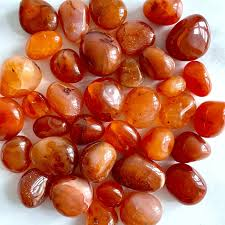
Crystal Spotlight - Carnelian
Carnelian feels alive. This is the kind of stone that tends to wake people back up when they’ve been running on autopilot, emotionally flat, creatively blocked, disconnected from motivation, or stuck in fear and hesitation. There’s warmth in it. Movement. Momentum. It carries an energy that often reminds people of blood flow, sunlight, firelight, courage, passion, and the pulse of life itself. Many people are drawn to Carnelian during periods where they want to rebuild confidence, reconnect with creativity, reclaim personal power, or finally begin taking action on things they’ve delayed for too long. It has a very embodied feeling to it. Less floating in the clouds and more reconnecting with being fully present in the human experience. Carnelian often feels supportive for people who have spent a long time surviving and are now trying to remember how to actually live again. Physical Overview Carnelian is a variety of chalcedony within the quartz family. Its color comes primarily from iron inclusions, which create the rich orange, amber, rust, and deep reddish tones that make the stone so recognizable. Some pieces are translucent and glowing while others appear more earthy and dense. Major deposits have been found in places such as India, Brazil, Madagascar, and Uruguay. Mohs hardness is around 6.5 to 7, making it durable enough for jewelry, carvings, and daily carrying. Physically, many crystal workers associate Carnelian with circulation, vitality, reproductive energy, physical stamina, motivation, movement, and supporting the body during exhaustion or burnout recovery. Historical Usage Carnelian has been treasured for thousands of years across many civilizations. Ancient Egyptians worked heavily with Carnelian in jewelry, protective amulets, burial pieces, and ceremonial objects. It was associated with life force, vitality, courage, and protection in the afterlife. In Ancient Rome, Carnelian was carved into signet rings because hot wax was less likely to stick to the smooth stone. Warriors throughout various cultures also carried Carnelian as a symbol of courage, confidence, and strength before battle.
🔥
4 likes • 3d
@Anouchka Hanneman That might be better left as display for now. 💖
🔥
3d •
Ooops!
What’s the coolest thing you’ve ever found on the ground completely by accident? Doesn't have to be a crystal.
🔥
6 likes • 3d
@Melvinia Ford Wow. I'll bet that felt good!
🔥
3 likes • 3d
@Cassandra Kiehn beautiful💖
1-10 of 375

🔥
@ahappyhippie
Herbs, Crystals, Meaningful wellness
Herbalist, intuitive certified counselor, healer, author, artist, jewelry designer, and founder of aHappy Hippie
Active 9h ago
Joined Nov 25, 2025
INFJ